-
E-mail
595012668@qq.com
-
Phone
13838263242
-
Address
Building B, Shenglong Jinzhong Ring, Zhongyuan District, Zhengzhou City, Henan Province
Product Categories
Zhengzhou Qifeng Environmental Protection Technology Co., Ltd

Coating production line
NegotiableUpdate on 01/08
- Model
- Nature of the Manufacturer
- Producers
- Product Category
- Place of Origin
Overview
The painting production line is a painting system equipment that connects various painting processes in sequence through mechanized conveying to achieve efficient production. Applicable occasions: Suitable for coating production of workpieces with relatively uniform structure and appearance, in batches or large quantities.
Product Details
painting production line
A coating system equipment that connects various coating processes in a mechanized manner to achieve efficient production.
Applicable occasions:
Suitable for coating production of workpieces with relatively uniform structure and appearance, in batches or large quantities
1、 The core components of a painting production line include three major stages and auxiliary systems
completepainting production lineThe equipment needs to be connected in series according to the "process flow", and each link directly affects the coating quality (adhesion, flatness, corrosion resistance). The core structure can be divided into 3 main links and 2 auxiliary systems:
1. Pre processing stage: the "basic engineering" that determines the adhesion of the coating
The core of pre-treatment is to remove impurities (oil stains, rust, dust) on the surface of the workpiece, and form a "phosphating film/passivation film" to enhance the adhesion of the coating, avoiding subsequent coating peeling and foaming. The main equipment and process are as follows:
Pre degreasing/degreasing tank: Soak or spray the workpiece with alkaline cleaning agent (such as sodium hydroxide solution) to remove residual engine oil and cutting fluid during the processing (temperature 50-60 ℃, time 5-10 minutes);
Washing tank: divided into 1-2 levels, rinse the residual degreasing agent on the surface of the workpiece with clean water to avoid affecting subsequent treatment (needs to be replaced regularly to ensure water cleanliness);
Rust removal tank (only for metal parts): Use acid pickling (hydrochloric acid, sulfuric acid solution) or sandblasting equipment to remove rust and oxide scale. After acid pickling, immediately wash with water to neutralize (to prevent excessive corrosion of the workpiece);
Phosphating/Passivation Tank: Form a uniform phosphating film (thickness 5-10 μ m) or passivation film on the metal surface to enhance the adhesion between the coating and the workpiece (phosphating temperature 30-40 ℃, time 3-5 minutes);
Drying oven: Dry the pre treated workpiece (temperature 80-120 ℃, time 10-15 minutes) to avoid moisture affecting the coating effect.
2. Coating process: The core process determines the appearance and function of the coating
According to the workpiece material and coating requirements (such as thickness, glossiness, weather resistance), different coating methods are selected, which are mainly divided into three categories:
Spray painting category
Equipment: Automatic spraying robots (such as ABB, Fanuc), fixed spray guns, spray painting rooms (water curtain cabinets/water rotary towers, used to collect paint mist);
Process: The workpiece enters the painting room through the conveyor chain, and the robot sprays (paint/water-based coating) according to the preset trajectory. The spraying thickness is controlled by the spray gun pressure (0.3-0.5MPa) and spraying speed (1-2m/s);
Applicable: car body, furniture, 3C product shell (scenes requiring high precision and high aesthetics).
Electrophoretic coating (suitable for complex structured metal parts):
Equipment: electrophoresis tank (including positive electrode plate and negative electrode hanger), ultrafiltration system, pure water cleaning tank;
Process: The workpiece is immersed in an electrophoretic paint solution as a negative electrode, and after direct current is applied, the paint particles are adsorbed on the surface of the workpiece to form a uniform coating (thickness 20-30 μ m), which is then washed with ultrafiltration water and dried;
Applicable: automotive chassis, hardware accessories (with strong coating adhesion, good corrosion resistance, suitable for complex surfaces).
Powder coating (environmentally friendly, solvent-free):
Equipment: powder spraying room, electrostatic spray gun (generating high voltage static electricity to make the powder charged), recycling system (recycling unadsorbed powder);
Process: The workpiece is grounded, and the charged powder is adsorbed on the surface of the workpiece, and then enters the curing furnace for high-temperature curing (temperature 180-220 ℃, time 15-20 minutes) to form a thick coating (50-100 μ m);
Applicable: anti-theft doors, guardrails, electrical enclosures (impact resistant, scratch resistant, no VOCs emissions).
3. Drying/curing process: the "key step" in shaping the coating
Select the corresponding curing equipment based on the coating method, with the core being to control temperature and time to ensure coating curing:
Hot air circulation oven: suitable for spray painting and electrophoretic parts. It uses electric heating or gas heating to make the temperature inside the oven uniform (± 5 ℃). For example, the curing temperature of spray painted parts is 60-80 ℃, and the time is 20-30 minutes;
Infrared curing oven: suitable for powder coating and UV paint, heated by infrared lamp radiation, with a fast heating rate (rising to 200 ℃ within 10 minutes), saving more than 30% energy;
UV curing machine: Suitable for UV paint (such as 3C products), it can cure the paint within a few seconds by irradiating it with a UV lamp (wavelength 200-400nm), greatly reducing the production cycle.
4. Auxiliary system: Ensure stable operation of the production line
Conveyor system: Use hanging chains, roller conveyors, and belt conveyors to circulate workpieces between each link, with a speed that matches the rhythm of each link (such as a car painting line conveyor speed of 1.5m/min);
Environmental Protection System:
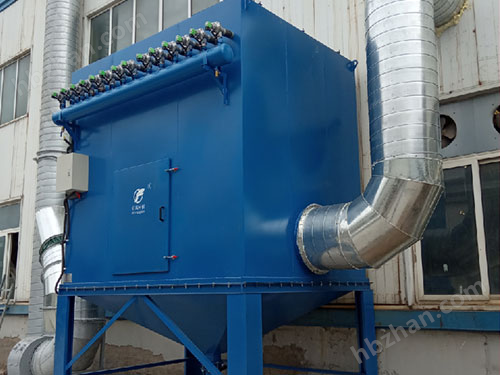
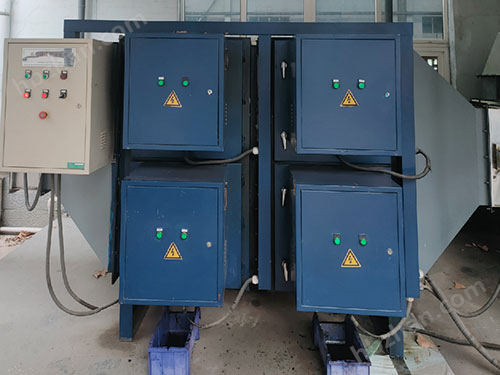
Paint mist treatment: water curtain cabinet, water rotary tower (wet) or filter cotton, electrostatic adsorption (dry);
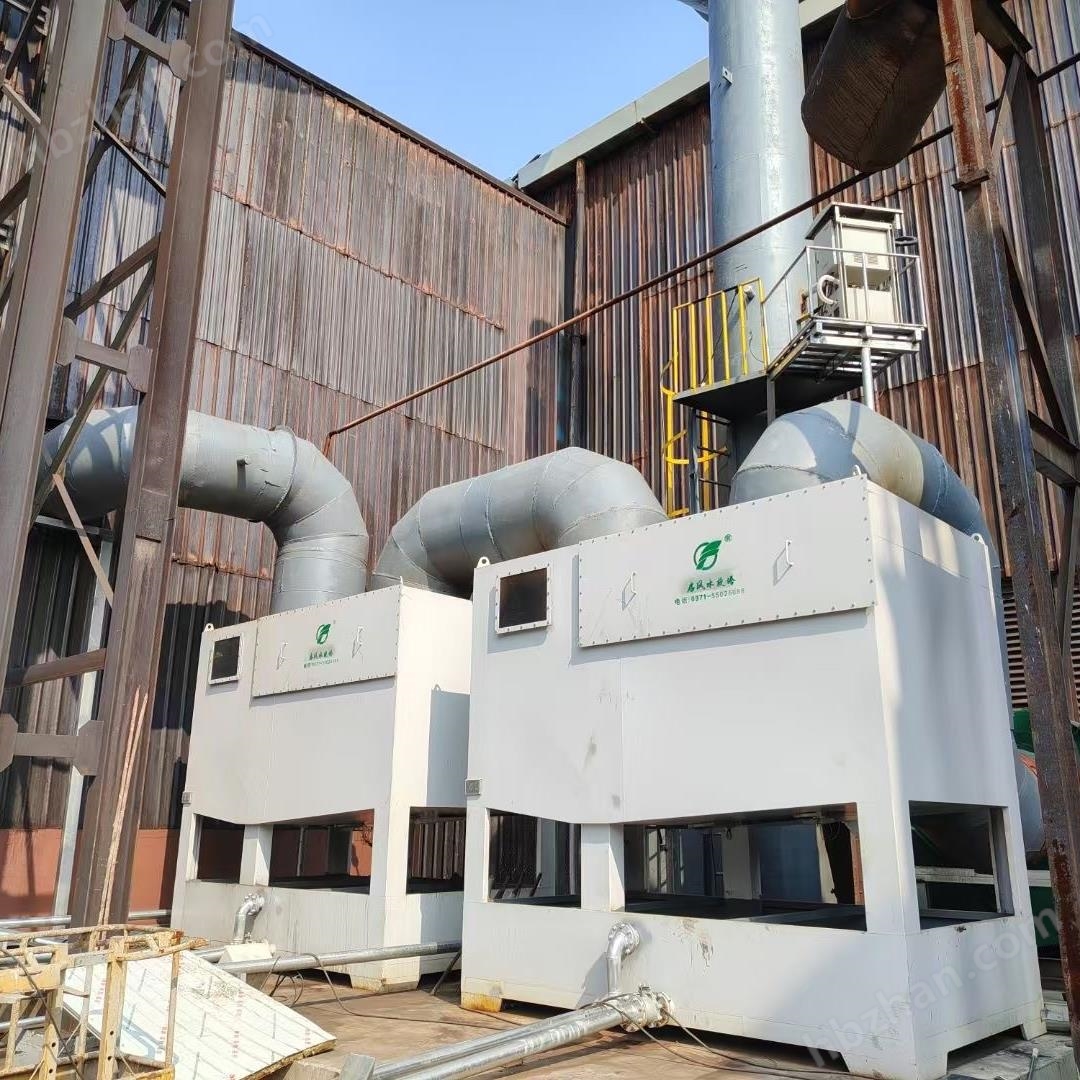
VOCs treatment: activated carbon adsorption tower, catalytic combustion equipment (CO), regenerative combustion equipment (RTO, suitable for high air volume and low concentration);
Wastewater treatment: Pre treated wastewater undergoes "coagulation and sedimentation → biochemical treatment → standard discharge" to avoid environmental pollution;
Control system: PLC control cabinet+touch screen, real-time monitoring of temperature, pressure, and conveying speed in each link, and automatic alarm (such as abnormal temperature and insufficient paint).