-
E-mail
3004994300@qq.com
-
Phone
13611928337,15021460884
-
Address
No. 52 Chengliu Road, Jiading District, Shanghai
Product Categories
Shanghai Chuntest Biotechnology Co., Ltd
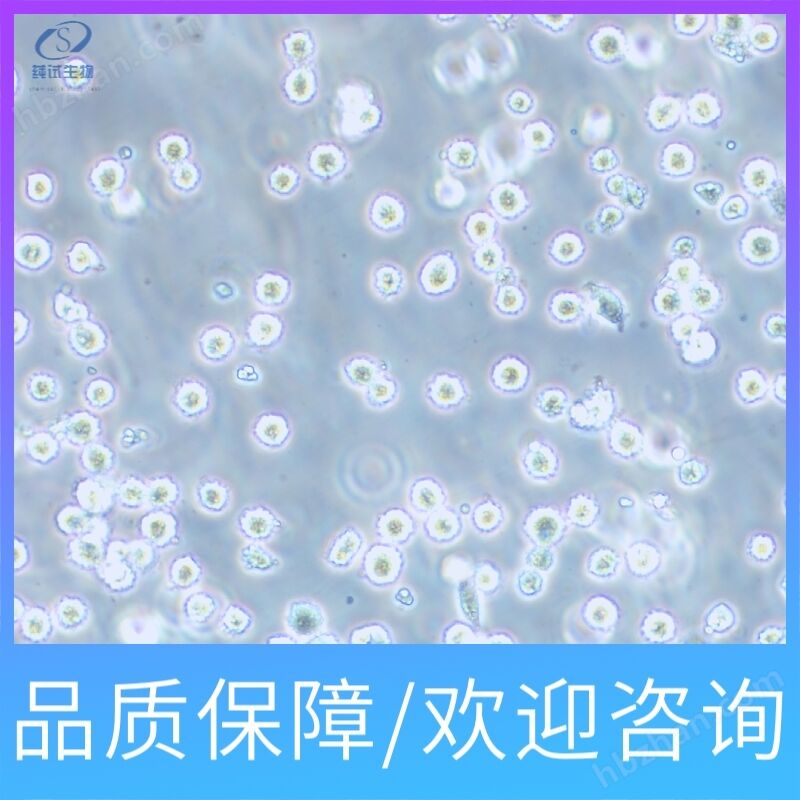


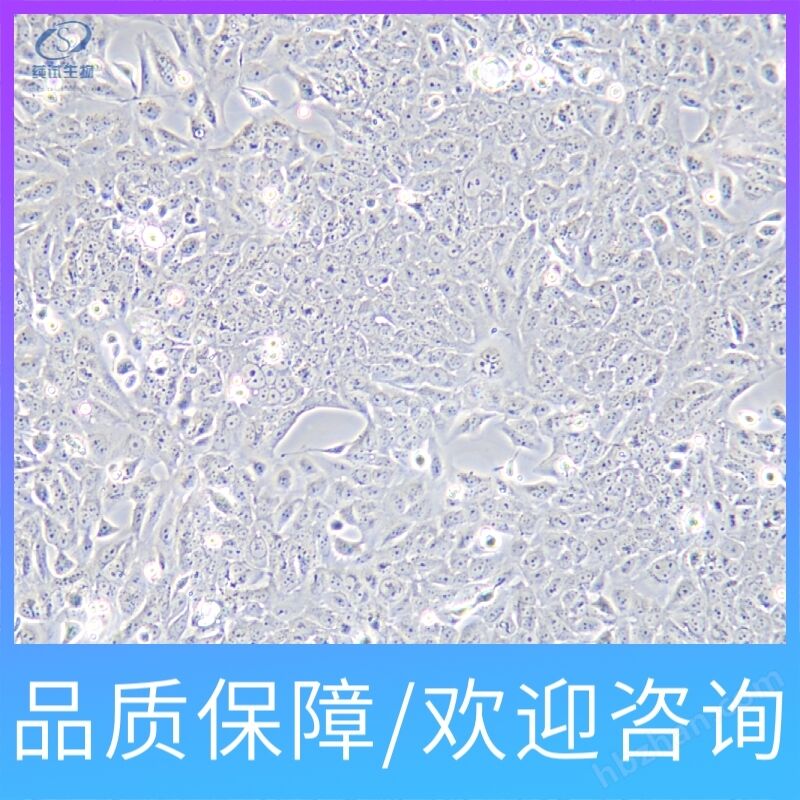
HGC-27 cell specific culture medium
NegotiableUpdate on 04/24
- Model
- Nature of the Manufacturer
- Producers
- Product Category
- Place of Origin
Overview
HGC-27 cell specific culture medium company is selling products: rabbit fallopian tube smooth muscle cells, mouse testicular interstitial cells, mouse ovarian granulosa cells, mouse renal artery endothelial cells, sheep aortic smooth muscle cells, human pancreatic acinar epithelial cancer, human cholangiocarcinoma cells, hybridoma cells; CS-H hybridoma cell line; F3A2 hybridoma cell line; F7-P-01 rat lung epithelial type II cells, human cervical cancer intestinal metastasis cells, and human lung cancer cells (large cell lung cancer); NCI-H460 human in situ pancreatic adenocarcinoma cells; BxPC-3 human lung adenocarcinoma cells; Lu-165
Product Details

HGC-27 cell specific culture mediumProduct Introduction
After careful optimization by the team and long-term testing, this product can maintain the growth status of HGC-27 cells.
This product already includesVarious components required for the growth of HGC-27 cells can be directly used for cell culture without adding any ingredients
Main components of the product
DMEM basic culture medium 445 ml
Defined FBS50 ml
P/S Penicillium su Streptomycin su 5 ml
Transportation and storage
Transportation: Low temperature transportation in an insulated box containing biological ice packs
保存方法:Store at 2 ℃~8 ℃, away from light, for 2 months; -Store at 20 ℃, away from light, for 6 months.
quality control
Test Item |
quality control |
|
clarity |
clarify |
|
PH |
7.3±0.2 |
|
Endotoxin content (EU/mL) |
≤10 |
|
|
Sterility testing |
bacteria |
negative |
fungus |
negative |
|
Mycoplasma |
negative |
|
|
Cell growth assay |
cell morphology |
normal |
Cell Growth Experiment |
qualified |
|


Product Name |
HGC-27 cell specific culture medium |
Item Number |
EY-XP5473 |
Specifications |
1*125ml/500ml |
Technical Service |
Free technical support |
purpose |
For scientific research experiments only |


For scientific research purposes only.
Some components in the culture system are harmful to human health. Please do not use exposed skin to come into contact with the liquid in the culture system or containers containing residual liquid in the culture system; The concentration and harmfulness of these harmful substances are relatively low. If there is contact, rinse immediately with tap water.


The following experimental protocol introduces the general process of cell culture cryopreservation. A detailed experimental plan must refer to the product manual for specific cells.
1. Prepare frozen culture medium and store it at 2 ° C to 8 ° C until use. Please note that the type of cryopreservation medium used depends on the cell line used.
When freezing adherent cells, gently detach the cells from the tissue culture container using the method used during passage. Resuspend the cells in the required culture medium.
3. Use a hemocytometer or cell counter according to the trypan blue exclusion method or use Countess ® The automatic cell counter measures the total cell count and percentage of live cells. Calculate the required amount of frozen culture medium based on the required density of live cells.
4. Centrifuge the cell suspension at a centrifugal force of approximately 100-200 × g for 5 to 10 minutes. Carefully discard the supernatant under sterile conditions without stirring the cell sediment.
Note: The centrifugation speed and time depend on the type of cell.
5. Resuspend the cell pellet in pre cooled frozen culture medium and adjust it to the appropriate live cell density for the cell.
6. Divide the cell suspension into several cryovials. When packaging, cells should be gently mixed from time to time to maintain a uniform cell suspension state.
7. Use a freezing device with controllable cooling rate to freeze cells, reducing the temperature by approximately 1 ° C per minute. Alternatively, place the cryotube containing the cells into a cryobox and place the cryobox overnight at -80 ° C.

GES-1 human gastric mucosal epithelial cells |
MADB6 cell specific culture medium |
CAL-51 human breast cancer cell |
HEK-293 cell specific culture medium |
BT474/LUC (STR) human breast ductal carcinoma cells |
MDA-MB-453 cell specific culture medium |
HDQP1 human breast ductal carcinoma cells |
Li-7 cell specific culture medium |
HCC70 human breast cancer cells |
SRA01-04 cell specific culture medium |
COLO824 human breast cancer cell |
SK-BR-3 cell specific culture medium |
CAL-148 human breast cancer cells |
AR42J cell specific culture medium |
Mda-mb-231+GFP+LUC human breast cancer cells |
HCT-15 cell specific culture medium |
Mda-mb-468+GFP+LUC human breast cancer cells |
SNU-1 cell specific culture medium |
BT549+GFP+LUC human breast cancer cells |
TM3 cell specific culture medium |
1590 human breast cancer cells |
SJSA-1 cell specific culture medium |
SK-BR-3-EGFP-LUC human breast cancer cell |
SF188 cell specific culture medium |
T47D-LUC-PURO human breast cancer cell |
GBC-SD cell specific culture medium |
MDA-MB-435S (STR) human breast ductal carcinoma cells |
LMH cell specific culture medium |
MDA-MB-134-VI (STR) human breast ductal carcinoma cells |
COV434 cell specific culture medium |

The research object is living cells
During the experimental process, cell viability can be maintained as required, and the condition of some live cells can be monitored, detected, and even quantitatively evaluated for a long time, including their morphology, structure, and life activities.
2. Research conditions can be artificially controlled
pH、 The physical and chemical conditions such as temperature, oxygen, carbon dioxide, tension, etc. can be artificially controlled according to actual conditions. At the same time, chemical, physical, biological and other factors can be applied as conditions for experimental observation, and these factors can also be strictly controlled.
3. The research sample can achieve relatively uniformity
After a certain number of generations of cell culture, the obtained cell lines can achieve uniformity and belong to the same type of cells. If necessary, methods such as cloning can be used to purify the cells.
4. The research content is easy to observe, detect, and record
Various research techniques are used, such as inverted biomicroscopy, fluorescence microscopy, electron microscopy, flow cytometry, confocal laser microscopy, immunohistochemistry, in situ hybridization, isotope labeling, and other instruments and equipment. The recording methods can include photography, time-lapse movies, television, and other means.
5. The scope of the research is relatively broad
The applied disciplinary fields are relatively broad, such as cytology, immunology, oncology, biochemistry, genetics, molecular biology, etc;
The scope of applicability is wide, from lower animals to higher animals, and targeted research can be conducted on different age stages and tissues of an animal.
6. The cost of research is relatively economical
Can provide a large number of experimental subjects with similar biological characteristics, same period, good repeatability.
