-
E-mail
kunyizhice@163.com
-
Phone
18253636694
-
Address
Room 201, Office Building No.1, North Road, 2 kilometers east of the intersection of Jiaowang Road and Weiri Expressway, Yingqiu Town, Changle County, Weifang City, Shandong Province
Product Categories
Shandong Kunyi Intelligent Testing Equipment Co., Ltd
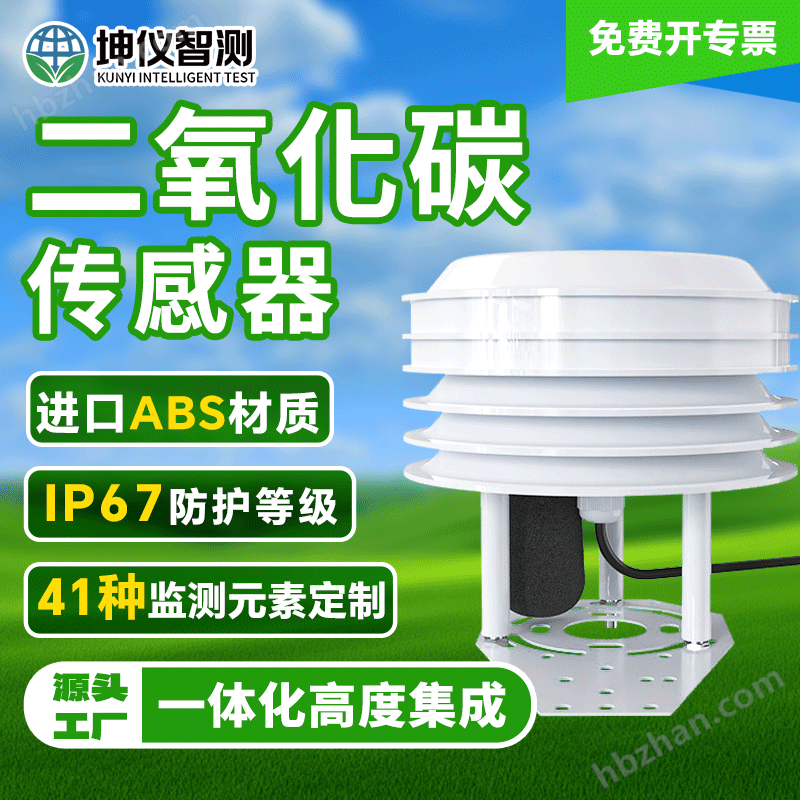



Integrated carbon dioxide sensor
NegotiableUpdate on 01/08
- Model
- Nature of the Manufacturer
- Producers
- Product Category
- Place of Origin
Overview
The integrated carbon dioxide sensor optimizes circuit design to reduce energy consumption, and some models support solar power supply or low-power mode, suitable for long-term unmanned deployment. Long term storage of historical data to assist in studying trends in air quality changes or the causes of pollution events.
Product Details
Integrated carbon dioxide sensorPerformance Characteristics
Quick response: The time from gas entering the detection area to data output is short, which can reflect concentration changes in real time and support dynamic environmental monitoring.
Strong stability: Built in temperature compensation module to reduce the impact of environmental temperature fluctuations on measurement results; Some models adopt anti-interference design (such as sealed optical path, anti-corrosion shell) to extend their service life.
Low power consumption and long lifespan: Optimizing circuit design to reduce energy consumption, some models support solar power supply or low-power mode, suitable for long-term unmanned deployment.
Product function
Real time monitoring and warning: providing continuous and dynamic CO ₂ concentration data, triggering alarms or linking devices (such as starting ventilation, closing doors and windows) when the concentration exceeds the standard.
Decision support: Provide scientific basis for personal health protection (such as adjusting outdoor activity time), corporate emission control, or government pollution control.
Energy saving optimization: Reduce energy waste through on-demand ventilation, for example, the fresh air system automatically adjusts the ventilation volume based on CO ₂ concentration, reducing air conditioning energy consumption.
Data recording and analysis: Long term storage of historical data to assist in studying trends in air quality changes or the causes of pollution events.
Integrated carbon dioxide sensorPrecautions for use
Environmental adaptation: Avoid installation in high temperature, high humidity, or highly corrosive gas environments to prevent component damage or measurement distortion; Some models require regular cleaning of the breathable film to prevent dust blockage.
Range selection: Choose the appropriate range according to the application scenario (such as agricultural scenarios that may require 0-10000ppm) to avoid data overflow caused by concentration exceeding the limit.
Waterproof and dustproof: Non waterproof models should be kept away from water sources. For outdoor use, it is recommended to choose products with a protection level of IP65 or higher.
Calibration and maintenance: Regularly calibrate sensors (recommended every 6-12 months) to ensure data accuracy; Preheat or calibrate before reusing after long-term idle.
Safe operation: Non professionals should not disassemble the internal components of the sensor to avoid electric shock or damage to the precision structure; Explosion proof models should be selected when dealing with combustible gas scenarios.