-
E-mail
kunyizhice@163.com
-
Phone
18253636694
-
Address
Room 201, Office Building No.1, North Road, 2 kilometers east of the intersection of Jiaowang Road and Weiri Expressway, Yingqiu Town, Changle County, Weifang City, Shandong Province
Product Categories
Shandong Kunyi Intelligent Testing Equipment Co., Ltd
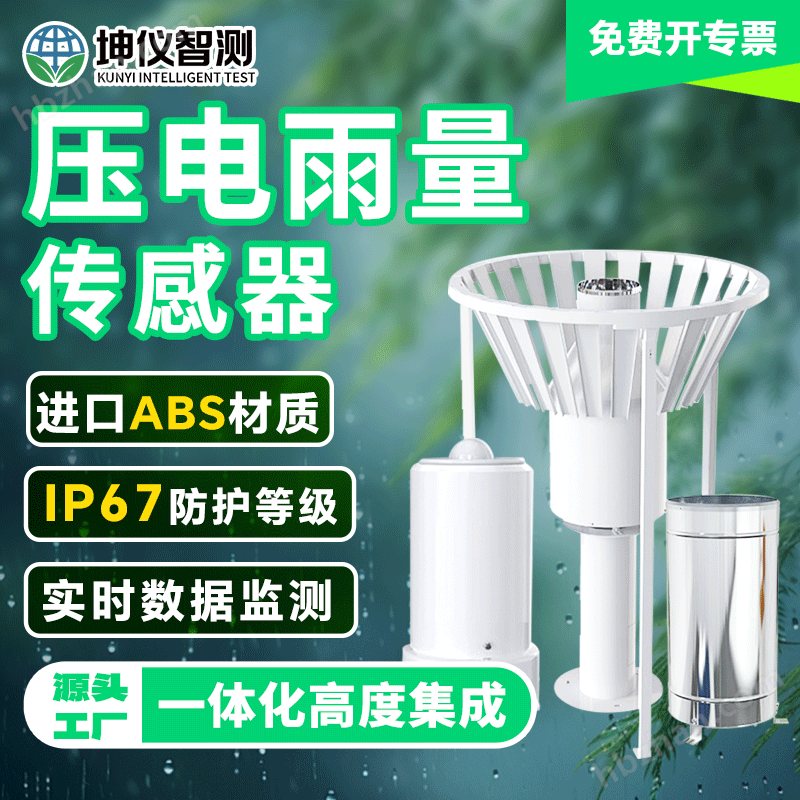


Piezoelectric rain sensor
NegotiableUpdate on 01/08
- Model
- Nature of the Manufacturer
- Producers
- Product Category
- Place of Origin
Overview
Piezoelectric rain sensor has high measurement accuracy and wide range, which can capture the precipitation process from micro drizzle to high-intensity rainstorm, and has no precision drift problem in long-term use. Compact size, easy to carry and disassemble, automatic horizontal calibration after installation, no need for on-site adjustment.
Product Details
Piezoelectric rain sensorIt is a high-precision rainfall measurement device designed based on the principle of piezoelectric effect, with the core component being piezoelectric material (such as PVDF piezoelectric film). When raindrops hit the surface of the sensor, the piezoelectric material generates charges due to deformation, and the amount of charges is directly related to the intensity of rainfall. By measuring the charges, the amount of rainfall can be accurately calculated.
Performance Characteristics
High precision and stability: high measurement accuracy, wide range, can capture the precipitation process from micro drizzle to high-intensity rainstorm, and long-term use of high-precision drift.
Strong anti-interference ability: no exposed parts, can filter environmental interference signals such as leaves, dust, insects, etc., ensuring data accuracy.
24/7 working ability: unaffected by weather changes, supports monitoring of rainfall duration in seconds, and adapts to special temperature and humid environments.
Low power consumption and maintenance free: Low power consumption, supports solar power supply, suitable for long-term deployment in the field; The arc-shaped contact surface design reduces rainwater residue, and daily maintenance only requires keeping the surface clean.
Easy installation: compact size, easy to carry and disassemble, automatic horizontal calibration after installation, no need for on-site adjustment.
Piezoelectric rain sensorApplication field
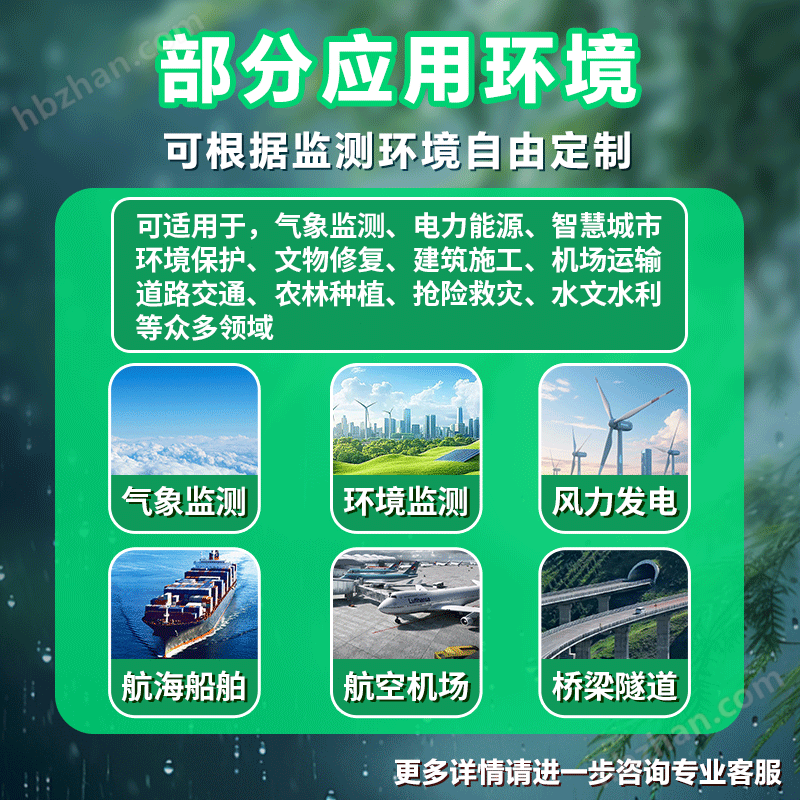
Meteorological monitoring: providing real-time rainfall, intensity, and start and end time data for meteorological stations, assisting in weather forecasting and special weather warnings.
Hydrology and Water Resources: Monitor the water level, flow rate, and velocity of rivers, reservoirs, and lakes to support flood control scheduling and water resource management.
Agricultural irrigation: Combined with intelligent irrigation systems, adjust irrigation amount according to precipitation to achieve water-saving agriculture.
Flood control and drought resistance: Real time monitoring of rainfall provides data support for flood control decisions and optimizes reservoir storage and release plans.
Geological hazard warning: Combining soil moisture, terrain and other data to warn of disasters such as landslides and mudslides.
Traffic road monitoring: providing traffic management departments with information on road rainfall, assisting in intelligent traffic management such as speed limits and warnings for flooded sections during rainy days.
Wind power generation: Monitor the impact of rainfall on equipment operation, assist in lightning protection and anti-corrosion design, and extend equipment life.