-
E-mail
3471633935@qq.com
-
Phone
18353515244
-
Address
Yantai Development Zone, Shandong Province
Product Categories
- Solid state thermal storage electric steam unit
- Valley electric heating boiler
- 10KV solid heat storage electric boiler
- Outdoor movable type
- Solid state thermal storage boiler
- Industrial thermal storage electric hot water boiler
- Electric energy storage steam unit
- Solid state energy storage electric boiler
Shandong Free Trade Zone Jinzhe New Energy Technology Co., Ltd


Magnesium oxide steam energy storage system
NegotiableUpdate on 02/24
- Model
- Nature of the Manufacturer
- Producers
- Product Category
- Place of Origin
Overview
Jinzhe New Energy Magnesium Oxide Steam Energy Storage System refers to a thermal energy storage system that uses magnesium oxide bricks as the storage medium and uses the stored heat to generate steam. The heat stored in magnesia bricks comes from low valley electricity, clean wind power, photovoltaic power, etc. By inserting electric heating elements into the heat storage body, the magnesia bricks are heated to 650-750 ℃ using electric heating elements to achieve electric thermal conversion.
Product Details
Jinzhe New EnergyMagnesium oxide steam energy storage systemIntroduction
Magnesium oxide steam energy storage system refers to using magnesium oxide bricks as the heat storage medium and using the stored heat to generate steamstoreCan system. magnesium oxidebrickThe stored heat comes from low valley electricity, clean wind power, photovoltaic power, etc. The electric heating element is inserted into the heat storage body, and the magnesium oxide brick is heated to 650-750 ℃ by the electric heating element to achieve electric thermal conversion. The thermal storage body is wrapped in insulation materials to achieve heat storage. When steam needs to be produced again, pure water is connected to the built-in steam generator, and saturated steam of no more than 2.5 MPa is generated through heat exchange. The entire operation process is controlled by an intelligent control system with a high degree of automation. Due to the fact that magnesia brick is a solid medium with a different form from the heat storage media such as water and molten salt used in the industry, it is also known as a solid energy storage system. Jinzhe New Energy refers to it as a solid energy storage heating unit.
There are two options for the input voltage level of the unit: 380V and 10KV. High power units above 600KW can directly input 10kV high voltage, saving users a large amount of transformer capacity expansion costs. They operate safely and reliably, with a high degree of automation.
This unit is equipped with its own steam generator components to ensure steam stability or produce superheated steam. The heat storage period is determined according to the local valley electricity period, and the heat release period is flexibly set according to the heat demand, which can achieve various heating needs such as 8 hours, 12 hours, 24 hours, etc.
The modular assembly technology of the product is mature, and the maximum single module steam output of the 10KV high-voltage direct entry unit is 1.5 tons/hour. Larger demand can be assembled modularly on this basis. Single module steam production of 380V unitzuiUp to 500kg/hour, single machine outputzuiApproximately 4 tons per hour.


Magnesium oxide steam energy storage systemApplication Examples


On December 3, 2022, two solid electric thermal storage steam generators (also known as solid thermal storage steam generators, valley electric thermal storage steam generators, etc.) from Jinzhe New Energy were loaded and shipped to the installation site of Henan Rongchi Clothing Co., Ltd.
Henan Rongchi Service Co., Ltd. is located in Fan County, Puyang City, Henan Province. It is the third 1000 person factory fully owned by Nantong Sanrong Trading Co., Ltd. in Henan Province. The company mainly produces pants and is one of the core suppliers for the global fast fashion brand "Uniqlo" and many European and American brands. During the clothing production process, steam ironing is required. In this project, we have equipped it with a solid thermal storage steam unit with a rated input power of 180KW, a rated steam pressure of 0.4MPa, and an hourly steam production of 200KG. It is an inspection free electric steam generator. After the arrival of the unit components and supporting auxiliary equipment at the site, our technical personnel, installation team, and users worked together to complete the installation and commissioning of two sets of equipment in just 15 days, once again demonstrating the efficient delivery capability of Jinzhe New Energy.
After more than ten days of operation and testing, the Jinzhe New Energy Solid State Electric Thermal Storage Steam Generator has shown significant advantages. Compared with the user's existing biomass steam generator, our electric steam boiler consumes electricity mainly during the valley electricity period, which can save more than 30% of steam costs; High steam quality and stable steam pressure; Fast exhaust speed, able to start and stop at any time; High degree of automation, capable of achieving unmanned operation.
It is worth mentioning that our solid electric thermal storage steam generator is equipped with specialized steam generator components and adopts its own constant temperature heating mode, which can ensure stable production of steam while also increasing the steam temperature according to actual needs, so that the produced steam has a certain degree of superheat, effectively solving the problems of unstable pressure and serious water carryover in Rongchi Company's original steam ironing system.
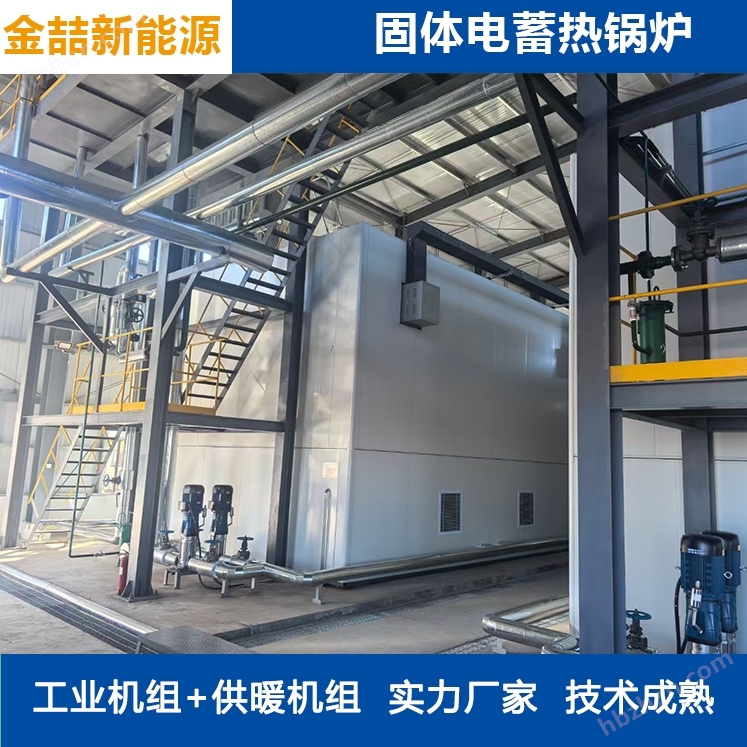
The following picture was taken during the boiler commissioning period.

The magnesium oxide steam energy storage system is currently one of the practical applications of valley power storage for steam supply in the market. Jinzhe New Energy is one of the few manufacturers that has put this technology into application. About 700KWH of electricity is needed to produce one ton of steam, so the power distribution load of electric steam units is high. Solid energy storage steam units can use 10KV high-voltage power supply, with a current of 1/27 of 380V power supply, which can save huge cable costs. At the same time, the unit can adopt 10KV direct power supply heating, which can save transformer capacity expansion and equipment investment, and can save a lot of upfront investment.
Four main technical parameters of thermal storage electric steam boiler
Traditional boilers usually only have two main parameters: output power and thermal efficiency, while thermal storage electric boilers have four main parameters: input power, output power, heat storage capacity, and thermal efficiency.
1、 Input power:
Input power, also known as heating power or thermal storage power. The power of electric heating determines how long it takes to fully store the heat. If the heating power is too low, it will require the use of electricity outside of valley time, increasing operating costs. If the heating power is too high, it will result in underutilization of valley time, wasting capacity electricity costs, and increasing unnecessary cable investment.
2、 Heat storage capacity:
The heat storage capacity is the main parameter that determines the price of electric thermal storage boilers. This parameter determines how much total heat can be output without heating after being fully charged. The more heat storage capacity is required, the larger the volume of the equipment, and the higher the equipment price. Insufficient heat storage can cause the heat to be released before the valley electricity time, requiring the use of flat or even peak electricity to supplement, which can lead to insufficient heating in the afternoon.
The main factors determining the heat storage capacity of an electric thermal storage boiler are the storage capacity of the storage medium itself and the number of storage elements.
3、 Heat release power:
Heat release power, also known as output power, is equivalent to the output power of traditional boilers and is calculated based on the heat load. Because the output power of a thermal storage power boiler decreases as the temperature of the thermal storage body decreases, it is necessary to ensure that the rated output power can be maintained before the start of the valley time each day, that is, when the temperature of the thermal storage body is low. Otherwise, it will cause insufficient heating capacity and require additional heating. Therefore, the output power of a thermal storage boiler is actually greater than or equal to the rated output power in the parameter table.
The main factors affecting the output power of electric thermal storage boilers are the design of heat exchange modules and insulation design. Poor design of the heat exchange module can result in a mismatch between heat output and heat demand. And insulation design determines the size of heat loss.
4、 Thermal efficiency:
Due to the fact that the operation of a thermal storage electric boiler consists of three steps: heating, heat storage, and heat release, the efficiency of the entire system that completes these three steps is the traditional boiler efficiency. The specific calculation method is as follows:
Thermal efficiency of thermal storage and power boiler=effective heat output of thermal storage and power boiler during one thermal storage and release cycle ÷ input heat *. Among them, the output heat is the heat obtained from the load end, that is, the heat output by the heat exchanger. The input heat is the numerical value obtained by converting the power consumption of the unit into heat.
Some manufacturers confuse the public and use an electric heating efficiency of 99% to impersonate system efficiency, but in fact, the electric heating efficiency itself is very high. The losses of this system mainly occur in the insulation and output stages, and the overall efficiency should be ensured to be 95%.
Ultimately, thermal efficiency is a comprehensive evaluation indicator that includes data calculations for heating power, heat storage, and heat release power.


