-
E-mail
xiajm0008@126.com
-
Phone
13328156668
-
Address
No. 310 Jinshan Road, Jiangyin High tech Zone, Wuxi City, Jiangsu Province
Product Categories
Jiangsu Taikun Environmental Protection Technology Co., Ltd

Monitoring system for waste incineration pollutant treatment process
NegotiableUpdate on 03/01
- Model
- Nature of the Manufacturer
- Producers
- Product Category
- Place of Origin
Overview
1、 System Overview: The flue gas from garbage incineration contains pollutants such as smoke, acidic gases, heavy metals, and dioxins
Product Details


1、 System Overview
The flue gas from garbage incineration contains pollutants such as smoke, acidic gases, heavy metals, and dioxins. In order to prevent secondary pollution to the environment caused by garbage incineration, it is necessary to strictly control the temperature of garbage incineration above 850 ℃ and stay for more than 2 seconds to ensure the decomposition of dioxins. Simultaneously adopting the dry flue gas purification process with the addition of reaction additives and hydrated lime, the flue gas emissions meet international advanced standards.
Garbage leachate is mainly produced in garbage storage tanks, which is caused by the discharge of water from the garbage after fermentation and decay in the storage tanks. Its characteristics are strong odor, high concentration of organic pollution, and high ammonia nitrogen content.
The incineration process of garbage and the treatment of leachate directly affect residents' daily lives. The Opinions of the State Council on Strengthening Key Work of Environmental Protection require that in order to further improve the level of automatic monitoring of pollution sources, the monitoring of pollution sources must be transformed from "point end monitoring" to "whole process monitoring". Therefore, it is necessary to monitor the working process of waste incineration exhaust gas and leachate treatment.
2、 System composition
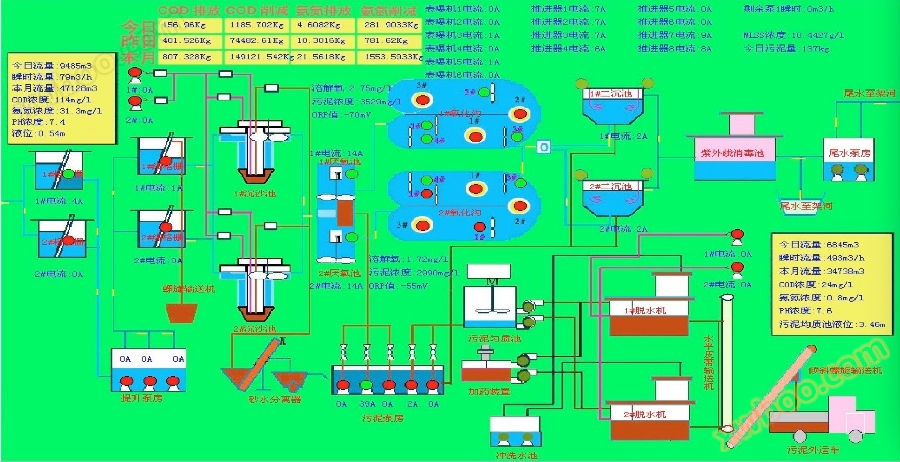
The monitoring system for garbage incineration treatment process consists of two parts: on-site monitoring system (garbage treatment process monitoring substation) and central monitoring platform.

1Garbage disposal process monitoring substation
The garbage disposal process monitoring substation consists of three parts: parameter monitoring, data collection and transmission, and application software.
parameter monitoringBy using a dedicated data conditioner, the main parameter signals during the garbage incineration process are processed into a data format that meets the requirements of online monitoring of pollution sources, that is, accurate, complete, and systematic acquisition of key operating parameter data and pollutant emission monitoring data of the main facilities in the garbage incineration process.
Data collection and transmissionBy using a dedicated wireless data acquisition device, the main data during the waste incineration process is collected, stored, and sent to the dedicated emission reduction computer of the waste incineration plant for its own emission reduction management; At the same time, data is transmitted wirelessly to the remote monitoring center to achieve monitoring and management of the waste incineration process by the environmental management department.
application softwareThrough the use of a dedicated computer for reducing emissions in waste incineration plants, data queries, data judgments, fault alarms, and condition assessments can be achieved. On site monitoring data can be statistically analyzed, and the operational status of treatment facilities can be determined and statistically analyzed, providing technological support for reducing emissions in waste incineration plants.
2Central monitoring platform
The central monitoring platform includes a pollution source central process monitoring system. Accept information from multiple on-site monitoring systems; Realize on-site data aggregation, alarm management, statistical analysis, total quantity verification, pollution discharge fees, and other functions.
3、 System design philosophy
1Transform end monitoring into full process control.
The system comprehensively uses automatic control, modern communication, Internet, database and other technologies, through the digital management of the whole process of online data collection, transmission, processing, calculation, analysis, release, sharing, etc. of the waste incineration treatment system, and the use of statistical principles, combined with process control, environmental protection and other professional knowledge, to carry out "full supervision and full control" of the waste incineration treatment process, changing the past situation of only measuring but not controlling, separation of prevention and control, so as to achieve the integration of prevention, control and governance.
2The process monitoring data collection has high reliability and authenticity.
The most crucial aspect of monitoring the process of garbage incineration is the reliability and authenticity of data collection. The system adopts the following monitoring data collection methods:
(1) The monitored data must be obtained from relevant online monitoring instruments (such as CEMS) or retrieved from the front-end nodes of the DCS system for waste incineration.
(2) The uploaded data should reflect the total emissions of major pollutants, the total amount during the time period, instantaneous flow rate, real-time concentration, and the working current and status of each major facility for waste incineration. At the same time, it can monitor the materials used in the waste incineration process.
3Based on the "Process Monitoring Technology Guidelines" of the Ministry of Environmental Protection as the design premise.
The construction of the monitoring system for garbage incineration treatment process is based on the "Process Monitoring Technical Guidelines" of the Ministry of Environmental Protection, and combined with actual requirements.
4、 Social and environmental benefits
1Provide basic source data for the total amount verification of environmental management departments.
It can monitor and collect online data on pollution generation, pollution control process, pollution emissions, etc., realizing the transformation from "point end monitoring" to "whole process monitoring", and providing basic source data for the total amount verification of environmental management departments.
2Truly grasp the comprehensive operation status of pollution control and treatment in garbage incineration plants.
Being able to monitor the pollution control process and establish relevant models to analyze the operation status of pollution control facilities and determine the authenticity of emission data; At the same time, the information can be transmitted in real-time to the pollution source center end process monitoring system of the competent department, which facilitates the management department to grasp the comprehensive operation status of the waste incineration plant's pollution treatment.
3Requirements for facilitating the emission reduction management of waste incineration plants themselves.
By using this system, waste incineration plants can real-time monitor the dynamics of waste pollution control processes and meet their own emission reduction management requirements; At the same time, by analyzing the materials used in the processing, cost reduction and consumption reduction are implemented.
Similar Product Recommend