-
E-mail
lixinghua@yunjingtianhe.com
-
Phone
13276363035
-
Address
Building 1, Weifang High tech Zone Optoelectronic Industry Accelerator (Phase I), No. 155 Guangdian Circuit, Weifang High tech Zone, Shandong Province
Product Categories
Shandong Tianhe Environmental Technology Co., Ltd

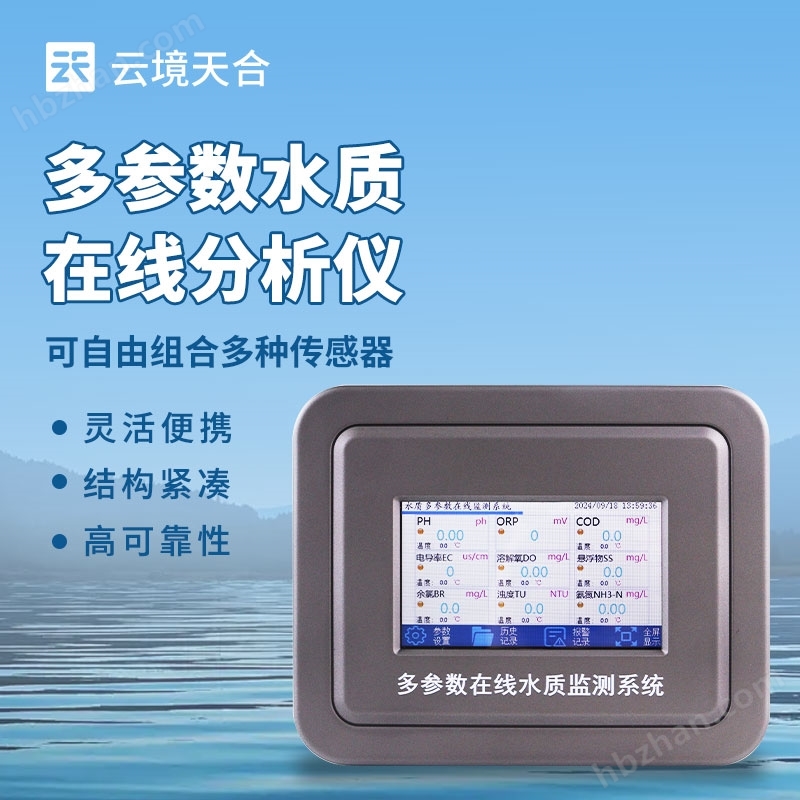
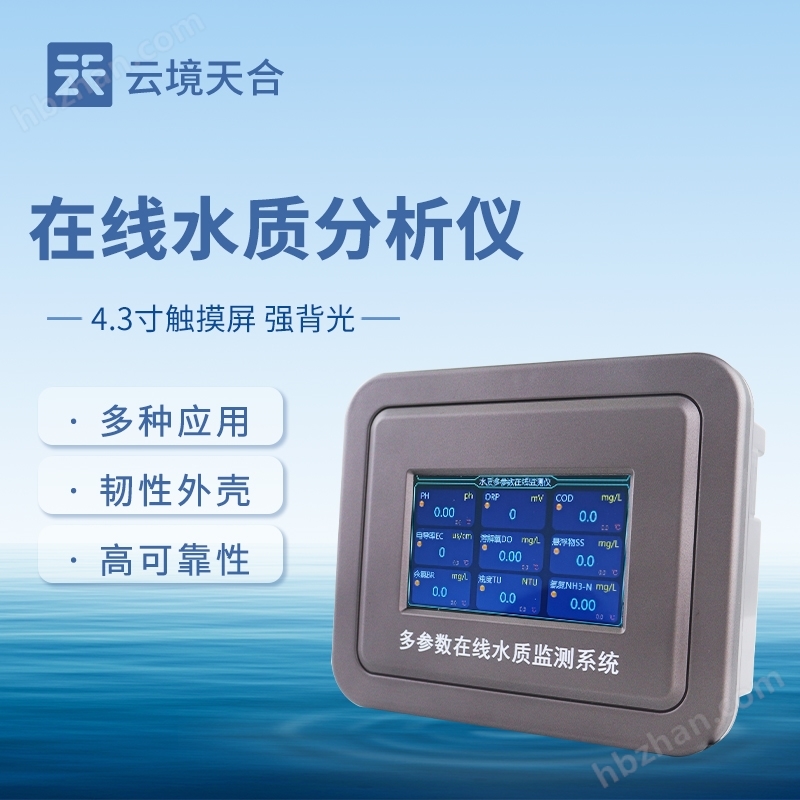


Online hardness detection instrument for water quality
NegotiableUpdate on 01/09
- Model
- Nature of the Manufacturer
- Producers
- Product Category
- Place of Origin
Overview
The online hardness detection instrument for water quality can continuously and automatically monitor changes in hardness in water bodies, timely reflect water quality conditions, and help staff quickly adjust treatment processes. By using sensor technology and precise measurement circuits, the content of calcium and magnesium ions in water can be accurately detected with minimal measurement errors. The ability to automatically collect, process, and analyze samples greatly improves detection efficiency. Easy to operate, simply follow the steps in the manual to complete the test, without the need for professional technicians or complex equipment. The chemical reagents used have high stability and can ensure the effectiveness of the reagents for a long time, which is beneficial for long-term use
Product Details
Online hardness detection instrument for water qualityIt can continuously and automatically monitor changes in hardness in water bodies, timely reflect water quality conditions, and help staff quickly adjust treatment processes. By using sensor technology and precise measurement circuits, the content of calcium and magnesium ions in water can be accurately detected with minimal measurement errors. The ability to automatically collect, process, and analyze samples greatly improves detection efficiency. Easy to operate, simply follow the steps in the manual to complete the test, without the need for professional technicians or complex equipment. The chemical reagents used have high stability and can ensure the effectiveness of the reagents for a long time, which is very important for users who conduct long-term water quality monitoring. The chemical reagents used are all non hazardous materials and will not cause harm to human health and the environment. At the same time, the device itself also has multiple safety protection measures, such as overload protection, short circuit protection, etc., to ensure that the power can be automatically cut off in abnormal situations and prevent accidents from occurring.

1、 Product Introduction
Online hardness detection instrument for water qualityIt is an instrument that can monitor water hardness and chloride ions online, and can quickly and accurately record key parameters in water bodies. At the same time, the instrument supports the expansion of water quality multi parameter sensors, which can be combined and configured according to different needs and applications, record and store historical monitoring data and alarm history records, and support the export of historical data. The RS485 interface supports the MODBUS-RTU communication protocol, making it convenient for users to communicate freely. It can connect and transmit data with devices such as PLC, DCS, configuration software, DTU, etc.
2、 Application Fields
1. Factory boiler water quality monitoring: used to prevent the formation of scale, prevent equipment corrosion, and ensure equipment safety.
2. Groundwater monitoring: used to monitor parameters such as pH value, conductivity, temperature, etc. of groundwater, in order to timely detect and solve water quality problems.
3. River and lake monitoring: used to monitor the water quality of rivers and lakes, such as dissolved oxygen, turbidity, ammonia nitrogen and other parameters, in order to take timely pollution control measures.
4. Ocean monitoring: used to monitor the water quality of the ocean, such as salinity, dissolved oxygen, temperature and other parameters, in order to timely detect and control marine pollution.
5. Sewage treatment: used to monitor the water quality parameters of sewage, such as pH value COD、 Ammonia nitrogen and other substances are used to control and regulate the sewage treatment process.
6. Industrial production: used to monitor the water quality status in the industrial production process, such as pH, conductivity, dissolved oxygen and other parameters, in order to adjust the process in a timely manner and ensure product quality.
7. Water treatment plant: used to monitor the pH value, dissolved oxygen, turbidity and other parameters of tap water, ensuring the safety and hygiene of tap water.
8. Scientific research: used for water quality monitoring in the field of scientific research, such as eutrophication of lakes, climate change, and other studies.
3、 Product Features
1. High reliability: suitable for long-term work in outdoor environments, with stable measurement and strong anti-interference ability.
2. Flexible and portable: Each probe can be freely combined and replaced independently, plug and play.
3. Scalability: Multiple sensors can be freely combined.
4. Multiple applications: rapid on-site measurement, emergency monitoring, or long-term online monitoring of groundwater, river water, lake water sources, and urban pipeline water.
5. Resilient shell: ABS+PC material, corrosion-resistant, capable of long-term continuous normal operation.
6. Compact structure: can be installed in smaller sizes.
7. Communication connection: RS485 expansion interface, isolated master/slave interface for independent communication.
4、 Technical parameters of multi parameter water quality analyzer
| display output | 4.3-inch touch screen with strong LED backlight, operable under direct sunlight |
| power supply | DC power supply: DC12V |
| power consumption | The power consumption of the instrument is about 12V/1W |
| Sound output | buzzer |
| communication protocol | Standard RS485 Modbus RTU protocol and device master/slave transmission channel support |
| Main materials | ABS+PC material |
| Storage temperature | -20 to 70 ℃ |
| Operating temperature | -10 to 50 ℃ |
| Protection level | IP65 |
| size | 175mm * 140mm * 49mm (length x width x height) |
| weight | About 0.5KG |
5、 Sensor parameters
| model | name | measurement range | principle | measurement accuracy | resolution | Is it standard | remark |
| S1S | cod | 0~1000mg/ L | UV254 absorption method | ±5%, ±0.3℃ | 0.1mg/L | COD turbidity integrated; Self cleaning with brush and temperature compensation | |
| turbidity | 0~400NTU | scattered light method | ± 1%, ±0.3℃ | 0.1NTU | |||
| S2 | Water hardness | 0~1000.0mg/L | Contact electrode method | ± 10% of the reading; ±0.3℃ | 0.1mg/L | √ | |
| S3 | pH | 0~14(ph) | Electrochemistry (salt bridge) | ± 0.1PH; ±0.1℃ | 0.01 | Warm compensation | |
| S4 | residual chlorine | 0~5.00 mg/L | Ion selective electrode method | ± 5% of the reading; ±0.3℃ | 0.01mg/L | Integrated residual chlorine pH; The best accuracy is achieved when the flow rate is between 0.42m/s and 0.85m/s; Warm compensation | |
| pH | 0~14(ph) | Electrochemistry (salt bridge) | ± 0.1PH; ±0.1℃ | 0.01 | |||
| S5 | ammonia nitrogen | 0~1000mg/l | Ion selective electrode method | 10% of the reading, ± 0.5 ℃ | 0.01mg | Ammonia nitrogen pH integrated; Warm compensation | |
| pH | 0~14(ph) | Electrochemistry (salt bridge) | ± 0.1PH; ±0.1℃ | 0.01 | |||
| S6 | ORP | -1500mv~1500mv | Electrochemistry (salt bridge) | ± 6mv | 1mV | ||
| S7 | conductivity | 0~10000uS/cm | Contact electrode method | ± 1.5%; ±0.1 °C | 1uS/cm | Warm compensation | |
| S7H | High range conductivity | 0~30000μS/cm | Contact electrode method | ± 1.5%; ±0.1 °C | 1uS/cm | High range conductivity TDS salinity integrated sensor; Warm compensation | |
| TDS | 0-10000ppm | Contact electrode method | ± 1.5%; ±0.1 °C | 1ppm | |||
| salinity | 0-10000ppm | Contact electrode method | ± 1.5%; ±0.1 °C | 1ppm | |||
| S8 | dissolved oxygen | 0~20mg/L | Fluorescence lifetime method | ±2%, ±0.3℃ | 0.01mg/L | Warm compensation | |
| S9 | turbidity | 0~1000NTU | scattered light method | ±1% , ±0.3℃ | 0.1NTU | Warm compensation | |
| S9S | Self cleaning turbidity | 0~1000NTU | scattered light method | ±1% , ±0.3℃ | 0.1NTU | Self cleaning with brush; Warm compensation | |
| S10 | suspended solids | 0~2000mg/L | scattered light method | ± 5% (depending on sludge homogeneity) | 0.1mg/L | ||
| S11S | sludge concentration | 0~20.000g/L | scattered light method | ± 5% (depending on sludge homogeneity) | 0.001g/L | Self cleaning with brush | |
| S14 | chloride ion | 0-3500.0mg/L | Ion selective electrode method | ±5%; ±0.3℃ | 0.1mg/L | √ | |
| S15S | chlorophyll | 0~400ug/L | fluorescence method | R²>0.999 | 0.01ug/L | Self cleaning with brush; Warm compensation | |
| S16S | blue-green algae | 0~200.0Kcells/mL | fluorescence method | R²>0.999 | 0.1Kcells/mL | Self cleaning with brush | |
| S17S | 水中油 | 0~60ppm | fluorescence method | 0.1ppm | 0.01ppm | Self cleaning with brush | |
| S20 | transparency | 50~1000mm | scattered light method | ± 5% (depending on sludge homogeneity) | 1mm | Warm compensation | |
| S21 | water temperature | −20℃~85℃ | High precision digital sensor | ±0.1℃ | 0.1℃ |
Similar Product Recommend