-
E-mail
filter_gd@126.com
-
Phone
15920106096
-
Address
302A, Building 2, Yangtao Center, Nancun Town, Panyu District, Guangzhou City
Product Categories
- Activated carbon/carbon sintered sieve plate
- PVDF sintered filter cartridge
- Copper powder sintered sieve plate
- PP sintered sieve plate
- Titanium sintered sheet/plate
- Copper powder sintered rod
- HDPE sintered filter cartridge
- PP melt blown cotton silencer
- PP sintering rod
- Titanium powder sintered sieve plate
- Activated carbon/carbon sintered rod
- Activated carbon, carbon sintered sheet/plate
Guangzhou Filter Source Filter Equipment Co., Ltd




Polymer HDPE sintered filter cartridge
NegotiableUpdate on 05/06
- Model
- Nature of the Manufacturer
- Producers
- Product Category
- Place of Origin
Overview
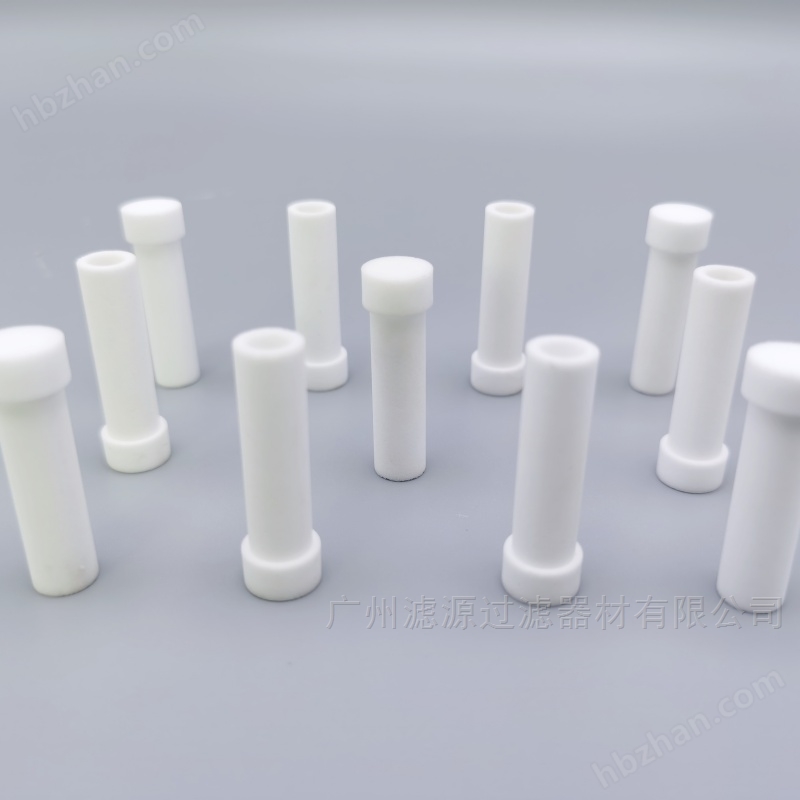
Polymer HDPE sintered filter cartridge is a sintered process polymer material filter cartridge produced by Guangzhou Filter Source Filter Equipment Co., Ltd. It has a wide range of applications
Product Details
Polymer HDPE sintered filter cartridgeMaterial Introduction:
HDPE (High Density Polyethylene) is an important branch of the polyethylene (PE) family. Due to its linear chain structure, few and short branches, and tight molecular packing, it has the characteristics of high density and balanced performance. It is one of the widely used general-purpose plastics worldwide, covering many fields such as people's livelihood, industry, and municipal engineering.
Physical and mechanical properties: Density of 0.941-0.965g/cm ³, milky white semi transparent solid, odorless and tasteless; Rigidity and hardness are higher than ordinary PE, with excellent impact resistance (especially in low-temperature environments), wear resistance, and low friction coefficient. It can withstand certain external impacts without easily breaking.
Temperature and corrosion resistance: melting point of 130-135 ℃, continuous use temperature of 60-80 ℃ (short-term can withstand 100 ℃), outstanding low temperature resistance (can withstand -60 ℃); Stable to most chemical substances such as dilute acids and bases, insoluble in common organic solvents such as ethanol and gasoline, but not resistant to strong oxidizing liquids such as concentrated nitric acid and potassium permanganate.
Other advantages: low breathability (better barrier to oxygen and carbon dioxide than low-density PE), good electrical insulation; Good processing fluidity, can be mass-produced through various processes, and food grade HDPE meets safety standards such as FDA and GB 4806. It is non-toxic and odorless.
Process description of sintered filter element:
The molding of HDPE filter cartridge is based on the "powder sintering" technology: specific particle size HDPE powder (usually 0.5-200 μ m) is uniformly filled into a customized mold, and kept at high temperature (close to the melting point of HDPE, 120-135 ℃) and low pressure (0.5-5MPa) for a period of time to melt the surface of the powder particles and produce viscosity, forming a "neck like connection" between particles; Subsequently, it is slowly cooled, and the melted part solidifies and forms a three-dimensional porous channel without any melted gaps between particles, ultimately producing a filter cartridge with specific pore size, porosity, and strength.
In short, the essence of the process is to balance the melting degree of HDPE powder by controlling the sintering temperature and time - ensuring that the particles adhere to form sufficient strength while retaining reasonable pores to achieve filtration function.
Optional aperture accuracy (micrometers): 0.5u, 1um, 5um, 10um, 30um, 50um, 80um, 100um, 150um, 200um
Size description method: outer diameter * inner diameter * length
The main structural methods of the product are hollow tubes (double or single) and solid columns. Customization of products with irregular structures is acceptable.
The structure of HDPE sintered products is diversified, including sintered sheets, sintered plates, vulcanized plates, spherical shapes, etc.
Characteristics of sintering filter cartridge process
Strong controllability of pore size: By adjusting the powder particle size, sintering temperature, and time, filter cartridges with pore sizes ranging from 1-100 μ m can be produced to meet different filtration requirements (such as 1-5 μ m for precision filtration and 20-50 μ m for coarse filtration).
Good chemical stability: HDPE itself is resistant to acid and alkali, organic solvents, and has no binder after sintering (pure HDPE molding). It will not release impurities due to chemical corrosion and is suitable for filtering strong corrosive media (such as chemical acid and alkali liquids).
Stable structure and long lifespan: The three-dimensional interconnected porous structure is not easy to block (can be backwashed and regenerated), and HDPE is resistant to high temperatures (short-term resistance to 100 ℃) and aging. Under normal use conditions, the lifespan can reach 1-3 years.
Application scenarios and process adaptation
polymerHDPE sintered filter cartridgeThe process parameters need to be customized according to the application scenario, and typical adaptation cases are as follows:
Drinking water filtration: pore size 5-10 μ m, porosity 50%, using food grade HDPE powder+vacuum sintering to ensure no odor or impurity release.
Chemical wastewater filtration: pore size 20-50 μ m, porosity 45%, using corrosion-resistant HDPE powder, sintering temperature increased to 132-135 ℃, enhancing filter strength to withstand wastewater pressure.
Medical liquid filtration: pore size 1-3 μ m, porosity 40%, using high-purity HDPE powder+ultrasonic cleaning+sterile drying, in compliance with GMP standards, to avoid liquid contamination.

Similar Product Recommend