-
E-mail
filter_gd@126.com
-
Phone
15920106096
-
Address
302A, Building 2, Yangtao Center, Nancun Town, Panyu District, Guangzhou City
Product Categories
- Activated carbon/carbon sintered sieve plate
- PVDF sintered filter cartridge
- Copper powder sintered sieve plate
- PP sintered sieve plate
- Titanium sintered sheet/plate
- Copper powder sintered rod
- HDPE sintered filter cartridge
- PP melt blown cotton silencer
- PP sintering rod
- Titanium powder sintered sieve plate
- Activated carbon/carbon sintered rod
- Activated carbon, carbon sintered sheet/plate
Guangzhou Filter Source Filter Equipment Co., Ltd


Sintered activated carbon carbon sieve plate
NegotiableUpdate on 05/06
- Model
- Nature of the Manufacturer
- Producers
- Product Category
- Place of Origin
Overview
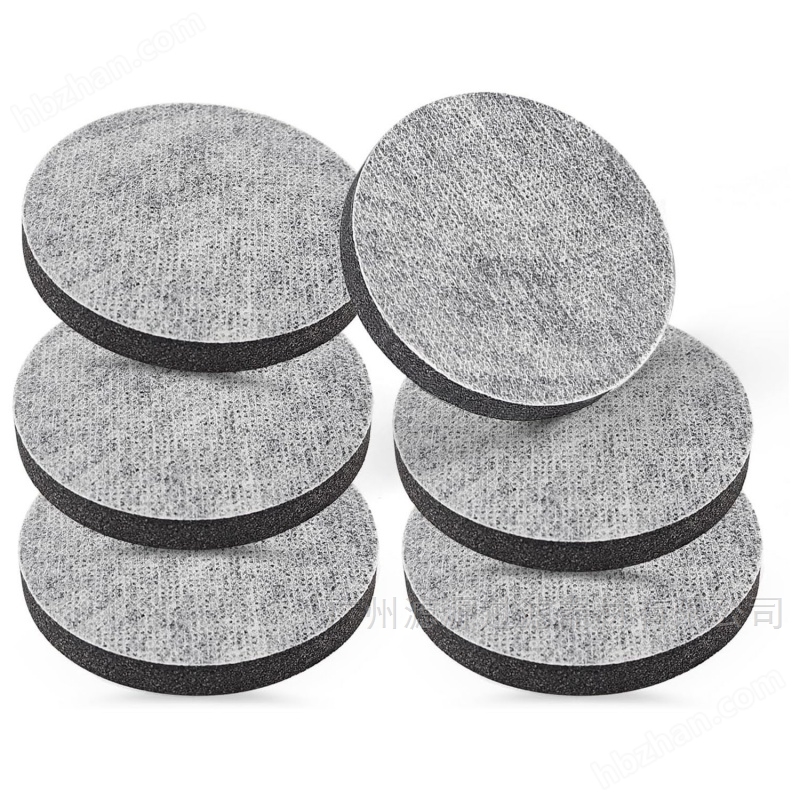
Sintered activated carbon sieve plate is a rigid porous adsorbent material formed by integrating high specific surface area activated carbon micro powder and special binder through high-temperature compression sintering process.
Product Details
Sintered activated carbon carbon sieve plateIn the fields of industrial waste gas treatment, VOCs recovery, air separation and purification, medical oxygen production, and new energy storage, unprecedented requirements have been put forward for high selective adsorption and stable filtration performance of gases. Traditional granular activated carbon is prone to pulverization, high pressure drop, and short lifespan, while ordinary filter plates lack adsorption function. How to break the deadlock?
What is sintered activated carbon screen plate?
Sintered activated carbon carbon sieve plateIt is a rigid porous adsorbent material formed by integrating high specific surface area activated carbon micro powder and special binder through high-temperature molding and sintering process. It combines the strong adsorption capacity of activated carbon with the mechanical strength of structured filter materials, forming uniform and interconnected microporous channels, achieving the integration of "filtration+adsorption", and completely solving the problems of carbon leakage, blockage, and channeling of traditional fillers.
Core advantage: Not only "activated carbon", but also "intelligent adsorbent"
High specific surface area/strong adsorption capacity
Selected coconut shell/coal based activated carbon raw materials, with a specific surface area of up to 800-1200 m ²/g, have excellent adsorption efficiency for VOCs (benzene, toluene, formaldehyde, etc.), hydrogen sulfide, ammonia, organic solvent vapors, etc.
Stable structure, zero dust shedding
Whole sintering molding, no adhesive fibers, no loose particles, eliminates downstream equipment pollution caused by "powder falling" during operation, especially suitable for highly sensitive scenarios such as clean rooms, medical oxygen concentrators, fuel cells, etc.
Low wind resistance/high-throughput design
Three dimensional interconnected pore structure, uniform airflow distribution, pressure reduction (more than 30% lower than the same adsorption bed), significant energy-saving effect.
Customizable aperture and thickness, suitable for multiple working conditions
Aperture range: 0.5mm-3.0mm (adjustable)
Thickness: 3mm, 5mm, 10mm, 20mm, etc
Size: Standard disc (Φ 50/100/150mm) or square plate (100 × 100mm, 200 × 200mm), supporting customized shapes.
Temperature and moisture resistance, long lifespan
The working temperature can reach 120 ℃, and its moisture resistance is better than ordinary activated carbon. It still maintains good adsorption activity in high humidity environments; Support thermal desorption regeneration, with performance degradation of less than 15% after 5-10 cycles of use.
Environmentally compliant, safe and reliable
Compliant with environmental standards such as RoHS and REACH, free of toxic additives, and can be recycled at high temperatures or safely buried after disposal.
Typical application scenarios
Industrial waste gas treatment (VOCs recovery)
Used for efficient capture and recovery of organic solvents in exhaust gases from industries such as spraying, printing, and chemical engineering, replacing traditional activated carbon towers and reducing replacement frequency and hazardous waste generation.
Medical Yong/Home Oxygen Generator
As a pre protective layer for molecular sieves, it adsorbs oil mist, water vapor, and organic impurities, prolongs the lifespan of molecular sieves, and improves oxygen purity (≥ 93%).
Air Separation and Gas Purification
In processes such as nitrogen oxygen separation, hydrogen purification, and biogas purification, trace impurities are removed to ensure the effectiveness of the core adsorbent.
New energy and energy storage system
Applied to the air inlet filtration of hydrogen fuel cells, it adsorbs corrosive gases such as SO ₂ and NOx in the air to protect the fuel cell stack.
Laboratory and cleanroom
Used for exhaust terminals of fume hoods and biosafety cabinets to achieve deep purification of harmful gases and ensure the safety of personnel and the environment.

Similar Product Recommend