-
E-mail
595337645@qq.com
-
Phone
13587394548
-
Address
Shaoxing Shangyu Lianghu Industrial Park
Product Categories
Shaoxing Shangyu Juli Fan Co., Ltd


SDS (R) -4.0 Floor mounted Tunnel Bidirectional Jet Smoke Exhaust Fan
NegotiableUpdate on 04/05
- Model
- Nature of the Manufacturer
- Producers
- Product Category
- Place of Origin
Overview
SDS (R) -4.0 floor mounted tunnel bidirectional jet exhaust fan $r $nSDS series tunnel ventilation fan muffler: The length of the muffler is usually twice the diameter of the fan, and when the noise requirements are high, it can also be twice the diameter of the fan. The muffler is fixed to the fan body with bolts.
Product Details


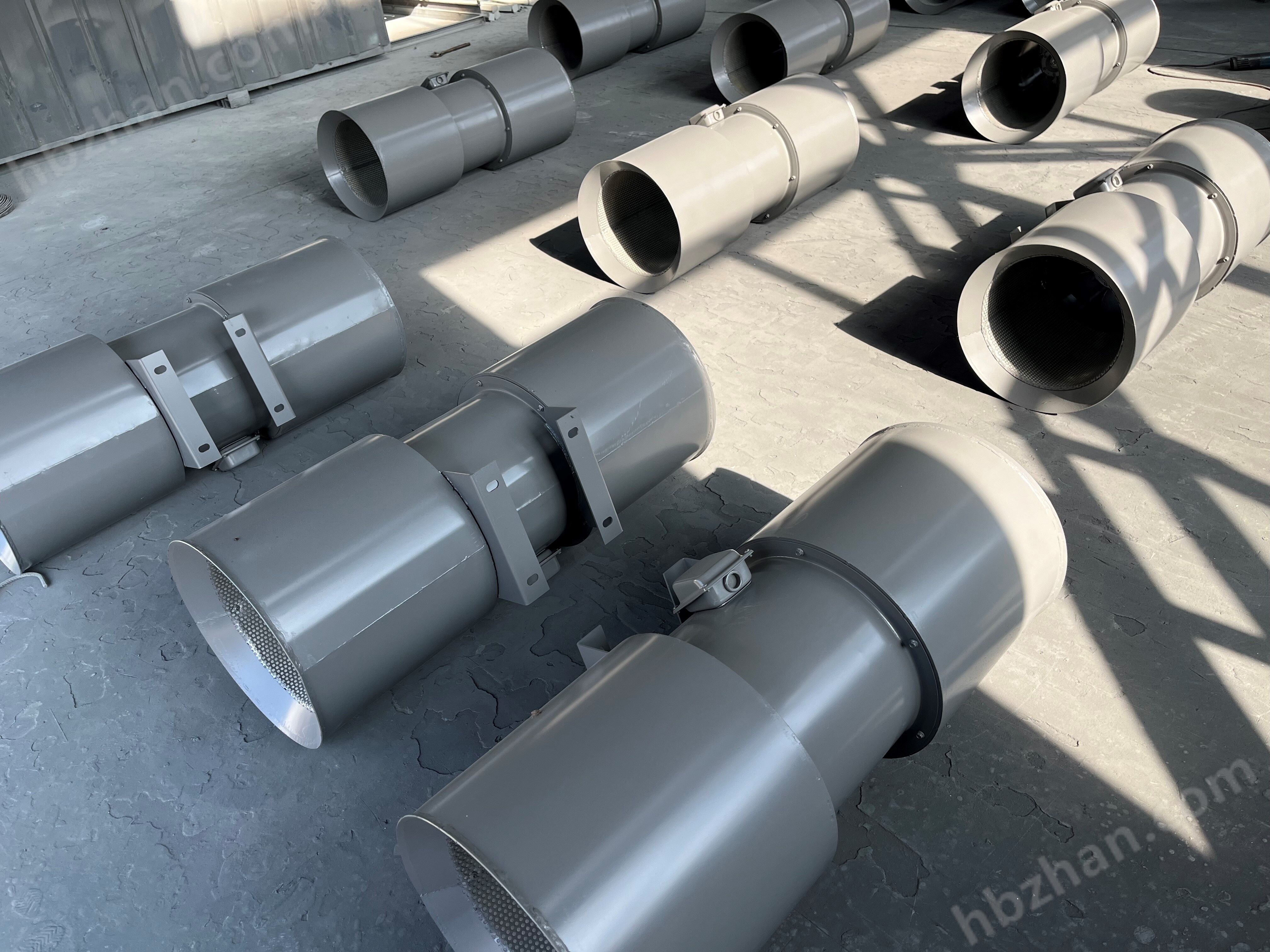

SDS (R) -4.0 Floor mounted Tunnel Bidirectional Jet Smoke Exhaust FanInstallation Notes
Find the center point of the bearing capacity of the channel steel, place the square steel pad on it, and then add a circular steel plate pad according to the height of the equipment. After all are ready, observe whether the pressure gauge reading returns to zero and check whether the connections of each part of the anchor rod tension gauge are reliable. Verify the correctness of the implementation review, confirm its accuracy, and conduct a pressure test until the required pressure is reachedSDS-11.2-4 Tunnel Axial Flow Fire Exhaust FanAfter confirming the accuracy, proceed with the following experiments.
Prepare a set, record the values, and ask the supervising engineer to confirm.
You should be familiar with the basic knowledge of vocal shyness, methods of vocal measurement, and the use of measuring instruments. When using the nozzle method to measure the A-level and octave band sound pressure level of a basin, it may be necessary to pay attention to whether the sound attenuation law of the side test environment meets the conditions of a semi free field. With the increasing number of noise measurement tasks and the rapid development of modern electronic technology, the quality of vocal side basin equipment is constantly improving. i, The types and numbers are also gradually increasing. Due to differences in the purpose and requirements of measuring it, different side devices can be selected and certain methods can be followed to implement sound measurement instructions. Common side LA devices include sound level meters, spectrometers, spectrometers, and timing analyzers. Correctly master the "Noise Side Method for Fans and Roots Blowers" for automatic recorders, recorders, etc.
Tunnel jet fanThe specifications range from 630mm to 1600mm, divided into two categories: unidirectional axial flow fans and reversible (bidirectional) axial flow fans. ZUI has a high thrust of 3500N and can choose high-efficiency and low-noise fans for any load and working condition.
The SDS series jet ventilation fan adopts a process with good quality assurance. The fan housing is formed by spinning and flanging imported from the United States, and the inner wall of the impeller section is metal processed to ensure the coaxiality and strength of the housing, as well as the radial clearance of the blades. The outer surface is hot-dip galvanized or other equivalent coating treatment, which is beautiful and corrosion-resistant, with excellent performance. The fan blades and hub are processed into die-casting mold cavities using Toshiba's fully automatic CNC boring and milling machining center in Japan, and aluminum alloy high (low) die casting is carried out in high-pressure casting and low-pressure casting machines. Through actual use by users such as highway tunnels, railway tunnels, and water conservancy dam projects, the fan's various performance indicators, corrosion resistance, reliability, economy and other technical, quality requirements and economic indicators are fully adapted. The use of various tunnels and subways.
In the construction of basic engineering projects such as subways, highway tunnels, and railway tunnels, the air quality standards and safety factors are met through forced ventilation by fans. As for the ventilation system, it is necessary to maintain good air quality, otherwise it is harmful to human health, as shown in the diagram.
Transportation tunnels can generally be divided into three categories: subway tunnels, highway tunnels, and railway tunnels.
The prerequisite for the safety and reliability of regular and emergency operations is the installation of an environmental control system that ensures coordination and full functionality among various systems.
A mechanical system: ventilation, fire protection, sewage discharge B power system: power supply, transmission and distribution, emergency power
C lighting system: lighting, local lighting, fluorescent indication D communication system: radio, computer terminal
E Transportation system: lighting, signals, signs, monitoring F Control system: monitoring of traffic conditions, equipment conditions, and equipment operation conditions
Tunnel ventilation systems generally have the following three basic methods or can adopt a mixed method:
1. Vertical ventilation system: This is the basic ventilation method. The fresh air flow flows from the entrance end to the exit end of the tunnel, and there is no need to install ventilation ducts along the longitudinal direction of the tunnel. This ventilation method generally uses reversible jet fans. Install the fan at the top or side of the tunnel to achieve comprehensive ventilation in both directions, achieving bidirectional ventilation or smoke control; If the tunnel is long, additional air supply and exhaust shafts must be added, which are connected to the atmosphere to form a mixed ventilation system.
2. Full horizontal ventilation system: Supply and exhaust ducts are set up along the tunnel direction, with fresh air collected from the wind pavilion and exhaust air discharged from the wind tower. Generally, the supply duct is set below the road surface, and the exhaust duct is set at the upper part of the lane. The supply duct and exhaust duct are equipped with supply and exhaust outlets at regular intervals. In case of accidents, exhaust is carried out along the tunnel cross-section in a timely manner to extract smoke.
3. Semi transverse ventilation system: This system can be divided into supply type semi transverse ventilation and exhaust type semi transverse ventilation. Generally, exhaust type semi transverse ventilation is used, with fresh air entering from the opening and exhaust similar to a full transverse ventilation system.
Factors to consider for tunnel ventilation system:
A Project Investment B Power Capacity C Operating Costs D Air Quality E Safety Factors F Guarantee Measures in Emergency Situations
Establish optimization after comprehensive economic analysis of the above factors
Factors for selecting the number and number of ventilation fans in tunnel ventilation systems:
A CO, NOx, and smoke concentration B Vehicle flow rate (vehicle density, speed)
C Wind load (tunnel length * width * height) D Exhaust emissions (vehicle age, quantity)
Emergency measures in case of fire alarm in E
Theoretical basis for thrust calculation of tunnel ventilation system
1. Calculation basis for thrust of tunnel ventilation system
Loss of inlet and outlet resistance? Friction coefficient of tunnel surface and equipment, etc
Vehicle friction coefficient (calculating vehicle motion or piston wind effect under unfavorable conditions)
What is the impact of wind speed outside the tunnel on the entrance and exit under unfavorable conditions? Tunnel terrain and location (slope, altitude)
The required thrust (temperature, pressure, time) in the event of a fire alarm
Theoretical conversion of 2 tunnel depressurization (Pa) to thrust required by jet fan (N)
The thrust of a jet fan is the change in momentum between the inlet and outlet of the fan, i.e. the fan thrust
N=C * mass flow rate * airflow velocity (N)
In the formula: N=wind turbine static thrust (LSO) N value C=empirical correction factor
Mass flow rate=air density * volumetric flow rate
The relative velocity between the jet fan used in the tunnel and the airflow inside the tunnel, the friction coefficient inside the tunnel, and the influence of parallel arrangement within the same group are all related. Therefore, the effective thrust of the jet fan is:
N=N*(1-V/V)C*C
In the formula: N=effective thrust of the fan (N) V=wind speed inside the tunnel (m/s)
V=Jet velocity (m/s) C=Friction coefficient inside the tunnel
C=Flow loss in parallel arrangement of the same group (this loss can be ignored if the fan units are separated by 100 times the diameter of the fan, so that the jet velocity does not affect the operating conditions in the direction of the air flow).
Structural characteristics of SDS (R) -5.6 floor mounted bidirectional jet fan for power tunnel installation
The SDS series tunnel ventilation fan is divided into two ventilation forms: unidirectional jet fan (SDS) and bidirectional jet fan (SDS (R))
The SDS series tunnel ventilation fan body, muffler, and bracket feet are made of steel plate CNC automatic welding and mechanism forming, and the surface is treated with surface coating to ensure the strength and corrosion resistance of the fan
SDS series tunnel ventilation fan impeller: To meet the needs of tunnel ventilation, the SDS series fan can change the number of blades and the angle of the fan blades
Silencer for SDS series tunnel ventilation fan: The length of the silencer is usually twice the diameter of the fan. When noise requirements are high, it can also be twice the diameter of the fan. The silencer is fixed to the fan body with bolts.
SDS series tunnel ventilation fan matching motor: The SDS series jet ventilation fan matching motor is a squirrel cage fully enclosed type, with a flange mounting plate. The motor insulation level is H level, and the anti-corrosion level is IP55. The motor lead out cable can be connected to the junction box on the fan body casing. The motor has a lubricating grease nozzle, and an external metal hose is connected to the lubricating grease nozzle on the fan body casing.
Reversible switching time of the fan: In emergency situations, the forward and reverse switching time of the jet fan is extremely important. The SDS (R) fan has two switching methods: electronic and mechanical, which can switch forward and backward to the rated speed of the fan within 30 seconds.
Please inquire about the performance parameters, appearance, and dimensions of the SDS tunnel jet fan.
SDS (R) -4.0 Floor mounted Tunnel Bidirectional Jet Smoke Exhaust Fan


Similar Product Recommend


