-
E-mail
info@shouxinpam.com
-
Phone
18929460565
-
Address
Nancheng District, Dongguan City, Guangdong Province
Product Categories
Guangdong Shouxin Environmental Protection Materials Technology Co., Ltd
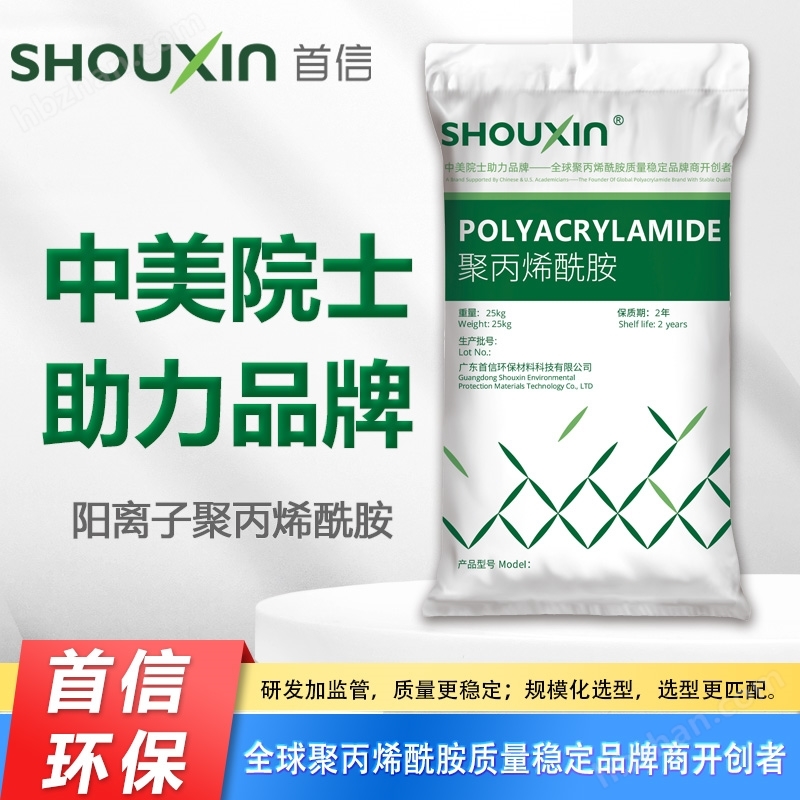


Shouxin brand cationic polyacrylamide - Chinese and American academicians support the brand
NegotiableUpdate on 02/13
- Model
- Nature of the Manufacturer
- Producers
- Product Category
- Place of Origin
Overview
The cationic polyacrylamide (CPAM) of Shouxin brand is a water-soluble linear polymer flocculant made by copolymerizing cationic monomers and acrylamide monomers. Mainly used for purposes such as sewage flocculation and sedimentation, and sludge dewatering.
Product Details
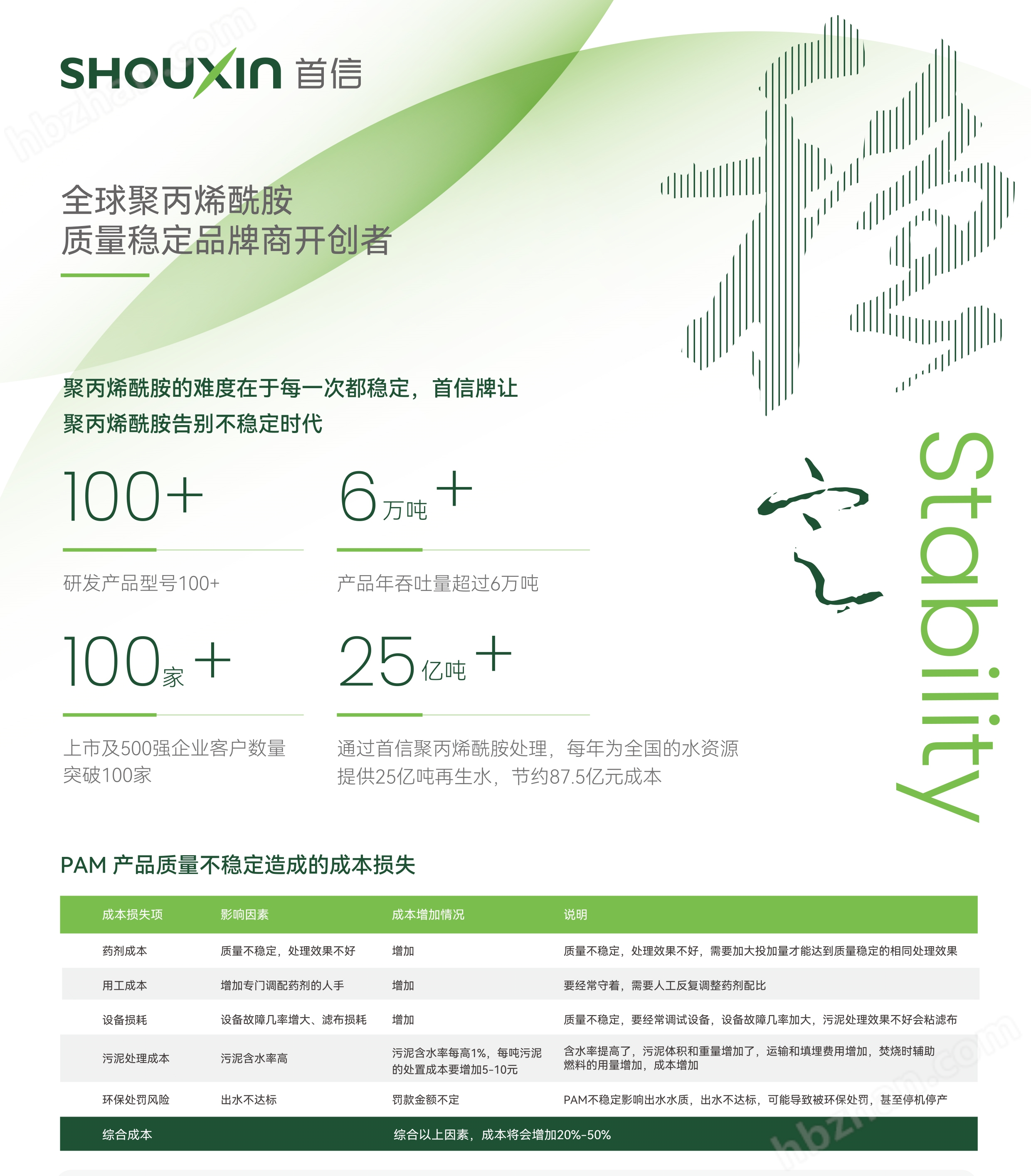


Cationic polyacrylamide (CPAM) is a water-soluble linear polymer flocculant formed by copolymerization of cationic monomers and acrylamide monomers. Mainly used for purposes such as sewage flocculation and sedimentation, and sludge dewatering.
【Shouxin brand cationic polyacrylamide - Chinese and American academicians support the brand】Characteristics:
PAM polyacrylamide is a synthetic polyelectrolyte based on acrylamide monomers and their copolymers, which is a high molecular weight water-soluble polymer. Generally, according to the nature of charge, it can be divided into cationic, anionic, and non-ionic types. PAM polyacrylamide has four major categories of performance.
1、 Flocculation effect
When polyacrylamide PAM is used for flocculation, it is related to the surface properties of the flocculated material, especially the dynamic potential, viscosity, turbidity, and pH value of the suspension. The dynamic potential of the particle surface is the reason for particle inhibition. Adding PAM with opposite surface charges can reduce the dynamic potential and cause coagulation.
2、 Adsorption bridging
Molecular chains are fixed on different particle surfaces, forming polymer bridges between particles to form aggregates and settle
3、 Surface adsorption
Various adsorption of polar functional groups particles on molecules.
4、 Enhanced effect
Molecular chains and dispersed phases are linked together through various mechanical, physical, chemical, and other interactions, forming a network. Polymer polyacrylamide has high viscosity and is one of the widely used varieties in water-soluble polymer compounds.
【Shouxin brand cationic polyacrylamide - Chinese and American academicians support the brand】Product application areas:
1. Used for sewage flocculation and sedimentation treatment
2. Used for sludge dewatering and pressure filtration treatment
3. Additive thickening treatment
4. Used for mud treatment in construction and shield tunneling
5. Used for processing in the petroleum industry
6. Used for river dredging treatment
7. For mineral processing production and wastewater treatment
Similar Product Recommend