-
E-mail
cschuyi@163.com
-
Phone
13508482461
-
Address
8th Floor, Building 3, Changsha Pharmaceutical and Health Industry Park, No. 1048 Zhongqing Road, Kaifu District, Changsha City, Hunan Province
Product Categories
- Online near-infrared turbidity spectrometer
- Online calcium chloride concentration meter
- Electrolyte trace water spectrometer
- Ethylene glycol concentration detector
- Online alcohol concentration analyzer
- Online turbidity detector
- Electronic grade online concentration meter
- Gelatin online concentration analyzer
Hunan Chuyi Electromechanical Co., Ltd


Accurate detection of secondary saltwater turbidity analyzer using near-infrared spectroscopy
NegotiableUpdate on 03/23
- Model
- Nature of the Manufacturer
- Producers
- Product Category
- Place of Origin
Overview
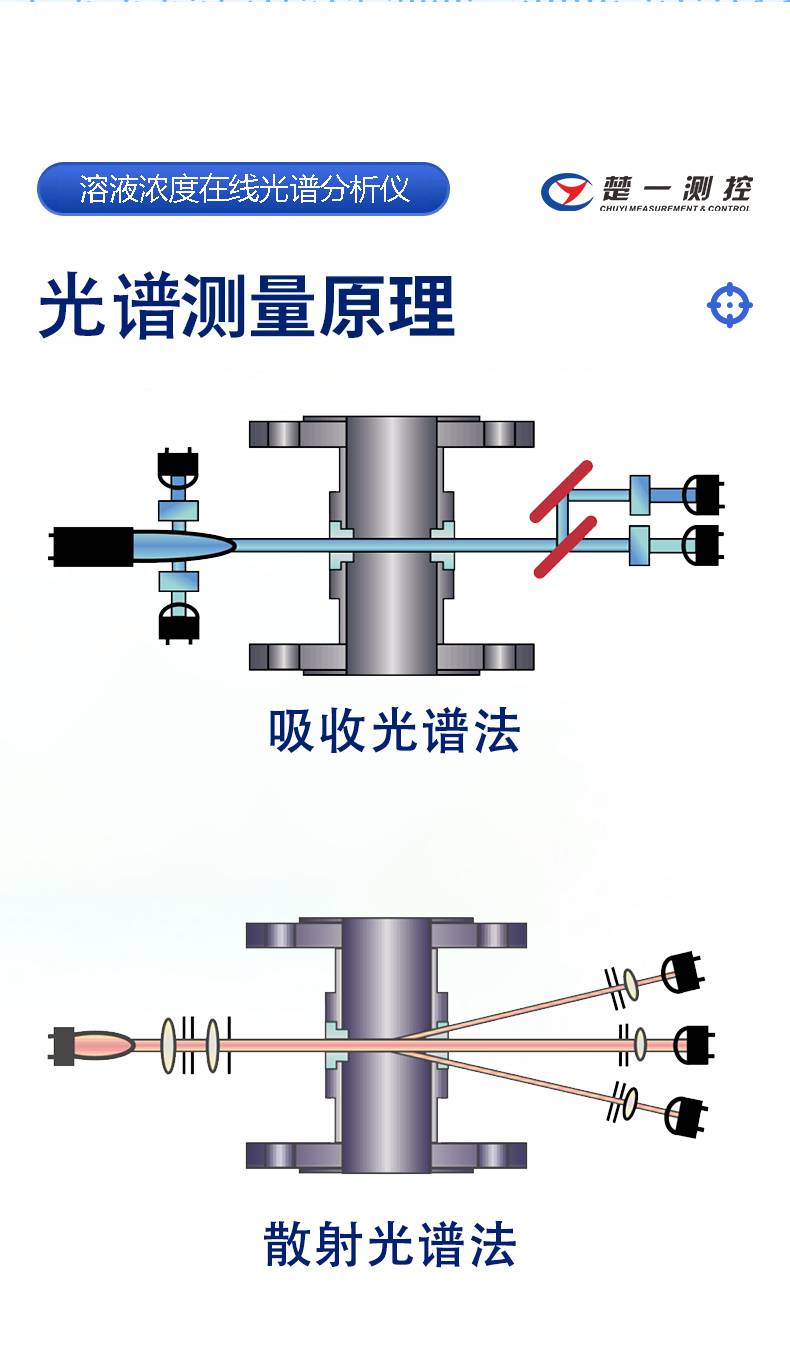
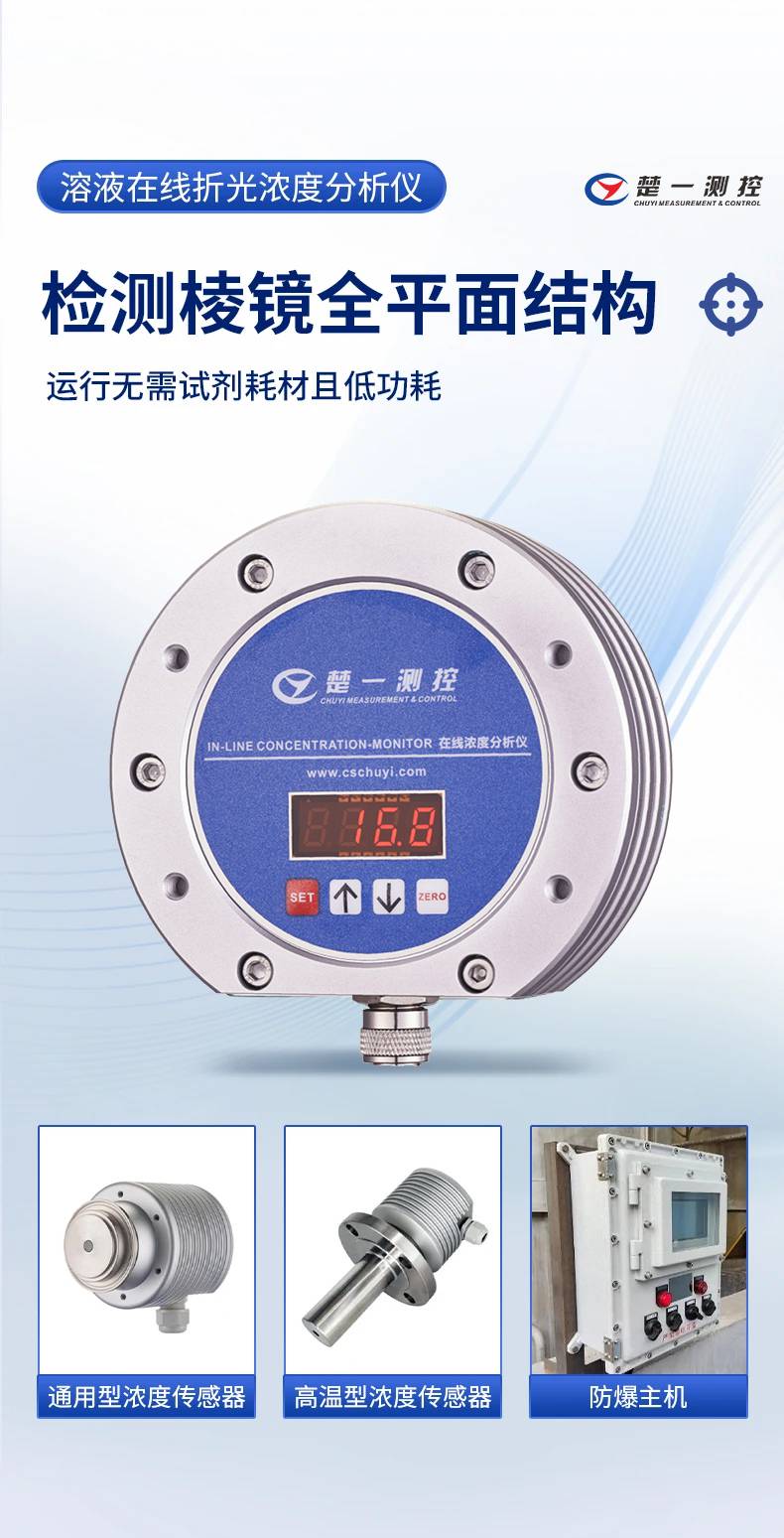
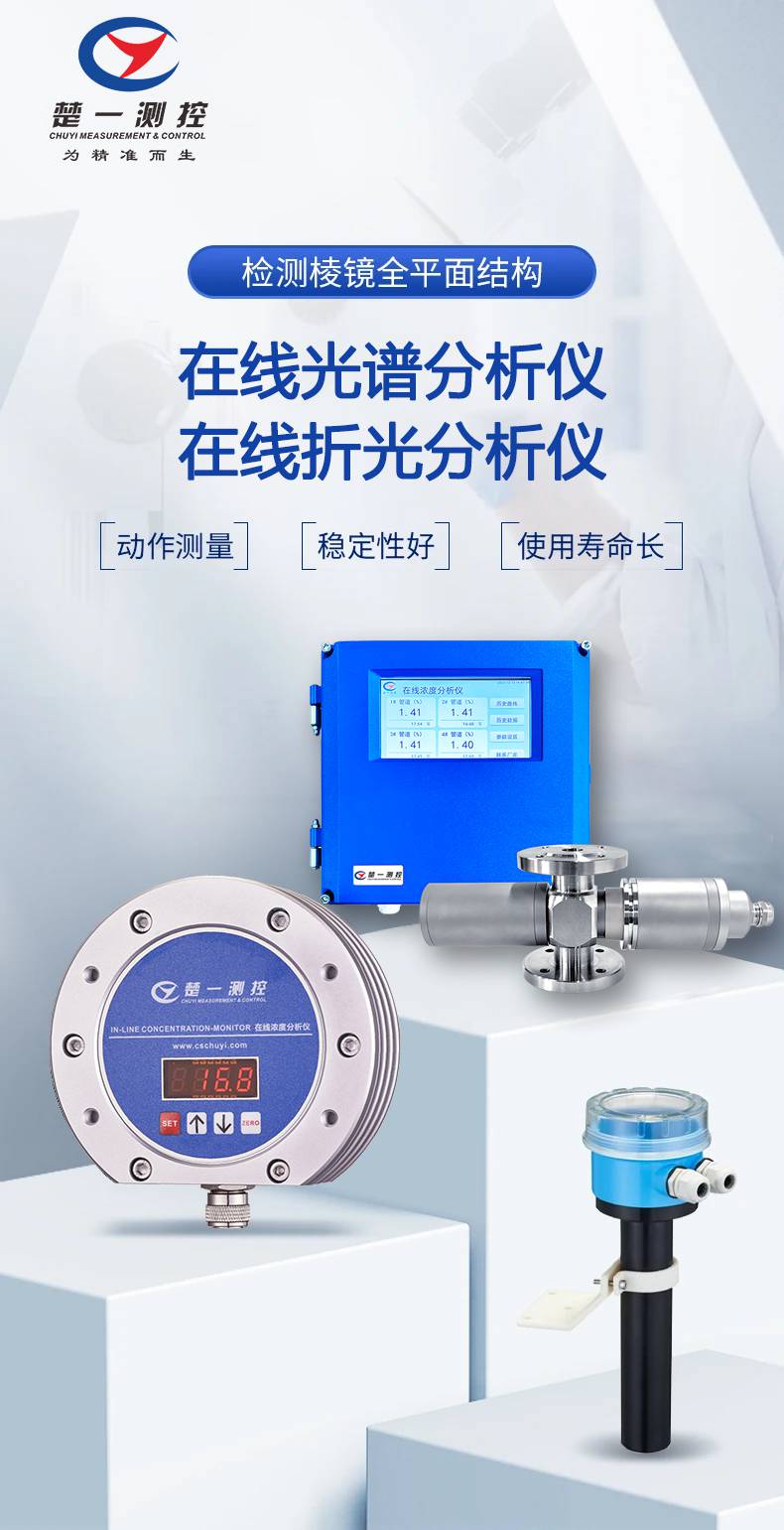
The secondary saltwater turbidity analyzer has a 12 #176; Characteristics such as scattering angle, circular array detector, special structure anti light attenuation, and resistance to mild window dirt. Based on the principles of near-infrared scattering and absorption, a split type design is used to measure the turbidity or concentration information of liquids through sensors, which are then processed, displayed, and controlled on a multifunctional host. This is suitable for measuring liquid turbidity or concentration.
Product Details
Product Introduction
Secondary saltwater refers to saltwater produced after electrolysis or other chemical treatment of primary saltwater. It is not pure water, but contains various impurities, the types and contents of which depend on the source of the brine, the treatment process, and the requirements of subsequent applications.
The main components of secondary saltwater, in addition to sodium chloride (NaCl), usually contain calcium, magnesium, sulfate ions, iron hydroxide ions, as well as some organic matter and suspended particles. Its properties and characteristics are mainly reflected in three aspects: corrosiveness, instability, and conductivity. Firstly, the concentration of chloride ions in secondary saltwater is relatively high, which has a certain degree of corrosiveness and potential hazards to equipment and pipelines. Secondly, impurities will precipitate and scale over time, affecting the quality of saltwater and system operation. And the secondary saltwater has good conductivity, which is the basis for its application in electrolysis and other processes.
The application fields of secondary saltwater are quite extensive. In ion membrane electrolysis, it is used to produce important chemical products such as chlorine gas and caustic soda, and is the core raw material of the chlor alkali industry. In the field of fine chemicals, secondary saltwater is used as a reaction medium or raw material in the production of dyes, pharmaceuticals, pesticides, and other products. In addition, in terms of water treatment, secondary saltwater can be used to soften water, remove heavy metals, and reduce the hardness and pollution of water bodies.
Turbidity is an indicator of the degree of turbidity of a liquid, which reflects the content of suspended particles in the liquid. For secondary saltwater, turbidity is a crucial quality parameter that directly affects production efficiency, product quality, and equipment lifespan.
The hazards of high turbidity:
Blockage of pipelines and equipment: Suspended particulate matter can easily deposit in pipelines, pumps, valves, and other equipment, causing blockages, reducing flow rates, increasing energy consumption, and even leading to equipment damage.
Impact on electrolysis efficiency: In ion membrane electrolysis, high turbidity can reduce the conductivity and selectivity of the ion membrane, leading to a decrease in electrolysis efficiency, an increase in by-products, and an impact on product purity.
Polluted products: Suspended particulate matter may enter the final product, reduce product quality, affect product appearance and performance, and even cause safety hazards.
Increased maintenance costs: In order to remove sediment and replace damaged equipment, a large amount of manpower and material resources are required, which increases maintenance costs.
Secondary saltwater turbidity analyzerDeveloped based on the scattering and absorption principles of near-infrared light, using a split design consisting of a spectral sensor and a multifunctional host. Sensors measure the turbidity and other information of liquids, and perform calculations, displays, and controls on a multifunctional host, suitable for accurate measurement of turbidity in secondary saltwater. The product has the characteristics of 12 ° scattering angle, circular array detector, special structure anti light attenuation, and resistance to mild window dirt.
Product advantages
No need for sample pretreatment, no need for reagents or consumables, the entire measurement process takes seconds.
A long-lasting light source that lasts up to 30000 hours, reducing usage and maintenance costs.
Optional components are available for fully automatic cleaning of the optical window to avoid measurement deviation caused by contamination.
The intensity of the light source is fully automatically adjusted to avoid a decrease in detection accuracy caused by light source attenuation.
The instrument has no mechanical action during the detection process, ensuring long-term stable use.
Years of experience in algorithms ensure that measurement results are not affected by solid impurities or crystals in the detected object.
Support upper computer communication, 4-20mA&RS485 signal output.
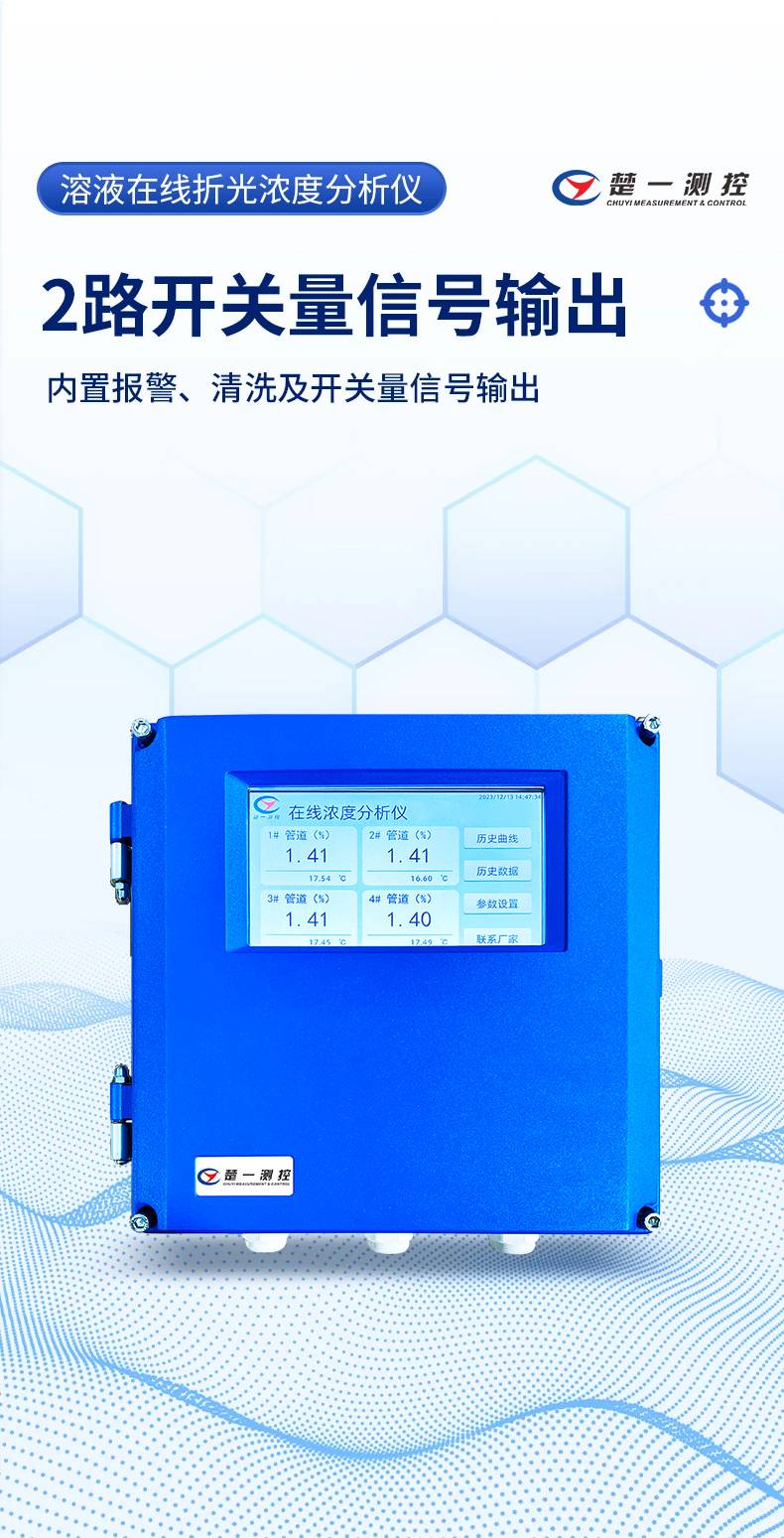
Support the output of switch signals such as alarm and control.
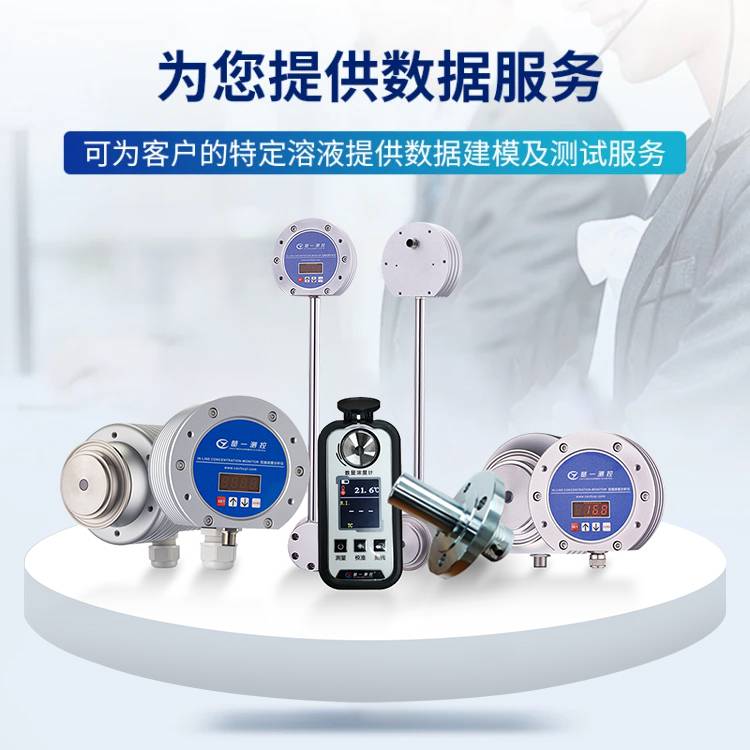
Support data modeling function and customizable data models.
Technical Specifications
Technical parameters/Technical sheet |
|
Measuring principle |
Near infrared scattering combined with transmission |
measurement items |
Turbidity and temperature of primary and secondary saltwater |
measurement range |
0.0 to 100.0ppm (mg/L), supports NTU unit output |
Optical path range |
2 to 50mm |
wavelength range |
Specific spectra from 900 to 1700nm |
Measurement accuracy * (refers to the calibrated accuracy) |
Better than ± 0.1ppm (mg/L) |
Light source |
Tungsten lamp, with a service life of ≥ 30000 hours |
measure time |
0.1 to 3 seconds |
ambient temperature |
-20 ℃ to+50 ℃ |
process temperature |
-30 ℃ to+150 ℃ |
optical window |
Optical grade sapphire |
key material |
Liquid contact material: Hastelloy, titanium, etc; Shell: Stainless steel |
input power |
AC 220V |
signal output |
DC 4 to 20mA&RS485; 2-4 switch signal outputs |
Explosion-proof rating |
Sensor: intrinsically safe Ex ia IIC T6 Ga Explosion proof host: Exd IIC T4/T6 |
Protection level |
IP65 |
Process pressure |
≤1.0 MPa(10 Bar), Higher pressure levels can be customized |
electrical interface |
1/2 NPT |
process connection |
Installation of DN25 bypass pipeline |
Calibration and Calibration |
Calibrate and calibrate based on physical and chemical data |
Cleaning options |
Window automatic cleaning component, adjustable cleaning cycle |

Similar Product Recommend


