-
E-mail
jiachenhuanbao@163.com
-
Phone
15133798595
-
Address
No. 4 Road, Botou Development Zone
Product Categories
Cangzhou Jiachen Environmental Protection Machinery Equipment Co., Ltd


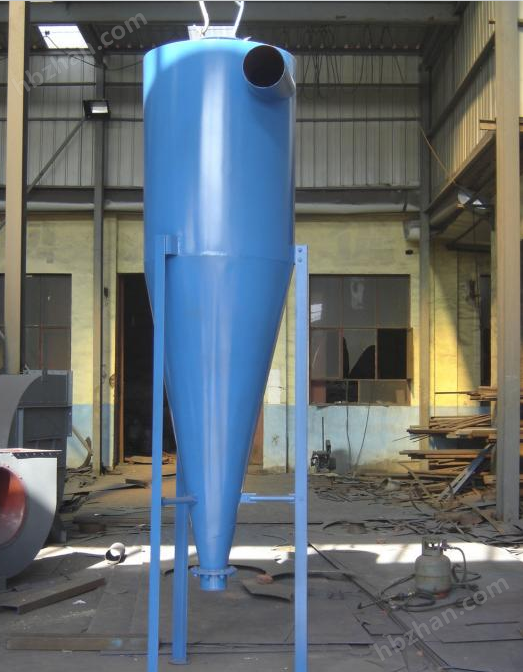
Boiler smoke and dust cyclone dust collector Shakron
NegotiableUpdate on 04/01
- Model
- Nature of the Manufacturer
- Producers
- Product Category
- Place of Origin
Overview
The principle of the boiler smoke cyclone dust collector Shakron determines that the removal efficiency of the cyclone dust collector for coarse particulate dust (5 μ m or more) can reach over 90%, and it has the advantages of simple structure, low energy consumption, and convenient maintenance. This article will provide a detailed analysis of the airflow movement laws, separation mechanisms, and key design parameters of cyclone dust collectors, helping readers to gain a deeper understanding of their internal logic of efficient dust removal and providing theoretical support for optimization and adjustment in practical applications.
Product Details
Boiler smoke and dust cyclone dust collector Shakron
As the most basic and commonly used dust removal equipment in industrial production, the cyclone dust collector, also known as the Shackleton dust collector, is widely known in industries such as mining, building materials, and chemical engineering. To understand the working principle of a cyclone dust collector, it is necessary to first clarify its core design logic - utilizing the centrifugal separation effect in fluid mechanics to achieve efficient separation of dust and gas. When the dusty gas enters the cylinder through the inlet of the cyclone dust collector, it will undergo high-speed rotational motion under the guidance of the guide structure, forming a strong cyclone airflow, which is also the origin of the name "cyclone dust collector".
Inside the cylinder of the cyclone dust collector, the airflow movement can be divided into three parts: outer swirl, inner swirl, and recirculation zone. The outer vortex spirals downwards along the wall of the cylinder from top to bottom, and the airflow velocity can reach 10-25m/s. It is the centrifugal force generated by this high-speed rotation that becomes the core driving force for dust separation. Due to the much higher density of dust particles than gas, under the action of centrifugal force, dust particles will overcome gas resistance and be thrown towards the inner wall of the cyclone dust collector. Once they contact the wall, the dust particles will lose inertia and settle along the wall to the bottom ash hopper under the drive of gravity and airflow, completing the dust collection process. The purified gas will form an upward internal vortex at the center of the cyclone dust collector cylinder, and be discharged through the top air outlet to achieve gas-solid separation.
The dust removal efficiency of a cyclone dust collector is closely related to various factors, among which the rotational speed of the airflow is one of the key factors. According to the centrifugal force formula F=mv ²/r (where m is the mass of dust, v is the airflow velocity, and r is the rotation radius), the faster the airflow velocity and the smaller the rotation radius, the greater the centrifugal force generated and the better the dust separation effect. Therefore, the design of cyclone dust collectors usually adopts a smaller cylinder diameter and enhances the rotational speed of the airflow after entering through a reasonable inlet structure (such as tangential inlet and volute inlet). At the same time, the particle size and density of dust particles can also affect the dust removal effect. Dust with larger particle size (usually above 5 μ m) and higher density is more easily separated in cyclone dust collectors, while fine particle dust (less than 5 μ m) is prone to escape with the airflow due to its small mass and weak inertia, leading to a decrease in dust removal efficiency. This is also an important reason why cyclone dust collectors are often used to pretreat coarse particle dust.
In addition, the structural parameters of the cyclone dust collector include cylinder height, cone angle, outlet diameter, etc. The optimized design of these parameters can improve the dust removal performance. For example, increasing the height of the cylinder appropriately can prolong the residence time of the airflow in the cyclone dust collector, allowing the dust to have more sufficient time to settle; A reasonable cone angle (usually 15 ° -20 °) can guide dust to smoothly slide towards the ash hopper, avoiding dust accumulation inside the cone; The ratio of the diameter of the air outlet to the diameter of the cylinder will affect the stability of the internal vortex, thereby affecting the efficiency of the purified gas discharge.
In practical applications, cyclone dust collectors are widely used in industries such as mining crushing, cement production, boiler flue gas pretreatment, and grain processing due to their advantages of simple structure, no vulnerable parts, low operation and maintenance costs, and adaptability to high temperature and high humidity conditions. As the official name of the Shakelong dust collector, the cyclone dust collector can be used alone or in combination with bag filters, electrostatic precipitators, and other equipment in industrial dust removal systems to form a multi-stage dust removal system. The cyclone dust collector first removes most of the coarse particle dust, and then the subsequent equipment processes the fine particle dust, which not only improves the overall dust removal efficiency, but also reduces the operating load and wear of the subsequent equipment, and extends the service life of the equipment.
It should be noted that the cyclone dust collector should avoid excessive fluctuations in air volume during operation, otherwise it will disrupt the stable rotation of the airflow and lead to a decrease in dust removal efficiency; At the same time, the sealing performance of the ash hopper is also crucial. If the sealing is not tight, external air will flow back into the cyclone dust collector, forming secondary dust and affecting the dust removal effect. Therefore, regular inspection of the sealing of the cyclone dust collector and timely cleaning of dust in the ash hopper are key to ensuring its stable and efficient operation.
Boiler smoke and dust cyclone dust collector Shakron
Similar Product Recommend


