-
E-mail
260109218@qq.com
-
Phone
13671878588
-
Address
3rd Floor, Building 5, No. 168, Lane 6495, Tingwei Road, Jinshan Industrial Zone, Shanghai
Product Categories
Qinping Machinery (Shanghai) Co., Ltd


Cam rotor pump
NegotiableUpdate on 04/04
- Model
- Nature of the Manufacturer
- Producers
- Product Category
- Place of Origin
Overview
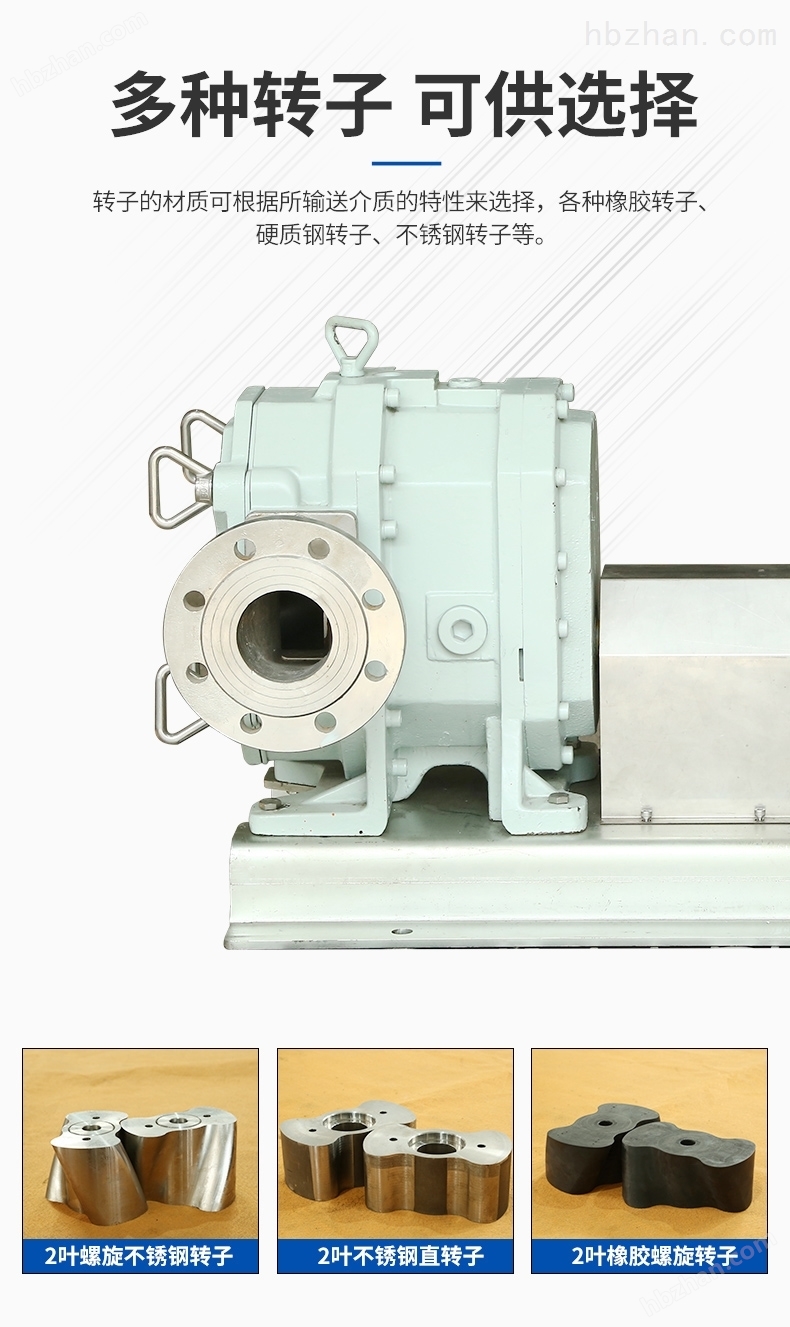
The cam rotor pump achieves conveying through a pair of synchronous reverse rotating rotors (with 2-4 teeth). When the rotor rotates, a vacuum suction force is generated at the inlet to suck in the medium, and then the rotor divides the pump chamber into multiple closed spaces, and the medium is pushed to the outlet as the rotor rotates. Maintain a fixed gap between rotors to avoid direct contact wear and ensure low-noise and long-life operation.
Product Details
Cam rotor pumpIt mainly consists of two synchronous reverse rotating cam rotors, pump casing, synchronous gearbox, and driving device. Two rotors usually adopt a double leaf or triple leaf cam structure, which achieves non-contact reverse rotation through a pair of synchronous gears.
1. Liquid absorption process
When the rotor rotates, a local vacuum is formed at the inlet end of the pump, and the medium is sucked into the pump chamber. During the rotation of the rotor, the pump chamber is divided into multiple sealed chambers, which move from the inlet to the outlet as the rotor rotates
2. Drainage process
As the rotor continues to rotate, the volume of the sealed chamber gradually decreases, and the medium is squeezed and pushed to the outlet, achieving continuous transportation. Due to the lack of contact between the rotors and the extremely small gap between them and the pump casing, low pulsation, low shear, and high efficiency conveying can be achieved
Cam rotor pumpIt has the advantages of strong self-priming ability, low shear characteristics, wear resistance, and adaptability to complex media, and is widely used in fields such as petrochemicals and wastewater treatment


