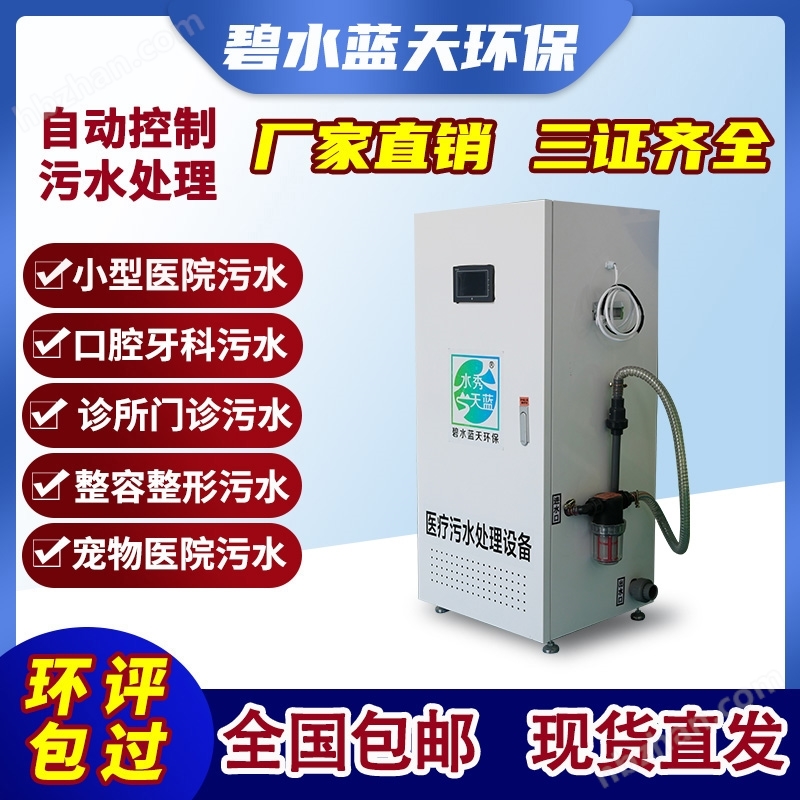
This equipment is designed specifically for treating comprehensive wastewater generated in laboratories (such as acid, alkali, organic solvents, heavy metal ions, etc.), with a daily processing capacity of 1 ton. The multi-level treatment process adopted (such as chemical precipitation, oxidation-reduction, activated carbon adsorption, precision filtration, etc.) can effectively remove various pollutants and ensure that the effluent quality meets national or local discharge standards. The equipment has high integration, easy operation, automatic control and safety protection functions, and occupies a small area. It is a key facility to ensure the environmentally compliant operation of the laboratory and reduce environmental risks. It can be customized and optimized according to specific water quality requirements.
School ChemistryLaboratory sewage treatment equipmentWidely used in secondary and higher education institutions, research institutes, medical institutions, biopharmaceuticals, disease control centers, environmental monitoring, product quality inspection, inspection and quarantine, drug inspection, blood stations, animal husbandry, hospitals, petrochemicals, enterprises and other laboratories and laboratory wastewater treatment. After treatment, the wastewater meets the first, second and third level standards in the comprehensive wastewater discharge standard GB8978-1996. The treated wastewater can be discharged into the municipal sewage pipe network or reused through reprocessing processes.
School ChemistryLaboratory sewage treatment equipmentProcess description:
Collect to the collection tank, and the wastewater in the collection tank is quantitatively lifted to a small size by a lifting pumpLaboratory sewage treatment equipment, An online pH detection instrument is installed in the pH adjustment tank. Based on the instrument signal, acid and alkali are added to adjust the pH to neutral. After that, the wastewater is passed through a micro electrolysis cell, and countless fine primary cells are formed between iron carbon electrodes to oxidize iron and produce ferrous coagulants, which have a removal effect on metal ions and other particles with weak negative charges. Afterwards, the metal ions in the wastewater are precipitated and flocculated through a coagulation sedimentation tank, combined with PAC and PAM. The sludge water separation is completed in the inclined tube sedimentation tank, and then the overflow passes through the disinfection system for deep treatment and standard discharge.
School ChemistryLaboratory sewage treatment equipmentProduct advantages:
1. Various pollutants in wastewater are treated using technologies such as neutralization precipitation, chemical oxidation, heavy metal capture, photocatalytic reaction, microelectrolysis, electrochemical oxidation, active adsorption, and MBR membrane deep purification;
2. Real time monitoring and control of wastewater quality changes and treatment processes using microcomputer programs, achieving 24/7 automatic operation without the need for dedicated personnel on duty;
3. Accurately control the dosage using a pH meter and imported metering pump, and equipped with devices such as liquid level control and shortage alarm;
4. Easy to operate, stable in operation, long in service life, and low in operation and maintenance costs;
5. Small footprint, can be placed indoors or outdoors according to different situations.