Liquid nitrogen spray fluidization quick freezing machine food freezing equipment is a new type of compound food quick freezing equipment designed for the food freezing research institute. This device innovatively integrates two core technologies, "liquid nitrogen spray ultra-low temperature freezing" and "fluidized monomer freezing (IQF)", using liquid nitrogen as the cold source to replace traditional large and complex mechanical refrigeration systems, achieving "rapid freezing of food monomers". It not only retains the protection of food nutrition and freshness by liquid nitrogen freezing, but also overcomes the deficiency of insufficient temperature in fluidized freezing, making it suitable for small-scale production
Liquid nitrogen spray fluidization quick freezer food freezing equipmentIt is designed for the Food Freezing Research InstituteNew composite food quick freezing equipment.This device innovatively integrates two core technologies, "liquid nitrogen spray ultra-low temperature freezing" and "fluidized monomer freezing (IQF)", using liquid nitrogen as the cold source to replace traditional large and complex mechanical refrigeration systems, achieving "rapid freezing of food monomers". It not only retains the protection of food nutrition and freshness by liquid nitrogen freezing, but also overcomes the deficiency of insufficient temperature in fluidized freezing. It is suitable for small batch production, food freezing process research and development, and medium frozen food processing scenarios, providing efficient and high-quality domestic freezing solutions for the food industry.
Liquid nitrogen as a cold source haschemical inertness(Does not react with food to prevent oxidation and discoloration)High latent/sensible heat utilization efficiency(Strong evaporative heat absorption ability, combined with fan circulation to achieve full recovery of cooling capacity)Fast cooling rateThe three major advantages of (no need for pre cooling of the refrigeration system, reaching low temperature immediately upon startup) fundamentally solve the problems of "slow cooling, uncontrollable temperature, and complex system" in traditional mechanical refrigeration.

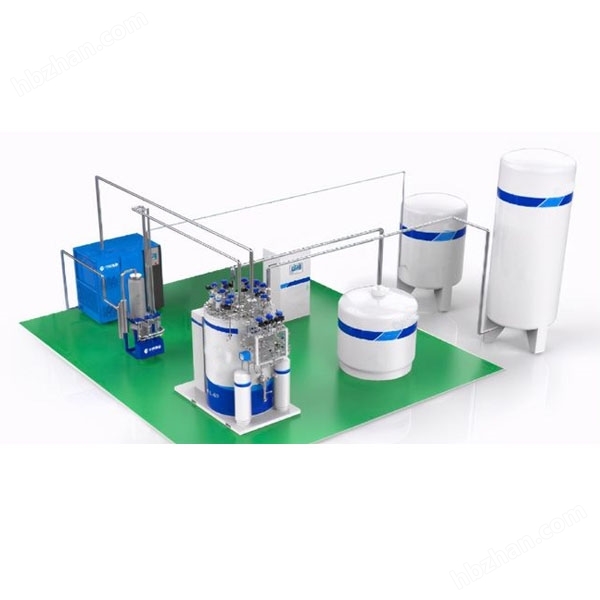
The equipment system consists of four major modules: liquid nitrogen supply unit, freezing execution unit, circulating temperature control unit, and conveying unit. The key components include:
Liquid nitrogen supply unit: high-pressure nitrogen cylinder (pressurized 200~300 kPa), liquid nitrogen tank, liquid nitrogen delivery/spray valve (manual ball valve+low-temperature solenoid valve), atomizing nozzle (atomized droplet diameter ≤ 1mm);
Freezing execution unit: pre freezing conveyor belt (liquid nitrogen spray section), freezing conveyor chain (fluidization section), scraper (pushing material), air distribution plate (achieving fluidization);
Circulating temperature control unit: centrifugal fan, air duct, return air channel (cold energy recycling), enclosure structure (insulation and energy-saving);
Control unit: frequency converter, low-temperature solenoid valve, microcomputer monitoring system (VB self-made software).

Liquid nitrogen spray fluidization quick freezer food freezing equipment
Feeding and pre freezingFood materials (granular, block, etc.) are transported by the feeding conveyor belt to the "pre freezing conveyor belt". Liquid nitrogen is sprayed at high pressure through a spray nozzle to quickly pre freeze the materials. At this stage, the high heat transfer coefficient of liquid nitrogen is utilized to form a thin ice film on the surface of the materials (enhancing mechanical strength and preventing subsequent adhesion). The materials need to pass through quickly to avoid low-temperature fracture;
Fluidized quick freezingThe pre frozen material enters the "fluidized quick freezing section", and the scraper on the freezing conveyor chain pushes the material to the air distribution plate; When the scraper reaches its limit position, the transmission device pauses, and the material is fluidized on the air distribution plate through "low-temperature cold air from bottom to top" (the material is uniformly frozen in a suspended state). The residence time is executed according to the preset process parameters (experimentally determined in advance);
Discharge and cooling cycleAfter freezing is completed, the transmission device restarts and the scraper pushes the material to the discharge port; At the same time, the centrifugal fan drives the circulation of cold air inside the enclosure structure, fully utilizing the cooling capacity (latent heat+sensible heat) of liquid nitrogen evaporation, reducing liquid nitrogen consumption, and improving equipment economy.
The equipment is equipped with a dual system of "automation control+microcomputer monitoring", which balances operational convenience, operational stability, and process flexibility:
Perform tests on fan motors and conveyor motorsstepless speed regulationThe wind speed and conveying speed can be adjusted according to the type of food (such as strawberries, shrimp, and diced vegetables) to meet different freezing needs;
Energy saving: When the air volume of the fan is adjusted to 60%, compared to traditional air door adjustment, the energy consumption of the fan is reduced by 54.4% (the fan power accounts for more than 97% of the total equipment power, and the frequency converter can significantly reduce the total energy consumption).
The liquid nitrogen spray flow is controlled through the "high-pressure nitrogen intake solenoid valve+low-temperature solenoid valve" linkage, and the temperature of the cold air medium under the network is precisely adjusted;
The standard setting temperature is -40 ℃ (taking into account liquid nitrogen consumption and freezing speed), which can be adjusted freely within the range of -30~-60 ℃ according to the characteristics of the food. Under special requirements, lower temperatures can be achieved to meet the freezing requirements of high value-added foods (such as seafood and medicinal ingredients).
Using VB language to develop monitoring software and communicating through a microcomputer serial portReal time display of key parametersTemperature distribution of each measuring point in the device, wind speed under the grid, working status of fans/conveying motors, and status of solenoid valve switches;
Data management function: Real time recording of operational data and storage in the database, supporting subsequent queries, process analysis, and optimization;
Parameter archiving and quick calling: Classify and archive validated parameters for different food fluidization operations. Workers can directly select the corresponding parameters before freezing, without the need for repeated debugging;
Multi mode control: supports switching between "manual+automatic+microcomputer control" modes to improve equipment reliability and adapt to different operating scenarios (such as manual adjustment for process development and automatic control for mass production).
Add liquid nitrogen spray pre freezing section to significantly shorten the total freezing time of food;
Case verification: In the process of strawberry quick freezing, compared with traditional fluidized bed quick freezing machines, the output of this equipment is higherdouble directlyIt can meet the efficient needs of small and medium-sized batch production.
Thin ice film protection: The ice film formed in the pre freezing section not only enhances the mechanical strength of the material (reducing mechanical damage to tender foods such as strawberries and bayberries), but also prevents adhesion between food particles and between food and conveyor belts;
Low dry consumption: The ice film effectively reduces the evaporation of food moisture during the freezing process, with a significantly lower dry consumption rate than traditional equipment, especially for high value-added foods such as imported seafood and fruits and vegetables, which can reduce economic losses;
Inert preservation: Liquid nitrogen chemical inertness can isolate oxygen, prevent food oxidation and discoloration (such as meat browning, fruit and vegetable discoloration), and maximize the preservation of the original freshness, taste, and nutritional components (such as vitamins and proteins) of the food.
Wide low-temperature regulation range (-30~-60 ℃), capable of freezing food that traditional mechanical refrigeration and quick freezing equipment cannot handle (such as sashimi that requires ultra-low temperature preservation and perishable medicinal ingredients);
Applicable food types: granular food (strawberries, blueberries, shrimp, diced vegetables), block food (small meat chunks, tofu chunks), tender food (bayberry, lychee), etc., suitable for various frozen food processing scenarios.
Without the need for traditional mechanical refrigeration systems such as compressors and condensers, the equipment can withstand the same freezing outputThe footprint is only half of that of traditional mechanical refrigeration quick freezing machines;
Initial investment advantage: The initial investment is for traditional mechanical refrigeration and quick freezing equipment1/3~1/2Significantly reduce the threshold for enterprise equipment investment.
No complex mechanical refrigeration components, no need for professional personnel to maintain the refrigeration system, reducing equipment maintenance labor costs;
No need for timed shutdown defrosting (a common pain point in traditional refrigeration equipment), low equipment failure rate, high operational stability, and maintenance costs reduced by more than 30% compared to traditional equipment;
Easy to operate: Workers can get started with simple training without the need for a deep background in refrigeration technology.
Fast cooling speed: Experimental data shows that reducing the offline temperature from 15 ℃ to -40 ℃ only requires6-7 minutesAfter the device is started, the temperature of the storage body reaches -20 ℃ within 15 minutes, and drops to -30 ℃ and stabilizes within 30 minutes;
It can be started and stopped at any time without the need for long preheating/pre cooling, and is compatible with the "multi batch, small batch" production mode to reduce idle energy consumption of equipment.
Food processing enterprisesProduction of small and medium-sized frozen foods (such as frozen fruits and vegetables, frozen seafood, and frozen prepared foods);
Research institutions/universitiesResearch and development of food freezing technology, optimization experiments of quick freezing technology (with flexible adjustment of temperature and time parameters);
High value-added food fieldQuick freezing processing of seafood (such as sashimi shrimp and crab), medicinal ingredients (requiring low-temperature locking effect), and tender fruits and vegetables (such as strawberries and bayberries).
At present, the proportion of liquid nitrogen refrigeration in the field of quick freezing worldwide is about 3% to 4%. As a typical representative of "localized liquid nitrogen quick freezing technology", quick freezing machine equipment not only meets the needs of China's quick freezing food industry for "efficient, high-quality, and low-cost" equipment, but also promotes the localization process of quick freezing devices. In the future, it is expected to be widely applied in fruit and vegetable processing, aquatic freezing, and processed food, and help upgrade and develop the food industry.