-
E-mail
2470379490@qq.com
-
Phone
13718238054
-
Address
Beijing
Product Categories
- Liquid nitrogen cooling system
- Low temperature injection system
- low-temperature mill
- MBE liquid nitrogen low-temperature system
- Dewar flask
- Liquid nitrogen circulation system
- Liquid nitrogen spray fluidization quick freezing machine
- Liquid nitrogen heat exchange system
- Low temperature equipment
- Liquid nitrogen monitoring and replenishment system
Beijing Deshi Technology Co., Ltd


The function of liquid nitrogen low-temperature gas purification equipment can be customized
NegotiableUpdate on 03/04
- Model
- Nature of the Manufacturer
- Producers
- Product Category
- Place of Origin
Overview
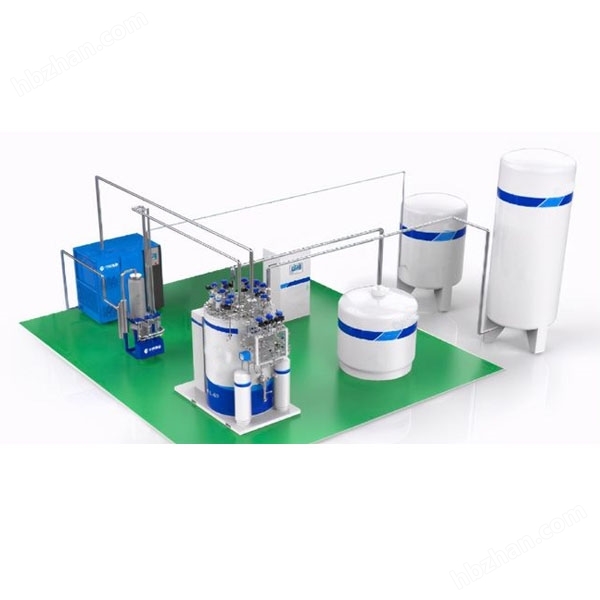
The function of liquid nitrogen low-temperature gas purification equipment can be customized. It is an industrial grade equipment that relies on low-temperature environment as its core and aims to achieve precise separation and deep purification of target gas by integrating professional purification methods such as low-temperature distillation, adsorption, condensation, etc., targeting the natural differences in physical properties such as boiling point, adsorption capacity, dew point, etc. of each component in the mixed gas. Whether it is gas components with similar boiling points, impurities that are easily adsorbed, or components with specific condensation temperatures, the equipment can efficiently process them through adapted technical paths, ultimately producing high-purity gases with a purity of over 99.999%, fully compatible with semiconductors, chemicals, energy, etc
Product Details
The function of liquid nitrogen low-temperature gas purification equipment can be customizedIt is an industrial grade equipment that relies on low-temperature environments as its core, targeting the natural differences in physical properties such as boiling point, adsorption capacity, and dew point of each component in mixed gases. By integrating professional purification methods such as low-temperature distillation, adsorption, and condensation, it achieves precise separation and deep purification of target gases. Whether it is gas components with similar boiling points, easily adsorbed impurities, or components with specific condensation temperatures, the equipment can efficiently process them through adapted technical paths, ultimately producing high-purity gases with a purity of over 99.999%, fully adapting to the stringent requirements of ultra-high purity gases in semiconductor, chemical, energy and other fields.

The function of liquid nitrogen low-temperature gas purification equipment can be customized
2、 Main technical methods
The equipment core integrates three low-temperature gas purification methods, which can be flexibly selected or combined according to the characteristics of gas components to ensure separation efficiency and purity:
1. Low temperature distillation method
Principle: Based on the difference in boiling points of different gas components, the mixed gas is cooled and introduced into a distillation tower to form gas-liquid phases inside the tower. Components with lower boiling points are enriched in the gas phase, while components with higher boiling points are enriched in the liquid phase. Separation is achieved through multiple partial vaporization and condensation. For example, when separating oxygen (boiling point -183 ℃) and nitrogen (boiling point -196 ℃), nitrogen is discharged from the top of the tower, and oxygen is taken out from the bottom or side of the tower.
Equipment composition: The core includes a distillation tower (with multiple layers of trays or packing inside, providing a gas-liquid contact mass transfer site), a condenser (condensing the gas phase at the top of the tower), and a reboiler (vaporizing the liquid at the bottom of the tower), maintaining gas-liquid equilibrium and mass transfer processes inside the tower.
2. Low temperature adsorption method
Principle: Utilize the difference in adsorption capacity of solid adsorbents for different gas components at low temperatures. When the mixed gas passes through the adsorption bed, the target gas is selectively adsorbed, while the remaining gases pass through; Then, by changing temperature, pressure, and other conditions to desorb the target gas, purification can be achieved. For example, in hydrogen purification, activated carbon adsorbs impurities such as carbon monoxide and carbon dioxide at low temperatures, and after heating or depressurization desorption, high-purity hydrogen gas is obtained.
Equipment composition: mainly composed of an adsorption bed (filled with adsorbent), a cooling device (cooling the gas and adsorption bed to the target low temperature), a heating device (used for desorption process), and a valve system (controlling gas flow direction and inlet/outlet).
3. Low temperature condensation method
Principle: Based on the different dew point temperatures of the gas components, the mixed gas is cooled to a specific temperature, so that the target components first condense into liquid or solid, while the remaining gases remain in the gaseous state. Separation is achieved through a separation device. For example, when separating water vapor from air, cooling the air to a certain temperature causes the water vapor to condense into liquid water, which is then separated into dry air through gas-liquid separation.
Equipment composition: including condenser (cooling mixed gas), gas-liquid separation device (separating condensed and gaseous components), cooling system (providing cold source, such as liquid nitrogen, refrigeration machine, etc.).

3、 Core technological advantages
1. Multi method adaptation, flexible and efficient
The equipment can flexibly select or combine three purification methods based on the characteristics of the mixed gas components (such as boiling point differences, adsorption differences, dew point differences), ensuring efficient separation of different gas systems (such as oxygen nitrogen mixtures, hydrogen impurities, air water vapor, etc.).
2. Precise control and stable operation
Temperature control: Equipped with a high-precision temperature measurement and control system, it can achieve precise temperature control within ± 0.5 ℃ for components with small boiling point differences (such as oxygen and nitrogen only differ by 13 ℃), avoiding incomplete separation.
Materials and thermal insulation: the core components are made of materials that are resistant to low-temperature embrittlement and have low thermal conductivity (such as low-temperature alloy), in combination with multi-layer thermal insulation structure (polyurethane foam, vacuum insulation board), to reduce the loss of cooling capacity and ensure the stability of the low-temperature environment.
3. Impurity pretreatment guarantee
Integrated preprocessing modules (filtration, chemical absorption, etc.) effectively remove impurities and pollutants from mixed gases, avoiding their reaction with adsorbents and solid blockage of equipment at low temperatures, ensuring continuous and reliable purification processes.

4、 Widely applicable scenarios
1. Semiconductor industry
We provide ultra-high purity protective gases (argon, nitrogen) and process gases (silane, ammonia) to remove impurities such as oxygen and moisture, ensuring high precision in processes such as chemical vapor deposition (CVD) and physical vapor deposition (PVD), and improving the performance of semiconductor devices.
2. Chemical industry
Purification of raw materials such as hydrogen and nitrogen in the production of synthetic ammonia and methanol, and optimization of reaction conditions; Separate ethylene ethane mixed gas to obtain high-purity ethylene, improve product yield and quality.
3. Energy sector
Removing impurities such as carbon dioxide and hydrogen sulfide from natural gas liquefaction (LNG) to avoid equipment corrosion or blockage and reduce production costs;
Purify high-purity hydrogen gas, increase energy density, and assist in hydrogen storage and transportation.
5、 Product Value
The liquid nitrogen low-temperature gas purification equipment integrates three core methods of low-temperature distillation, adsorption, and condensation, combined with precise control and reliable design, to provide stable ultra-high purity gas solutions for various industries. It can not only improve product quality and optimize production efficiency, but also reduce energy consumption and environmental pollution. It is the core supporting equipment for high-quality production in semiconductor, chemical, energy and other fields.
Similar Product Recommend