- Phone
-
Address
3-3, Enterprise Shushang District, No. 18 Jingxing Street, Changping District, Beijing
Product Categories
- stereoscopic monitoring
- Monitoring the hygroscopic growth characteristics of particulate matter
- Ozone/photochemical pollution monitoring
- Greenhouse gas monitoring
- Carbon aerosol monitoring
- Haze monitoring
- Monitoring of particulate matter source apportionment components
- AQI monitoring of ambient air quality
Beijing Saikema Environmental Protection Instrument Co., Ltd

AE33 rack mounted black carbon analyzer
NegotiableUpdate on 01/16
- Model
- Nature of the Manufacturer
- Producers
- Product Category
- Place of Origin
Overview
Product Overview:
Product Details
Product Overview:
The black carbon analyzer measures the attenuation of light by continuously collecting particles on the filter membrane. Based on the absorption characteristics of black carbon aerosols in the 370nm, 470nm, 520nm, 590nm, 660nm, 880nm, and 950nm wavelength bands and the degree of attenuation of transmitted light, the concentration of black carbon aerosols is obtained. The concentration of black carbon aerosols is mainly measured at a wavelength of 880nm. Continuous measurement in multiple bands can better obtain information on aerosol optical absorption, optical characteristics, radiation transmission, emission sources, and source apportionment.
Product advantages and features:
*Simultaneously using light sources with seven wavelength bands of 370, 470, 520, 590, 660, 880, and 950 nm, the band data shows the fastest frequency as 1Hz;
*Real time dual point technology (patent numbers: 8411272, and 9018583): avoids the phenomenon of membrane loading when sampling with a single membrane strip, and can provide more comprehensive information on aerosol chemical components;
*Dynamic zero calibration (European Patent Application Number:. 3);
*Obtained EPA-ETV certification and Slovenian SIQ certification;
*Source analysis: Based on the different absorption spectra of different substances, real-time dual point technology can effectively identify black carbon in the combustion process of fossil fuels and biomass;
*Data can be stored in real-time or transmitted remotely in network mode;
*Can quickly clean the light source analysis components;
*The hardware system is easy to operate, stable and reliable;
*Low energy consumption.
Technical parameters:
*Filter membrane: glass fiber membrane coated with polytetrafluoroethylene;
*Measurement resolution: 0.001 μ g/m3 or 1 ng/m3;
*Time resolution: 1s or 60s can be set by the sampler;
*Flow rate: adjustable from 2 to 5 L/min. If it is necessary to increase the flow rate, an external pump can be used to achieve it;
*Appearance and interface: 8.4-inch LED color touch screen, capable of remote interface operation;
*Data output: transmitted through RS232, Ethernet, USB data interfaces;
*Data storage: According to the set time, data is transferred to the built-in memory card, which can be remotely transferred or manually stored on external storage devices;
*Power supply: 100~230VAC, 50/60 Hz (adjustable);
*Appearance size: 28 × 43 × 33cm, 19 inch standard rack mounted chassis, weight: 21kg;
*Quality control and quality assurance: Use external calibrators for manual or automatic flow calibration, and perform noise and gas leakage detection through dynamic zero calibration. In addition, calibrate the optical components of the instrument using standard traceable neutral density optical filters.
Optional accessories:
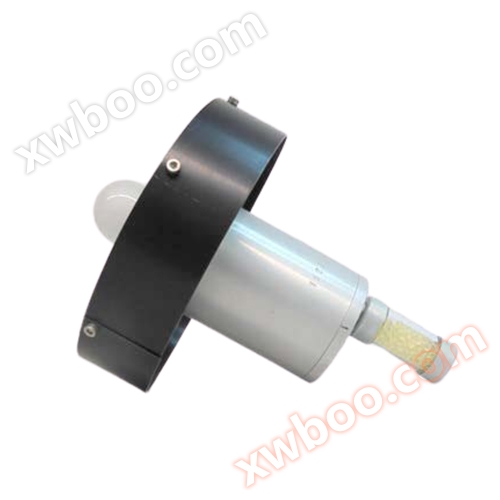
Particle size cutter:Cyclone particle size cutter produced by Mesalabs (BGI) company
*PM2.5- SCC -1.829 type, flow rate of 5L/min;
*PM1.0- SCC -0.732 type, flow rate of 2L/min.
Application scope:
*Atmospheric aerosol black carbon monitoring;
*Monitoring of atmospheric radiation transmission;
*Monitoring of aromatic compounds with UV absorption;
*Monitoring of combustion emissions of carbon containing substances;
*Monitoring of combustion emissions from internal combustion engines;
*Other applications of black carbon analyzer:
The black carbon analyzer calculates the concentration of black carbon aerosols based on the attenuation of transmitted light caused by black carbon aerosols on the sampling film, and therefore can also calculate the optical absorption coefficient of aerosols;
The thermal optical carbon analysis method is applied to measure the elemental carbon (EC) aerosols on the sampling film, and the results are compared with the optical method for measuring black carbon aerosols (BC) to establish a comparison of different measurement techniques.