- Phone
-
Address
3-3, Enterprise Shushang District, No. 18 Jingxing Street, Changping District, Beijing
Product Categories
- stereoscopic monitoring
- Monitoring the hygroscopic growth characteristics of particulate matter
- Ozone/photochemical pollution monitoring
- Greenhouse gas monitoring
- Carbon aerosol monitoring
- Haze monitoring
- Monitoring of particulate matter source apportionment components
- AQI monitoring of ambient air quality
Beijing Saikema Environmental Protection Instrument Co., Ltd
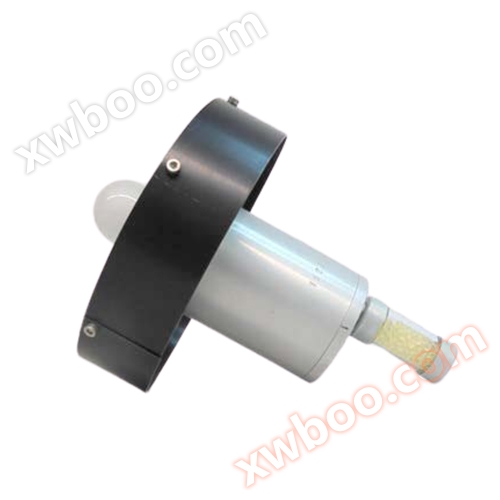
J (NO2) filter radiometer
NegotiableUpdate on 01/15
- Model
- Nature of the Manufacturer
- Producers
- Product Category
- Place of Origin
Overview
Background introduction: The variation of O3 volume fraction in the near surface layer of urban polluted areas is mainly controlled by local photochemical reactions, and the generation and loss of ozone are determined by the photochemical reactions of its precursors (such as NOx, VOCs, etc.). The photochemical reaction of VOCs in the atmosphere increases the content of HO2 and RO2 free radicals, thereby increasing the amount of NO converted to NO2, leading to the accumulation of ozone. Based on the technology and research of Max Planck Institute in Germany, Metcon has developed a filter radiometer specifically for measuring atmospheric photochemical radiation flux and calculating the photolysis rate of J (NO2), taking into account the important role of O3, NO2, and other substances in photochemical reactions. J (NO2) type filter radiometer: The J (NO2) filter radiometer can be used to measure the photolysis rate of NO2, providing a basis for studying a series of photochemical reaction processes such as ozone production. This radiometer has two options: 2-pi and 4-pi. 2-pi is used for ground measurement, while 4-pi is used for aerial measurement. Technical parameters:
Product Details
Background introduction:
The variation of O3 volume fraction in the near surface layer of urban polluted areas is mainly controlled by local photochemical reactions, and the generation and loss of ozone are determined by the photochemical reactions of its precursors (such as NOx, VOCs, etc.).
The photochemical reaction of VOCs in the atmosphere increases the content of HO2 and RO2 free radicals, thereby increasing the amount of NO converted to NO2, leading to the accumulation of ozone.
Based on the technology and research of Max Planck Institute in Germany, Metcon has developed a filter radiometer specifically for measuring atmospheric photochemical radiation flux and calculating the photolysis rate of J (NO2), taking into account the important role of O3, NO2, and other substances in photochemical reactions.
J (NO2) type filter radiometer:
The J (NO2) filter radiometer can be used to measure the photolysis rate of NO2, providing a basis for studying a series of photochemical reaction processes such as ozone generation. This radiometer has two options: 2-pi and 4-pi. 2-pi is used for ground measurement, while 4-pi is used for aerial measurement.
Technical parameters:
*Perspective: 2-pi (1 × 180 °) or 4-pi (2 × 180 °);
*Angle relationship (± 80 ° zenith angle): approximately ± 5% (response to average angle -90 ° to+90 °);
*Wavelength characteristics: The most suitable wavelength range for NO2 molecule photolysis is 285-375nm;
*Absolute calibration: better than ± 5% under chemical photometry (FZ J ü lich) and j-spectroscopy;
*Sensitivity: approximately 1.5 × 10⁻⁶ sec-1/mV;
*Linear: better than 1% based on the characteristics of the detector;
*Detector: HAMAMATSU Head on Vacuum Phototube;
*Output signal: 2-pi: 0-10VDC; 4-pi:2×(0~10VDC);
*Power supply: 12 VDC, maximum power 30W;
*Instrument casing: aluminum;
*Weight: Approximately 800g;
*Optical system: cosine quartz optical receiver head;
*Mutual calibration: calibration comparison with J-LICH chemical photometer, or calibration comparison with Master filter radiometer calibrated by J-LICH;
*Maintenance: In addition to the drying tube, the optical lens also needs to be regularly wiped (to prevent dust), and other components do not require user modification or repair;
*Optional model: 2pi-J (NO2) - Determination of NO2 photolysis rate on the ground; 4pi-J (NO2) - Determination of NO2 photolysis rate in aerial survey;
*At present, only 2pi-J (NO2) and 4pi-J (NO2) filter radiometers are available. If users want to measure J (NO3) and J (O1D), they can choose the UF-CCD photolysis spectrometer.


