- Phone
-
Address
3-3, Enterprise Shushang District, No. 18 Jingxing Street, Changping District, Beijing
Product Categories
- stereoscopic monitoring
- Monitoring the hygroscopic growth characteristics of particulate matter
- Ozone/photochemical pollution monitoring
- Greenhouse gas monitoring
- Carbon aerosol monitoring
- Haze monitoring
- Monitoring of particulate matter source apportionment components
- AQI monitoring of ambient air quality
Beijing Saikema Environmental Protection Instrument Co., Ltd

Aurora 3000 Three wavelength Turbidity Meter
NegotiableUpdate on 01/06
- Model
- Nature of the Manufacturer
- Producers
- Product Category
- Place of Origin
Overview
Instrument Introduction:
Product Details
Instrument Introduction:
The Aurora 3000 turbidity meter is suitable for measuring air pollution and aerosol light scattering caused by various reasons, and can also be applied to the calculation and research of forward and backward scattering, scattering enhancement factor, wavelength index, and single scattering albedo.
The Aurora 3000 uses Ecotech's innovative LED light source, which can simultaneously measure 450nm (blue), 525nm (green), and 635nm (red), increasing the breadth and depth of particle analysis.
The Aurora 3000 turbidity meter is also equipped with a backscatter shutter to analyze total and backscatter, providing important information for the study of global atmospheric radiation balance.
The microprocessor controlled Aurora 3000 provides flexible menu driven programming, which can be operated through the front panel display buttons or an external PC.
Functional features:
>Higher precision
*Automatic reference optical calibration;
*Enhance the intensity of the light source to improve measurement accuracy;
>Easy to use
*Compact structure, lightweight, and easy to operate;
*Different standard gases (SPAN) can be selected to automatically complete instrument calibration: CO2, SF6, FM-200, R-12, R-22, R-134, or user-defined gases;
*Automatic zero/mark check and adjustment function: can perform automatic zero check/adjustment and mark check/adjustment at intervals of 1, 3, 6, 12, or 24 hours (mark check can also be performed once a week);
*Automatic pressure and temperature compensation function;
*Built in sample gas heater, with a humidity threshold set by the user (RH:<30% to<90%), to eliminate humidity interference;
*Built in backup battery, real-time clock and data collector. Can record 5-minute average of 33 days or 1-minute average of 6 days;
*Provide CDs of data downloaders and hardware upgrade software;
>Economical and practical
*Large measurement range (from 0 to 20000Mm-1);
*Built in 12V heater, no longer requiring external inlet heater;
*LED light source has a long service life, up to 5 years;
Technical parameters:
*Measurement parameters: Light scattering coefficient of particulate matter, σ sp (wavelengths 450525 and 635nm);
*Measurement range: σ sp: 0 to 20000Mm-1;
*Minimum detection limit: Both total scattering and backscattering are 0.3 Mm-1 (optional 0.1 Mm-1) (1-minute average);
*Total scattering angle: 9 °~170 ° or backscatter angle: 90 °~170 °;
*Secondary measurement: sample gas temperature, chamber temperature, RH, and sample gas pressure;
*Sample gas flow rate: approximately 5L/min;
*Working environment: Temperature: -20 ℃ to 45 ℃;
*Relative humidity: 10% to 95%;
*Calibration: Calibration gases can be selected from CO2, SF6, FM-200, R-12, R-22, R-134, or user-defined gases;
*Output: 4 analog outputs (2 voltage, 2 current) and RS232 multi-point serial port output;
*Filtering: Kalman digital filtering, sliding average filtering (30 seconds) or no filtering;
*Optics: Reference brightness measurement;
*Light source: Stable LED light source (patent number: US7671988);
*Wavelength: 450nm (blue), 525nm (green), and 635nm (red);
*Power supply: 110-240VAC, 50/60Hz or 12VDC, with heating device for 60 watts;
*Storage parameters: date and time, σ sp (635525 and 450nm), air temperature, chamber temperature RH、 Pressure and state;
*Maximum storage capacity: 5-minute average of 33 days or 1-minute average of 6 days;
*Dimensions: 700mm x 170mm x 215mm (length x width x height);
*Weight: 11.2Kg;
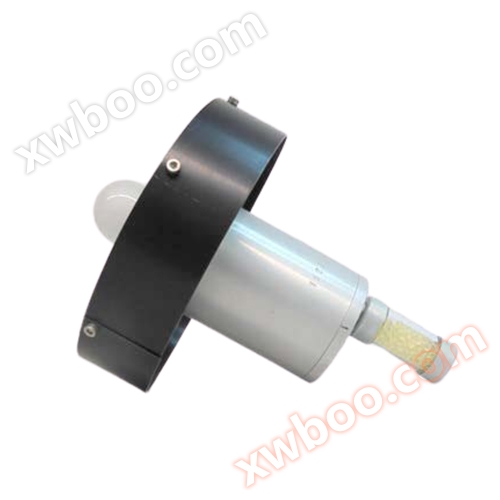
*Optional: external pump, solar panel, roof mounting flange, insect and rain proof cap, gas calibration component, wall suspension bracket;
>Application scope:
*Visibility observation, suitable for long-term observation of dust, fog, and haze;
*Measurement of aerosol scattering coefficient, applied to the study of atmospheric radiation balance and climate change;
*Observation of smoke from biofuel combustion;
*Research on fine particulate matter (PM2.5);
*Visibility measurement of airports, highways, and roads;
*Monitoring of forest and shrub fires.