-
E-mail
junsish@163.com
-
Phone
18016281599
-
Address
No. 818, Linhai Industrial Park, Fengxian, Shanghai
Product Categories
Shanghai Junsi Experimental Instrument Co., Ltd


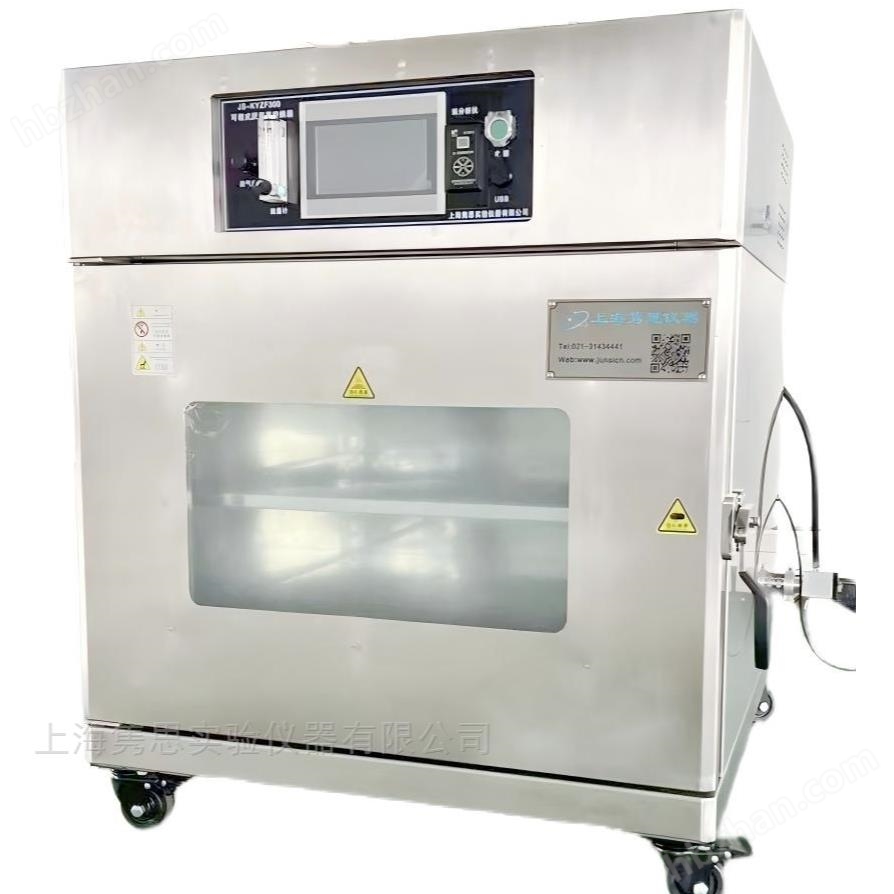
Coupling agent vapor deposition equipment, thickening agent/anti sticking agent vapor deposition machine
NegotiableUpdate on 05/16
- Model
- Nature of the Manufacturer
- Producers
- Product Category
- Place of Origin
Overview
Coupling agent vapor deposition equipment, thickening agent/anti sticking agent vapor deposition machine, vaporizes liquid coupling agent under vacuum or specific atmosphere, causing it to come into contact with the substrate surface in the form of gaseous molecules and undergo chemical reactions, forming a uniform, dense, ultra-thin monolayer or multilayer thin film.
Product Details
1、 What is coupling agent vapor deposition?
The traditional coupling agent treatment methods (such as soaking and spraying) involve immersing the material in an aqueous or alcohol solution of the coupling agent. And vapor deposition is the process of vaporizing liquid coupling agents in a vacuum or specific atmosphere, allowing them to come into contact with the substrate surface in the form of gaseous molecules and undergo chemical reactions, forming a uniform, dense, and ultra-thin monolayer or multilayer thin film.
IICoupling agent vapor deposition equipment, thickening agent/anti sticking agent vapor deposition machineCore components of the equipment
A complete set of coupling agent vapor deposition equipment usually includes the following core parts:
1. Sedimentation chamber
·Function: Place the core area of the workpiece (substrate) to be processed.
·Requirement: It usually requires corrosion resistance, high sealing performance, and heating function (heating the substrate or cavity itself to promote the reaction).
2. Vacuum system
·Function: Vacuum the chamber before deposition to remove air and water vapor, creating a clean and controllable reaction environment. This is crucial for preventing premature hydrolysis of coupling agents and ensuring membrane quality.
·Composition: Usually includes mechanical pumps, and sometimes molecular pumps may be configured as needed to achieve higher vacuum levels.
3. Coupling agent delivery system
·Function: This is the technical key of the device.
4. Heating and temperature control system
·Function:
·Heating the substrate: The temperature on the surface of the substrate is the key driving force for the hydrolysis and condensation reactions of the coupling agent.
·Heating gas pipeline: to prevent condensation of vaporized coupling agents during transportation.
·Requirement: High temperature control accuracy and good uniformity of temperature inside the chamber.
5. Control system
·Function: Integrated PLC or computer for precise control of the entire process flow, including:
· 真空度
·Temperature in each area (vaporizer, pipeline, chamber, substrate)
·Coupling agent feed rate
·Sedimentation time
·Advantages: Achieve process automation, repeatability, and record all parameters to ensure the stability of product quality.
IIICoupling agent vapor deposition equipment, thickening agent/anti sticking agent vapor deposition machineApplication field
This type of equipment is mainly used in fields that require high surface treatment requirements:
·Microelectronics and semiconductors: depositing insulation layers on wafers or improving the adhesion of subsequent materials.
·Aerospace: Processing composite materials such as carbon fiber and glass fiber to enhance hydrophobicity, greatly improving their interfacial bonding strength with resin matrix.
·Optics: Deposition of anti reflective, waterproof, and anti fog functional films on lenses and optical components.
·Nanoimprint: Anti adhesive and release agent evaporation, used to modify the hydrophobicity of the substrate surface and achieve excellent anti adhesive effect.
·Medical devices: Deposition of biocompatible coatings on the surface of implants.

Adhesive/anti adhesive vapor deposition machineadvantage
Advantages compared to traditional wet process technology:
Characteristic vapor deposition method, traditional wet method (soaking/spraying)
The uniformity of the film layer is good, and it can form a single molecular layer without droplets, which is prone to uneven thickness and flow marks
The film layer has high purity, no solvent pollution, and high density, which may introduce impurities such as solvents and catalysts
Similar Product Recommend