- Phone
-
Address
3-3, Enterprise Shushang District, No. 18 Jingxing Street, Changping District, Beijing
Product Categories
- stereoscopic monitoring
- Monitoring the hygroscopic growth characteristics of particulate matter
- Ozone/photochemical pollution monitoring
- Greenhouse gas monitoring
- Carbon aerosol monitoring
- Haze monitoring
- Monitoring of particulate matter source apportionment components
- AQI monitoring of ambient air quality
Beijing Saikema Environmental Protection Instrument Co., Ltd

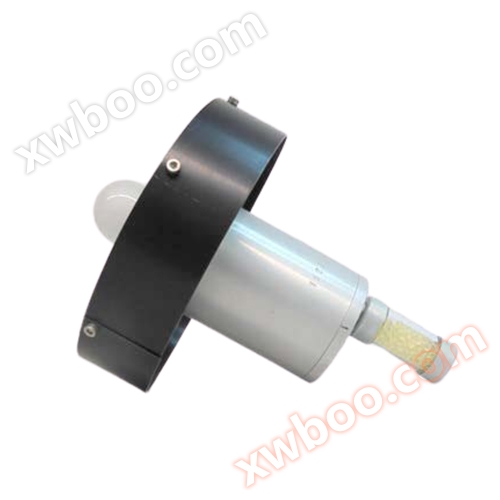
EDM 180 Particle Size Spectrometer
NegotiableUpdate on 01/15
- Model
- Nature of the Manufacturer
- Producers
- Product Category
- Place of Origin
Overview
Instrument Introduction: The EDM 180 online particle size spectrometer developed and produced by GRIMM Aerosol Technology Company in Germany uses the principle of laser scattering to simultaneously obtain the mass concentration values of PM10, PM2.5, and PM1 in the ambient atmosphere. Compliant with European standards EN 12341 (PM10), EN 14907 (PM2.5), and GOST-R standards of the Russian Federation, and certified by EPA (PM2.5). Technical features:
Product Details
Instrument Introduction:
The EDM 180 online particle size spectrometer developed and produced by GRIMM Aerosol Technology Company in Germany uses the principle of laser scattering to simultaneously obtain the mass concentration values of PM10, PM2.5, and PM1 in the ambient atmosphere. Compliant with European standards EN 12341 (PM10), EN 14907 (PM2.5), and GOST-R standards of the Russian Federation, and certified by EPA (PM2.5).
Technical features:
*Real time online continuous monitoring;
*Fully automatic self check;
*Do not replace the cutting head;
*Simultaneously analyze PM10, PM2.5, and PM1;
*Real time data of 31 particle size distributions ranging from 0.25 to 32 um can be downloaded;
*Simultaneously measure environmental temperature, relative humidity, and pressure for automatic pressure compensation;
*Error report prompt;
*The sampling flow rate is automatically kept constant at 1.2L/min;
*Automatically calculate the total sampling volume;
*The sampling dehumidification system retains semi volatile organic compounds;
*Stable operation;
*Low system maintenance, low frequency of consumables replacement, and low cost;
*Powerful analysis software (optional);
*The measurement time resolution is 6 seconds;
*No radioactive source, good shock absorption effect;
*SVC monitoring module (optional);
Measurement principle [laser scattering method]:
The vacuum pump draws ambient air into the sample chamber at a constant flow rate of 1.20L/min. The laser source generates green laser to irradiate the sample chamber at a high frequency, which is fast enough to ensure that the concentration of particles in the sample gas is within a certain range, and no particles passing through the chamber are missed. If there are particles present, laser irradiation will cause scattering. A detector that forms a 90 degree angle with the laser irradiation direction on the same plane will receive scattered light focused by the opposite mirror. The strength of the scattered light depends on the diameter of the particles and is independent of their color. The pulse signal received by the detector is correlated with the diameter of the particles that generate scattering. In this way, the detector generates corresponding pulse signals for all particles passing through the sample chamber. The pulse signal counter records the number of particles, while the pulse signal analyzer provides a classification of the corresponding pulse strength for each particle, which can obtain the size and quantity concentration distribution of each particle size. Finally, the mass concentrations of PM10, PM2.5, and PM1 were calculated through the model.
1.2L/min automatic constant flow sample:
The design of the injection port meets the requirements of the Johannesburg Convention. Using TSP injection port, no particle size separation is required, with a unique design that distinguishes it from all other particle monitoring devices on the market. Wire mesh surrounds to prevent larger objects such as insects or leaves from entering.
The dehumidification system retains semi volatile organic compounds:
When the relative humidity of the ambient air is high, condensation water is easily formed on the surface of particles. To prevent water vapor or small water droplets from entering the probe, heating is usually used, but it can cause loss of semi volatile species such as nitrates and sulfates. GRIMM company uses specially designed Nafion tubes for isothermal dehumidification of sampling gas, which can avoid the loss of semi volatile organic compounds caused by heating and drying methods. This method is patented by GRIMM company.
Powerful graphic analysis software (optional)
*Simultaneously display the mass concentrations of PM10, PM2.5, and PM1 online;
*Display the number concentration of 31 channels;
*Simultaneously display time concentration trend charts for different parameters;
*Download measurement data stored in the instrument's memory or data card;
*Replay historical data and reproduce the measurement process;
*Display the distribution of particle size, quantity, and concentration;
Technical parameters:
Measurement principle: Laser light scattering (90 °), laser diode, 660nm;
Measurement range: 0.25~32 μ m, 31 channels (F, E, MC type);
Channel threshold: (F, E, MC type):
0.25 – 0.28 – 0.30 – 0.35 – 0.40 – 0.45- 0.50 – 0.58 – 0.65 – 0.70 – 0.80 – 1.0 – 1.3 – 1.6 – 2.0 – 2.5 – 3.0 – 3.5 – 4.0 – 5.0 – 6.5 – 7.5 – 8.5 -10.0 – 12.5 – 15.0 – 17.5 – 20.0 – 25.0 – 30.0 – 32.0 μm
Storage interval time: adjustable: 1min~1h (optional: 1min, 5min, 10min, 15min, 30min, 60min);
Particle concentration: 1~2000000 p/L;
Mass concentration: 0.1~6000 μ g/m3;
Injection flow rate: 1.2L/min ± 5%, automatic constant flow;
Cleaning gas: 0.3L/min, continuous automatic cleaning of optical measuring components;
Sample gas: -20 ° C~60 ° C, relative humidity<95% (no condensation);
Dehumidification: Automatic Nafion dryer system;
Repeatability: ± 5% of maximum range;
Power supply: 230 VAC, 50 Hz (optional: 110 VAC, 60 Hz);
Operating temperature:+4~40 ° C, RH<95% (no condensation);
Performance: Maximum power: 150W, maximum current: 1.4A;
Data storage card: 1 MB~4 MB SRAM;
Sampling tube: 1.5 meters (extendable tube can be added);
Size and weight: 19 '' standard cabinet installation;
Host: 483 x 177 x 400 mm, 15kg (4U);
Sampling tube holder: 483 x 89 x 120 mm, 2kg (2U);
Model selection:
EDM180-C: Provides mass concentration values for PM10 and PM2.5;
EDM180-D: Simultaneously provide mass concentration values and total particulate matter (TC) values for PM10, PM2.5, PM1;
EDM180-F: Provides the number concentration values of particles in 31 channels;
EDM180-E: Simultaneously provide the mass concentration and TC (total number of particles) values of PM10, PM2.5, PM1, or the number concentration values of particles in 31 channels;
EDM180-MC: Simultaneously provides the mass concentration of PM10, PM2.5, PM1 (or TSP) and the number concentration of particulate matter in 31 channels;
Certification and credentials:
The GRIMM series instruments have been able to accurately calculate the values measured by laser systems into particulate matter values through 15 years of field experiments, certification, and testing processes worldwide.
At present, GRIMM's EDM 180 is an environmental particulate matter monitor (PM10 and PM2.5) certified by weight reference optical system. And become the first certified analyzer capable of simultaneously monitoring PM10 and PM2.5 online.
Optional items:
Meteorological parameter sensors;
NanoCheck particle sensor;
Automatic membrane sampling;
Data recording;
quality control
All GRIMM environmental monitoring instruments undergo a week-long online comparison run with reference instruments before leaving the factory. During the comparative operation, in addition to comparing the correlation of measurement results, temperature and humidity sensors, dehumidification functions, etc. will also be tested. All test results will be stored in the instrument to ensure that all factory instruments operate in good condition.