-
E-mail
shyishuang@163.com
-
Phone
13817714336
-
Address
85 Mingnan Road, Songjiang District, Shanghai
Product Categories
- Plate making wastewater treatment process
- Electrophoretic wastewater treatment equipment
- Integrated equipment for domestic sewage treatment
- Underground sewage treatment facilities
- Integrated equipment for domestic wastewater treatment
- Defatting wastewater treatment
- Copper wastewater treatment equipment
- Laboratory sewage treatment equipment
- Copper containing wastewater treatment equipment
- Industrial oily wastewater treatment equipment
- Industrial reverse osmosis pure water equipment
Shanghai Yishuang Environmental Technology Engineering Co., Ltd
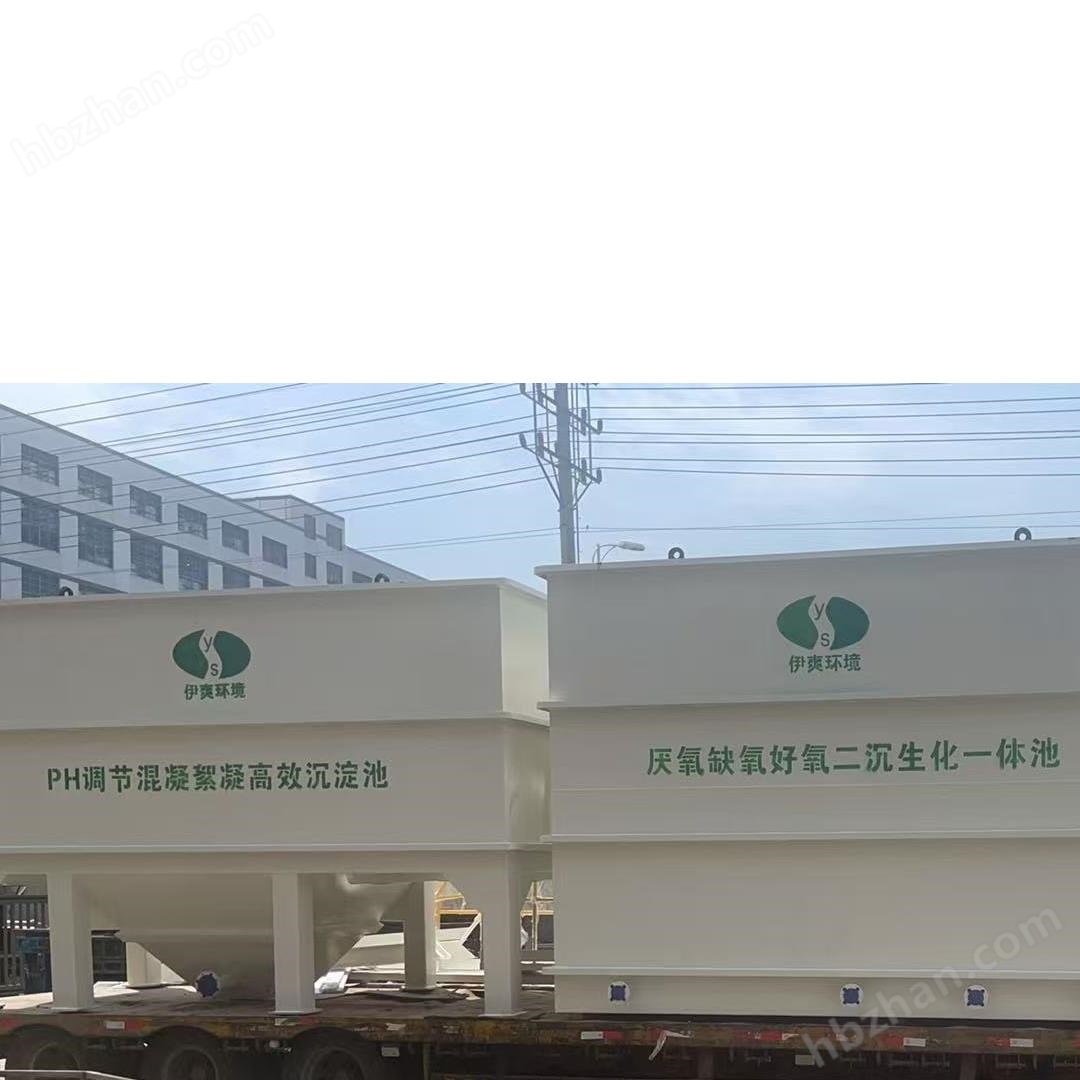
Integrated equipment for domestic sewage in highway service areas
NegotiableUpdate on 03/19
- Model
- Nature of the Manufacturer
- Producers
- Product Category
- Place of Origin
Overview
Integrated equipment for domestic sewage in highway service areas. As an important node in the transportation network, the domestic sewage generated in highway service areas contains a large amount of organic matter, suspended solids, and nitrogen and phosphorus compounds. If discharged directly without treatment, it will cause serious pollution to the surrounding soil and water bodies. As a core component of environmental protection infrastructure in service areas, domestic sewage treatment equipment achieves purification and resource utilization of sewage through the synergistic effect of physical, chemical, and biological treatment processes, and has become a standard configuration in modern service area construction.
Product Details
Integrated equipment for domestic sewage in highway service areasAs an important node in the transportation network, the domestic sewage generated by highway service areas contains a large amount of organic matter, suspended solids, and nitrogen and phosphorus compounds. If discharged directly without treatment, it will cause serious pollution to the surrounding soil and water bodies. As a core component of environmental protection infrastructure in service areas, domestic sewage treatment equipment achieves purification and resource utilization of sewage through the synergistic effect of physical, chemical, and biological treatment processes, and has become a standard configuration in modern service area construction.
Integrated equipment for domestic sewage in highway service areasTechnical principles and process characteristics
The current mainstream sewage treatment equipment in service areas mostly adopts a combination process of 'pretreatment+biological treatment+deep treatment'. In the pretreatment stage, large particle impurities and sediment in the sewage are removed through grilles and sedimentation tanks to reduce the subsequent treatment load; The biological treatment unit is dominated by A/O (anaerobic/aerobic) process and MBR (membrane bioreactor) technology, utilizing microbial communities to degrade organic matter and remove nitrogen and phosphorus. Among them, MBR process has been applied in over 60% of newly built service areas due to its advantages of small footprint and stable effluent quality; The deep processing stage uses filtration, disinfection and other processes to make the effluent meet the Class A standard of the "Pollutant Discharge Standards for Urban Sewage Treatment Plants" (GB18918-2002). Some equipment also integrates a reclaimed water reuse system, and the treated water can be used for service area greening irrigation, vehicle washing, etc., increasing water resource utilization by more than 30%.
Key points for equipment selection and operation management
When selecting equipment in the service area, it is necessary to comprehensively consider the sewage volume, water quality characteristics, and site conditions. For medium-sized service areas with an average daily sewage volume of 50-300 tons, integrated underground treatment equipment has become a popular choice due to its modular design, easy installation, and low noisechoiceEquipment buried underground can save over 30% of ground space; For large service areas with high traffic volume and complex sewage composition, a quality separation treatment system is required to collect and treat catering wastewater, domestic wastewater, and oily wastewater from gas stations by classification. In operation management, it is necessary to establish a comprehensive inspection system, focusing on monitoring key parameters such as aeration system air pressure, sludge concentration, effluent COD (chemical oxygen demand), etc. At the same time, remote monitoring can be achieved through Internet of Things technology. When equipment malfunctions, it can automatically alarm and the response time can be shortened to less than 15 minutes.
Industry development trends and technological innovation
With the advancement of the 'dual carbon' target and the acceleration of smart transportation construction, sewage treatment equipment in service areas is developing towards intelligence and low-carbon direction. The new generation of devices integrates AI water quality prediction models, which can dynamically adjust processing parameters according to changes in traffic flow, reducing energy consumption by 15% -20%; The coupling system of photovoltaic power generation and sewage treatment equipment has been piloted in multiple service areas, using solar energy to supply energy to power consuming units such as aeration and agitation, reducing carbon dioxide emissions by about 80 tons per unit annually. In addition, the application of biological ecological treatment technology has expanded the treatment scenarios, and the combination of artificial wetlands and stable ponds has been promoted in service areas of ecologically sensitive areas, achieving both sewage purification and creating landscape water bodies, forming a virtuous cycle of 'treatment reuse landscape'.
The standardization of equipment and the professionalization of operation and maintenance have also become the focus of industry development. The "Technical Regulations for Sewage Treatment Facilities in Highway Service Areas" released in 2024 unify the standards for equipment design, construction, and acceptance, requiring the average operating time (MTBF) of the equipment to be no less than 8000 hours. At the same time, the third-party operation and maintenance model is gradually becoming popular, and professional environmental protection enterprises provide full lifecycle management services for service areas through dispatching technical personnel or remote operation and maintenance platforms, reducing operation and maintenance costs by about 25% compared to traditional models. This mode not only ensures the stability of the processing effect, but also optimizes the operation and maintenance plan through big data analysis, extending the service life of the equipment to more than 15 years.
Similar Product Recommend