-
E-mail
shyishuang@163.com
-
Phone
13817714336
-
Address
85 Mingnan Road, Songjiang District, Shanghai
Product Categories
- Plate making wastewater treatment process
- Electrophoretic wastewater treatment equipment
- Integrated equipment for domestic sewage treatment
- Underground sewage treatment facilities
- Integrated equipment for domestic wastewater treatment
- Defatting wastewater treatment
- Copper wastewater treatment equipment
- Laboratory sewage treatment equipment
- Copper containing wastewater treatment equipment
- Industrial oily wastewater treatment equipment
- Industrial reverse osmosis pure water equipment
Shanghai Yishuang Environmental Technology Engineering Co., Ltd
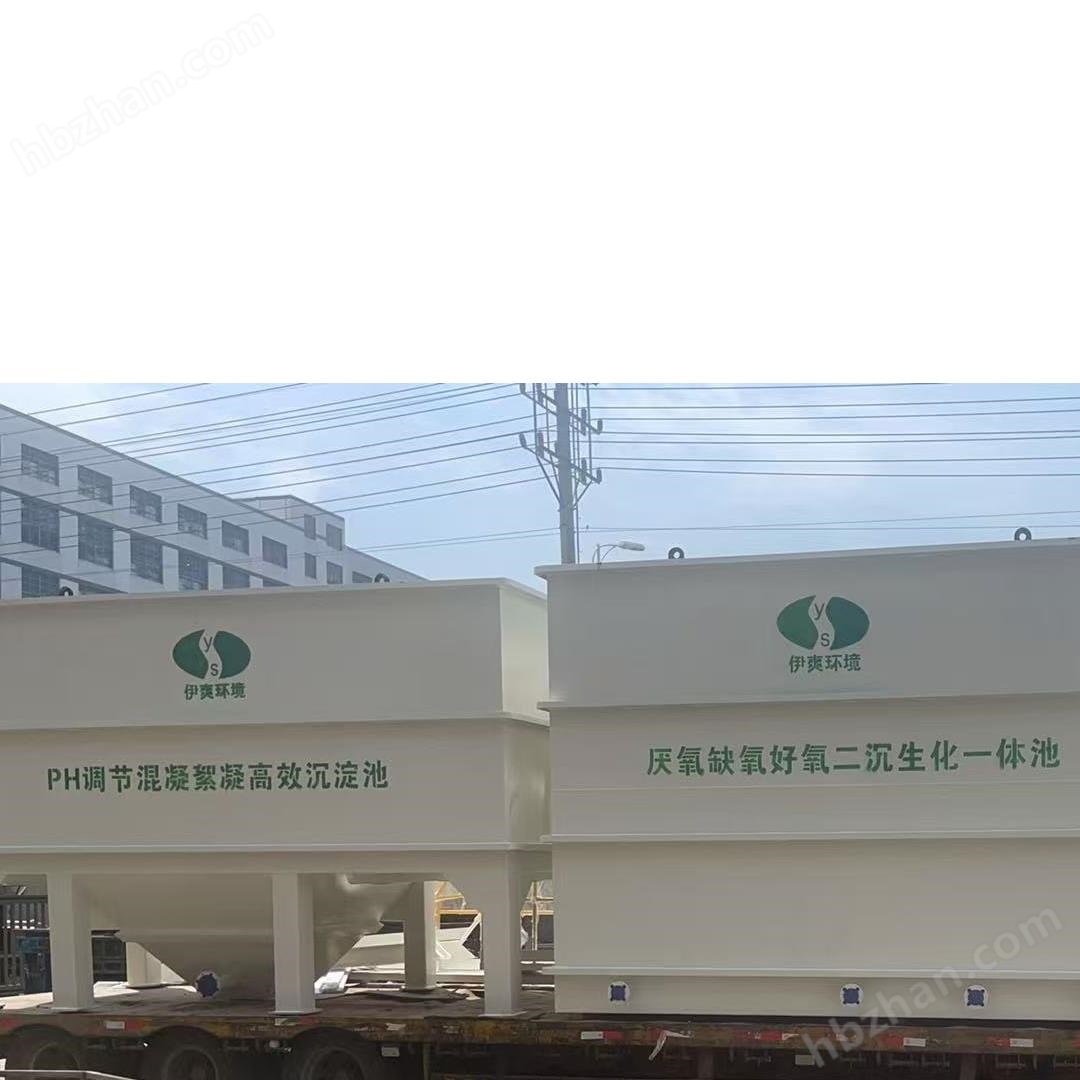
Mobile containerized integrated sewage treatment equipment
NegotiableUpdate on 03/19
- Model
- Nature of the Manufacturer
- Producers
- Product Category
- Place of Origin
Overview
Against the backdrop of increasingly severe water scarcity and environmental pollution issues, mobile containerized integrated sewage treatment equipment has become an innovative solution in the field of sewage treatment due to its advantages of high efficiency, flexibility, and modularity. This device integrates the core functions of traditional sewage treatment plants into standard containers, realizing the "plug and play" of sewage treatment facilities, providing a new idea for emergency water supply, remote area water treatment, industrial wastewater treatment and other scenarios.
Product Details
Against the backdrop of increasingly severe water scarcity and environmental pollution issues,Mobile containerized integrated sewage treatment equipmentWith its advantages of high efficiency, flexibility, and modularity, it has become an innovative solution in the field of sewage treatment. This device integrates the core functions of traditional sewage treatment plants into standard containers, realizing the "plug and play" of sewage treatment facilities, providing a new idea for emergency water supply, remote area water treatment, industrial wastewater treatment and other scenarios.
1、 Equipment Structure and Technical Principles
The main body of the equipment adopts a 20 foot or 40 foot standard container structure, which integrates pre-treatment system, biological reaction unit, sedimentation and filtration module, disinfection device and intelligent control system inside. Its core technology is based on MBR (membrane bioreactor) process or SBR (sequencing batch reactor), which combines efficient microbial communities with membrane separation technology to achieve deep purification of domestic and industrial wastewater. For example, the processing flow of a certain model of equipment includes: grid filtration to remove large particle impurities → regulating the balance of water quality and quantity in the tank → anaerobic/aerobic biological reaction tank to degrade organic matter → membrane module to intercept activated sludge and suspended solids → ultraviolet disinfection to meet emission standards. The PLC control system equipped with the equipment can monitor water quality parameters (COD, ammonia nitrogen, turbidity, etc.) in real time, and automatically adjust operating parameters such as aeration rate and reflux ratio to ensure stable treatment effect.
IIMobile containerized integrated sewage treatment equipmentCore advantages and application scenarios
1. Highly integrated and rapidly deployed
All components have been installed and debugged before the equipment leaves the factory. On site, only the inlet and outlet pipelines and power system need to be connected to start. The deployment cycle has been shortened from several months in traditional sewage treatment plants to 1-3 days. After the typhoon disaster in a coastal city in 2023, three 40 foot equipment were installed within 24 hours, treating 500 tons of sewage per day, effectively avoiding secondary water pollution.
2. Flexible mobility and modular expansion
Designed with standard container dimensions, it can be conveniently transported by road, rail, or sea. The processing capacity of a single device is usually 50-500 tons per day, and multiple devices connected in parallel can form a processing capacity of tens of thousands of tons. A certain oil drilling platform uses two 20 foot equipment to solve the problem of domestic sewage treatment for offshore workers.
3. Intelligence and low operational requirements
Equipped with a remote monitoring and fault diagnosis system, operation and maintenance personnel can view the real-time running status through a mobile app. The membrane module is made of PVDF material, with a service life of up to 3-5 years. Biological strains can maintain activity in low temperature (5 ℃) environments, making it suitable for applications in cold regions.
4. Wide applicability
Municipal emergency: urban waterlogging treatment, temporary resettlement site sewage treatment
Industrial sector: Wastewater pretreatment in mining and chemical industrial parks, with a reuse rate of over 80%
Rural environmental governance: single village or joint village sewage treatment, occupying only one-third of the traditional facility area
Military and Field Operations: Sewage Treatment Support for Mobile Scenarios such as Campsites and Exploration Teams
3、 Technological Innovation and Development Trends
In recent years, this type of equipment has made breakthroughs in energy conservation, consumption reduction, and resource recovery. The photovoltaic driven equipment developed by a certain environmental protection enterprise achieves energy self-sufficiency rate of over 60% through solar power supply; Another equipment integrates sludge dewatering and biogas recovery devices, which convert the sludge generated during the treatment process into organic fertilizers or biogas energy. In the future, with the deepening application of AI algorithms in water quality prediction and optimization control, as well as the popularity of new membrane materials such as graphene composite membranes, equipment will develop towards low energy consumption, high intelligence, and multifunctionality. For example, the "smart water treatment unit" combined with Internet of Things technology can achieve collaborative operation of multiple devices within a region and dynamically allocate processing loads.
4、 Challenges and Countermeasures
Despite its significant advantages, the promotion of equipment still faces challenges, such as high initial investment costs (about 500000 to 2 million yuan per unit), susceptibility of membrane components to oil and grease pollution, and high energy consumption for insulation in cold regions. In response, the industry has reduced initial customer investment through financing leasing models, developed self-cleaning membrane components to reduce maintenance frequency, and adopted polyurethane insulation materials and heat pump technology to enhance low-temperature environmental adaptability. The newly revised "Pollutant Discharge Standards for Urban Sewage Treatment Plants" (GB18918-2024) in 2024 further promotes the technological upgrading of equipment and encourages enterprises to improve nitrogen and phosphorus removal efficiency. Some products have achieved effluent quality that meets the Class IV standard for surface water.
As a revolutionary sewage treatment model, mobile containerized integrated equipment is reshaping the technological landscape of the water treatment industry. The concept of transforming "centralized processing" into "distributed governance" not only lowers the threshold for infrastructure construction, but also provides flexible and efficient solutions for sustainable management of water resources. With the advancement of carbon neutrality goals, the potential applications of such devices in areas such as wastewater resource utilization and energy recovery will be further released, contributing significant strength to water security.

Similar Product Recommend