-
E-mail
shyishuang@163.com
-
Phone
13817714336
-
Address
85 Mingnan Road, Songjiang District, Shanghai
Product Categories
- Plate making wastewater treatment process
- Electrophoretic wastewater treatment equipment
- Integrated equipment for domestic sewage treatment
- Underground sewage treatment facilities
- Integrated equipment for domestic wastewater treatment
- Defatting wastewater treatment
- Copper wastewater treatment equipment
- Laboratory sewage treatment equipment
- Copper containing wastewater treatment equipment
- Industrial oily wastewater treatment equipment
- Industrial reverse osmosis pure water equipment
Shanghai Yishuang Environmental Technology Engineering Co., Ltd
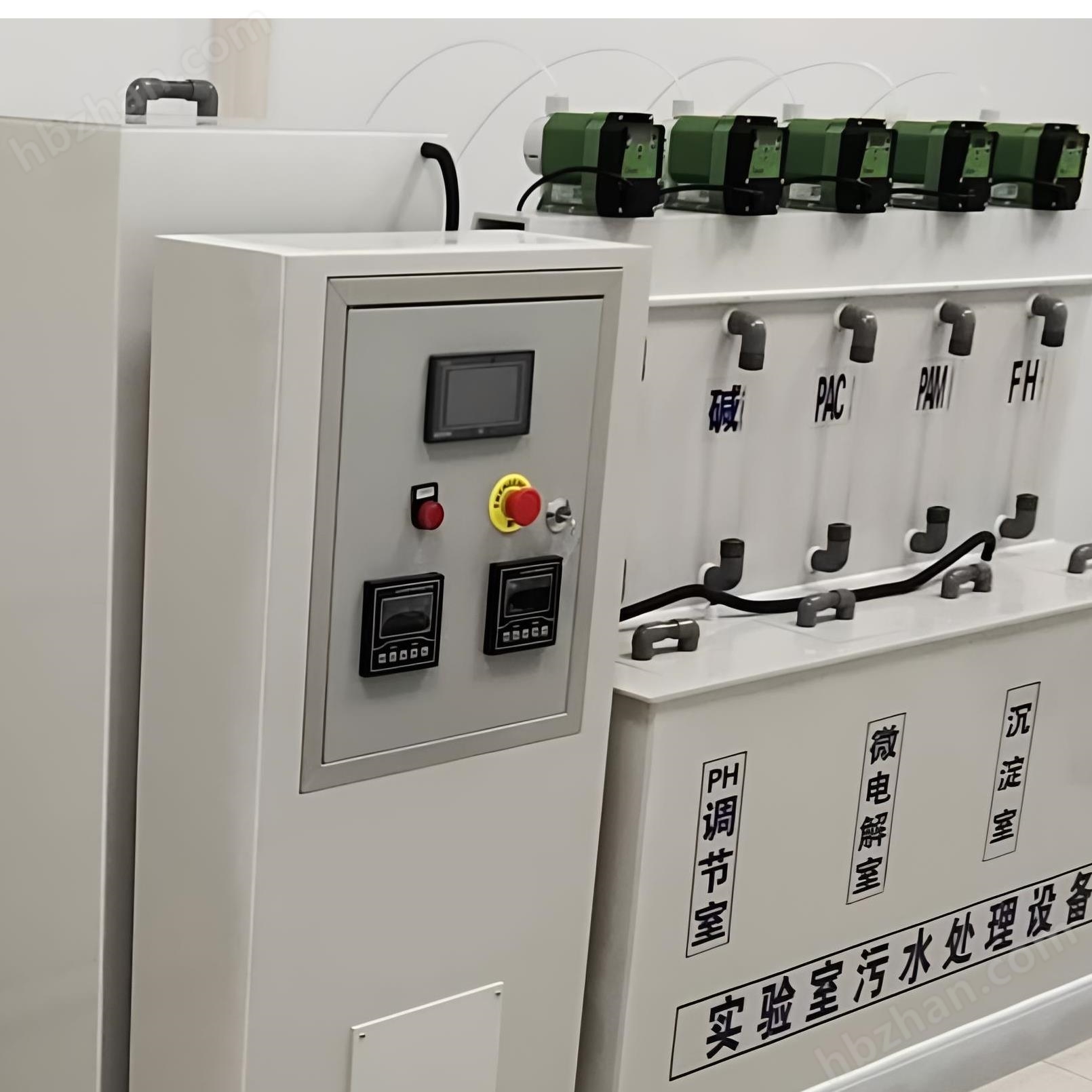
Wastewater treatment in university laboratories of higher education institutions
NegotiableUpdate on 03/19
- Model
- Nature of the Manufacturer
- Producers
- Product Category
- Place of Origin
Overview
With the vigorous development of higher education and scientific research, the wastewater treatment in university laboratories, as an important carrier of technological innovation, has attracted increasing attention in terms of the daily discharge and treatment of wastewater generated during their operation. The composition of laboratory wastewater is complex and the types of pollutants are diverse. Improper treatment not only poses a potential threat to the ecological environment, but may also affect the accuracy of scientific research data and the health and safety of laboratory personnel. Therefore, building a scientific and efficient laboratory sewage treatment system has become a key link for higher education institutions to achieve green scientific research and sustainable development.
Product Details
Wastewater treatment in university laboratories of higher education institutionsWith the vigorous development of higher education and scientific research, university laboratories, as important carriers of technological innovation, have increasingly attracted attention to the issue of sewage discharge and treatment generated in their daily operations. The composition of laboratory wastewater is complex and the types of pollutants are diverse. Improper treatment not only poses a potential threat to the ecological environment, but may also affect the accuracy of scientific research data and the health and safety of laboratory personnel. Therefore, building a scientific and efficient laboratory sewage treatment system has become a key link for higher education institutions to achieve green scientific research and sustainable development.
Wastewater treatment in university laboratories of higher education institutionsMain characteristics and classification of sewage
The complexity of university laboratory wastewater is mainly reflected in the diversity of its sources. According to different experimental types and research directions, wastewater can be divided into four categories: inorganic wastewater, organic wastewater, biological wastewater, and mixed wastewater. Common heavy metal ions (such as lead, mercury, chromium, etc.), acidic and alkaline substances, and toxic chemical reagents in inorganic wastewater mainly come from experiments such as chemical synthesis and material preparation; Organic wastewater contains a large amount of organic solvents (such as ethanol, formaldehyde), oily substances, and organic synthesis products, which are mostly produced in research fields such as biochemistry and organic chemistry; Biological wastewater includes culture media containing pathogenic microorganisms, animal experimental waste liquids, etc., which exist in laboratories such as life sciences and medicine; Mixed wastewater contains multiple pollutants due to cross experimental operations, significantly increasing the difficulty of treatment. In addition, laboratory wastewater also has characteristics such as unstable discharge volume, high instantaneous concentration, and intermittent discharge, which puts higher demands on the flexibility and shock resistance of the treatment system.
Common problems in current laboratory wastewater treatment
Although most universities have established preliminary sewage treatment facilities, there are still many problems in actual operation. Firstly, some laboratories lack a comprehensive classification and collection system, and the phenomenon of arbitrary mixing and discharge of sewage of different properties is common, which makes it difficult for subsequent treatment processes to play a targeted role. For example, when inorganic wastewater containing heavy metals is mixed with organic wastewater, chemical reactions may occur to generate more difficult to degrade complexes, increasing treatment costs. Secondly, the processing technology and equipment configuration are insufficient, and many universities still rely on traditional physical and chemical treatment methods (such as neutralization precipitation, simple filtration), which have limited removal effects on low concentration pollutants and difficult to degrade organic matter, making it difficult to meet increasingly strict environmental emission standards. In addition, the lack of management mechanisms is also an important bottleneck, including a lack of professional sewage treatment operators, inadequate daily monitoring systems, and incomplete emergency response plans, resulting in low operational efficiency of the treatment system and even safety hazards.
Optimizing the key path of laboratory wastewater treatment
In response to the above issues, higher education institutions need to collaborate from the three levels of technology, management, and system to enhance the laboratory sewage treatment capacity. At the technical level, the process of "classification treatment+cascade purification" should be promoted. For inorganic wastewater, chemical precipitation method can be used to remove heavy metal ions, combined with membrane separation technology to achieve deep purification of water quality; Organic wastewater can be degraded through anaerobic aerobic biological treatment processes, and advanced oxidation technologies such as Fenton oxidation and ozone oxidation can be used if necessary to improve treatment efficiency; Biological wastewater needs to undergo strict disinfection and inactivation treatment to ensure that pathogenic microorganisms are discharged in compliance with standards. At the same time, intelligent processing equipment is introduced to monitor sewage quality and treatment process in real time through an online monitoring system, achieving automatic adjustment of chemical dosage, optimization of operating parameters, and improving the stability and accuracy of the treatment system.
A full process management system of "source control process supervision end of pipe processing" needs to be established. In terms of source control, strengthen the environmental awareness training of experimental personnel, promote green experimental technologies (such as micro experiments and solvent recovery and reuse), and reduce pollutant emissions from the source; In the process supervision, strictly implement the sewage classification collection system, set clear classification labels and dedicated collection containers, and establish a laboratory sewage generation and discharge ledger to achieve traceable management; The final treatment stage requires regular maintenance and performance evaluation of the treatment facilities to ensure that the treatment effect continues to meet the standards. In addition, universities should equip professional environmental protection technicians to be responsible for the daily operation and technological upgrading of sewage treatment systems, while maintaining close communication with environmental protection departments to timely understand emission standards and policy requirements.
Universities should formulate the "Laboratory Sewage Treatment Management Measures", clarify the division of responsibilities among departments and laboratory personnel, and incorporate sewage treatment work into the laboratory safety assessment system; Establish special funds for the construction, renovation, and maintenance of sewage treatment facilities to ensure the sustainability of capital investment; Strengthen cooperation with scientific research institutions and environmental protection enterprises, introduce treatment technologies and management experience, and promote the standardization and normalization of laboratory sewage treatment construction. At the same time, encourage scientific research and development related to laboratory sewage treatment, develop low-cost and high-efficiency treatment technologies, achieve integrated development of "industry university research application", and provide technical support for university laboratory sewage treatment.

Similar Product Recommend