-
E-mail
1743251064@qq.com
-
Phone
13403270026
-
Address
Botou Development Zone, Hebei Province
Product Categories
- Pulse dust collector
- Star shaped unloader
- Dust bag
- Spiral conveyor
- Cyclone dust collector
- Dust humidifier
- Dust removal framework
- Low temperature plasma exhaust gas treatment equipment
- precipitator
- Dust removal accessories
- Single dust collector
- Boiler dust collector
- bag-type dust collector
- Plasma oxygen integrated machine
- Catalytic combustion equipment
- Industry dust collector
- Welding smoke purification equipment
- other
- UV photo oxygen exhaust gas treatment equipment
Botou Longnuo Environmental Protection Equipment Co., Ltd

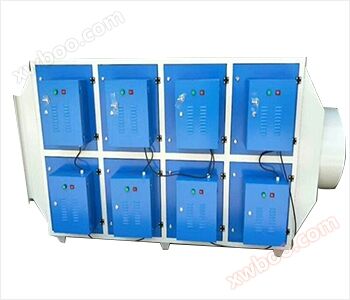
Low temperature plasma exhaust gas treatment equipment
NegotiableUpdate on 08/02
- Model
- Nature of the Manufacturer
- Producers
- Product Category
- Place of Origin
Overview
Introduction to low-temperature plasma exhaust gas treatment equipment: Exhaust gas treatment equipment mainly refers to an environmentally friendly device that uses different process technologies to reduce harmful components in exhaust emissions through recycling or removal, in order to protect the environment and purify the air, so that our environment is not polluted
Product Details

Introduction to Low Temperature Plasma Waste Gas Treatment Equipment
Exhaust gas treatment equipment mainly refers to an environmental protection device that uses different process technologies to recover, remove, and reduce harmful components in exhaust emissions, in order to protect the environment and purify the air, so that our environment is not polluted.
Exhaust gas treatment equipment mainly refers to an environmental protection device that uses different process technologies to recover, remove, and reduce harmful components in exhaust emissions, in order to protect the environment and purify the air, so that our environment is not polluted.
Plasma is a gas in an ionized state, and its English name is plasma. It was named by American scientist Muir in 1927 when studying the discharge phenomenon in mercury vapor at low pressure. Plasma is composed of a large number of electrons, neutral atoms, excited state atoms, photons, and free radicals, but the number of charges of electrons and positive ions must exhibit electrical neutrality, which is the meaning of "plasma". Plasma differs from solids, liquids, and gases in many aspects of conductivity and electromagnetic influence, hence it is also referred to as the fourth state of matter. According to the state, temperature, and ion density, plasmas can usually be divided into high-temperature plasmas and low-temperature plasmas (bulk and cold plasmas). The ionization degree of high-temperature plasma is close to 1, and various particles have almost the same temperature and are in thermodynamic equilibrium. It is mainly used in the study of controlled thermonuclear reactions. Low temperature plasma, on the other hand, is in a non-equilibrium state where the temperatures of various particles are not the same. The electron temperature (Te) is greater than or equal to the ion temperature (Ti), reaching over 104K, while the temperature of its ions and neutral particles can be as low as 300-500K. Generally, gas electron emitters belong to low-temperature plasmas.
As of 2013, research on the mechanism of low-temperature plasma is believed to be the result of inelastic particle collisions. Low temperature ionization is rich in electrons, ions, free radicals, and excited state molecules. High energy electrons collide with gas molecules (atoms), converting energy into the internal energy of ground state molecules (atoms) and undergoing a series of activation states such as excitation, dissociation, and ionization. On the one hand, it opens the bonds between gas molecules, generating some single-molecules and solid particles; Another force arises. Free radicals such as OH and H2O2, as well as highly oxidizing O3, play a decisive role in this process with high-energy electrons, and the thermal movement of ions only has side effects. Under normal pressure, the electron temperature in the highly non-equilibrium plasma generated by gas discharge is much higher than the gas temperature (around 100 ℃ at room temperature). Various types of chemical reactions may occur in non-equilibrium plasmas, mainly determined by the average energy of electrons, electron density, gas temperature, concentration of harmful gas molecules, and ≥ gas composition. This provides a solution for reactions that require high activation energy, such as the removal of recalcitrant pollutants in the atmosphere. Additionally, it can also be used to treat volatile organic pollutants and sulfur-containing pollutants with low concentrations, high flow rates, and high air volumes.
The common method of generating plasma is gas discharge, which refers to the ionization of an electron from a gas atom or molecule through a certain mechanism, forming a gas medium called ionized gas. If ionized gas is generated by an external electric field and forms a conduction current, this phenomenon is called gas discharge. According to the mechanism of discharge, the pressure source properties of the gas, and the geometric shape of the electrode, gas discharge plasma can be mainly divided into the following forms: ① glow discharge; ③ Dielectric barrier discharge; ④ Radio frequency discharge; ⑤ Microwave discharge. Regardless of the form of plasma generated, high-voltage discharge is required. Easy to ignite and pose a danger. Due to the treatment of gaseous pollutants, it is generally required to be carried out at atmospheric pressure.