-
E-mail
1743251064@qq.com
-
Phone
13403270026
-
Address
Botou Development Zone, Hebei Province
Product Categories
- Pulse dust collector
- Star shaped unloader
- Dust bag
- Spiral conveyor
- Cyclone dust collector
- Dust humidifier
- Dust removal framework
- Low temperature plasma exhaust gas treatment equipment
- precipitator
- Dust removal accessories
- Single dust collector
- Boiler dust collector
- bag-type dust collector
- Plasma oxygen integrated machine
- Catalytic combustion equipment
- Industry dust collector
- Welding smoke purification equipment
- other
- UV photo oxygen exhaust gas treatment equipment
Botou Longnuo Environmental Protection Equipment Co., Ltd
Plasma exhaust gas treatment equipment
NegotiableUpdate on 08/02
- Model
- Nature of the Manufacturer
- Producers
- Product Category
- Place of Origin
Overview
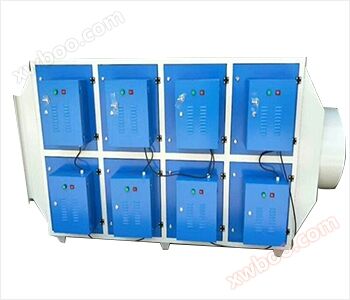
Introduction to plasma exhaust gas treatment equipment: Low temperature plasma is the fourth state of matter after solid, liquid, and gas. When the applied voltage reaches the discharge voltage of the gas, the gas is broken down, producing a mixture including electrons, various ions, atoms, and free radicals
Product Details

Low temperature plasma exhaust gas treatment technology uses dual medium barrier discharge to generate plasma, which has a high density. It was initially used for the decomposition and treatment of fluorocarbons and halogenated substances, and later extended to the treatment of industrial odors, odors, and toxic and harmful gases. This technology is energy-saving, environmentally friendly, and has a wide range of applications. Almost all odors and odors generated in chemical production processes can be treated, and it has a good decomposition effect on dioxins.
The plasma industrial waste gas treatment technology has developed standardized waste gas treatment equipment, which uses the generated high-energy electrons, free radicals and other active particles to activate, ionize, and crack the various components in industrial waste gas, causing a series of complex chemical reactions such as decomposition and oxidation. After multi-stage purification, various odor and odor pollutants emitted from pollution sources are eliminated, and toxic and harmful gases are reduced to low toxicity and non toxicity, protecting the human living environment. Due to its ability to decompose pollutant molecules and low processing energy consumption, it has opened up a new approach for the treatment of industrial waste gas.
Low temperature plasma is the fourth state of matter after solid, liquid, and gas. When the applied voltage reaches the discharge voltage of the gas, the gas is broken down, producing a mixture including electrons, various ions, atoms, and free radicals. During the discharge process, although the electron temperature is high, the temperature of heavy particles is low, and the entire system exhibits a low-temperature state, hence it is called low-temperature plasma.
Low temperature plasma degradation of pollutants utilizes the interaction between high-energy electrons, free radicals, and other active particles with pollutants in exhaust gas, causing pollutant molecules to decompose in a very short period of time and undergo various subsequent reactions to achieve the goal of pollutant degradation. (Note: Compared to high-temperature plasma, low-temperature plasma operates at room temperature.) The plasma reaction zone is rich in highly energetic substances such as high-energy electrons, ions, free radicals, and excited state molecules. The pollutants in the exhaust gas can react with these high-energy substances, causing them to decompose in a very short period of time and undergo various subsequent reactions to achieve the goal of degrading pollutants.