- Phone
-
Address
3-3, Enterprise Shushang District, No. 18 Jingxing Street, Changping District, Beijing
Product Categories
- stereoscopic monitoring
- Monitoring the hygroscopic growth characteristics of particulate matter
- Ozone/photochemical pollution monitoring
- Greenhouse gas monitoring
- Carbon aerosol monitoring
- Haze monitoring
- Monitoring of particulate matter source apportionment components
- AQI monitoring of ambient air quality
Beijing Saikema Environmental Protection Instrument Co., Ltd

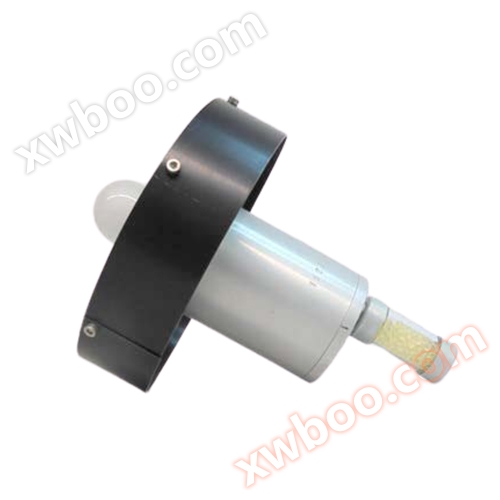
M3000 Particle Moisture Absorption/Volatility Analyzer
NegotiableUpdate on 01/06
- Model
- Nature of the Manufacturer
- Producers
- Product Category
- Place of Origin
Overview
M3000 Particle Moisture Absorption/Volatility Analyzer
Product Details
Background introduction:
When the relative humidity of atmospheric particles increases in the surrounding environment, their particle size will increase to a certain extent after absorbing moisture. The hygroscopic growth characteristics of particulate matter not only affect its actual size in the atmosphere, but also alter its optical properties.
Mainly reflected in:
(1) Affects the optical properties of particulate matter, including particle size, phase function, and refractive index. The refractive index is an important index that represents the direct radiative forcing and the impact of particulate matter on reducing atmospheric visibility;
(2) Research has shown that the particle size of aerosol plays a more significant role in its nucleation reaction than its chemical composition, affecting the properties of particulate matter as cloud condensation nuclei;
(3) The hygroscopicity of particulate matter can affect the multiphase chemical reactions of particulate matter and the generation of secondary aerosols, causing changes in aerosol concentration, particle size distribution, and chemical composition;
(4) The hygroscopicity of particulate matter can also affect human health. The settling rate and position of particulate matter entering the human body are determined by the particle size, while moisture absorption directly affects the particle size.
Main functions:
The M3000 particulate matter hygroscopicity/volatility analyzer mainly measures the hygroscopicity growth coefficient/volatility coefficient of particulate matter, and its main functions are as follows:
1. Measure the Hygroscopicity Growth Factor (HGF) and Volatility Growth Factor (VGF) of specific particle sizes generated in the environment or laboratory;
2. Estimating the ratio of hygroscopicity/volatile chemical components of particulate matter and the mixing state of particles through the distribution of HGF and VGF;
3. Measure the (dry) particle size distribution of particulate matter in the environment.
Performance indicators:
*Humidity regulation range: 20% -90%, deviation after humidity stabilization (RMS):<1.5% (RH=90%);
*Heating temperature adjustment range: 20 ℃ -300 ℃, deviation after temperature stabilization (RMS):<1.5 ℃;
*Particle size measurement range: 10nm-1000nm (SMPS mode); 10-300nm (H/V-TDMA mode);
*Relative humidity stabilization time:<60 minutes (20% -90%);
*Temperature stabilization time:<600s (room temperature -300 ℃);
*Measurement range of condensation counter: 0.01-1 × 10⁵ #/cm3;
*Working temperature: 15-35 ° C; Working pressure: 600-1030hPa;
*Power consumption (including vacuum pump): 1200W; operating voltage: 220V AC;
*Control and data acquisition software: written in Labview 2013, fully automated operation; Adjustable measurement parameters include measurement mode, multiple single sorting particle sizes, humidity cycling, temperature cycling, particle size range (SMPS), etc; Adjustable instrument parameters include sample flow rate, DMA sheath flow rate, etc. Automatic data recording;
Offline data inversion software: invert HGF-PDF, VGF-PDF liquid water content (ALWC), etc. *
Accessories and optional functions:
1. Temperature control tube (adjustable from 20-300 ℃), expanding Volatility TDMA function;
2. Calibration system;
3. Aerosol particle cutting head (PM1/PM2.5 impactor).
Workflow:
Particle size spectrum measurement (SMPS)
Environmental aerosols enter the Nafion dryer and are dried to RH<20%. The particles are charged in a known distribution using a Kr85 neutralizer or X-ray. DMA1 adjusts the voltage to sort aerosols of different sizes according to the user's selected particle size range, and then enters the CPC counting.
Measurement of Moisture Absorption Growth Coefficient (HTDMA)
The environmental aerosol enters the diffusion drying tube and is dried to RH<20%. The particles are charged in a known distribution through a Kr85 neutralizer or X-ray. The first DMA adjusts the voltage to sort the aerosol according to the user's selected particle size (such as 40, 80, 150nm), and exposes the particle size to the user set relative humidity through a humidification tube (Nafion humidifier). The second DMA scans the particle size after moisture absorption, and then enters the CPC counting. This measures the aerosol hygroscopic growth factor and mixing state.
Volatility Coefficient Measurement (VTDMA)
Similar to HTDMA measurement, only using temperature controlled heating tubes instead of humidification tubes, the measured result VGF ≤ 1.0. At different temperatures, different substances will evaporate, and VGF will change accordingly, which can infer the chemical composition and mixing state of the original particles.