Welcome Customer !

Membership

Help

Yancheng Hengtel Environmental Protection Technology Co., Ltd
Custom manufacturer

Main Products:

cep-online>Products

Yancheng Hengtel Environmental Protection Technology Co., Ltd

  • E-mail

    3271614727@qq.com

  • Phone

    13962029582

  • Address

    No. 2 Road, Private Industrial Park, Jianhu County

Contact Now

Manufacturer of integrated boosting and stabilizing equipment for fire box pumps

NegotiableUpdate on 01/26
Model
Nature of the Manufacturer
Producers
Product Category
Place of Origin
Overview
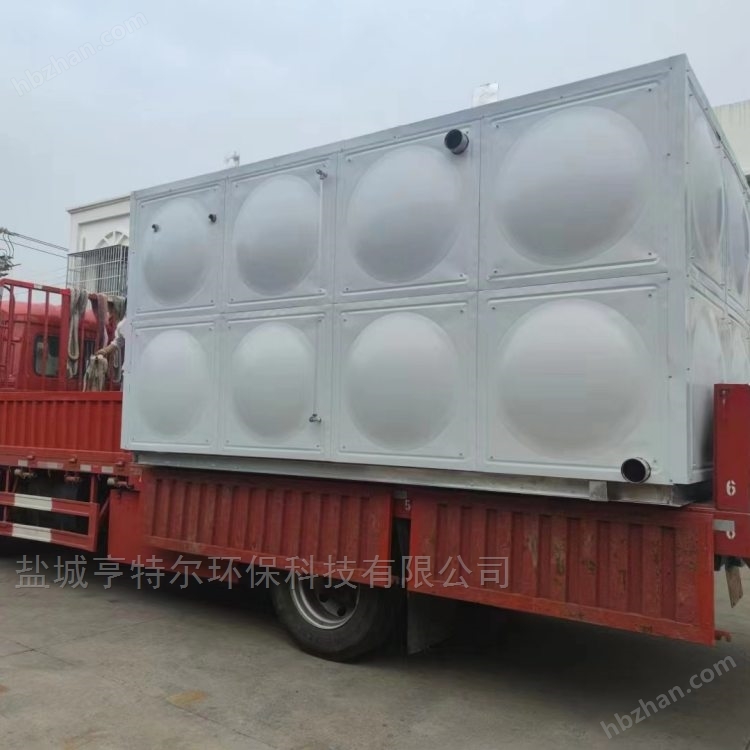
The manufacturer of integrated boosting and stabilizing equipment for fire box pumps is a modular fire water supply equipment that integrates fire water tanks, boosting pump sets, stabilizing systems, and intelligent control systems. Its core function is to provide continuous and stable water pressure and initial fire water consumption for building fire protection systems (fire hydrants, automatic sprinklers)
Product Details

The integrated boosting and stabilizing equipment for fire box pumps is designed toFire water tank, booster pump set, voltage stabilization system, intelligent control systemThe modular fire water supply equipment integrated into one has the core function of providing continuous and stable water pressure and initial fire water consumption for building fire protection systems (fire hydrants, automatic sprinklers), ensuring that the most unfavorable fire protection facilities can quickly start and reach the design flow pressure in case of a fire. It is widely used in various building fire water supply scenarios, especially suitable for projects with tight land conditions, short construction periods, and high demand for intelligence.

1、 Core composition and structural design of equipment

The equipment adopts a "factory prefabrication+modular integration" design, with core components including a water tank system, a pump system, a control and protection system, and auxiliary components, all of which work together to achieve the function of boosting and stabilizing pressure:

1. Water tank system (water storage and quality assurance)

Component Details mainstream configuration core function
Material Selection -Conventional environment: SUS304 food grade stainless steel (corrosion-resistant, no secondary pollution)-Highly corrosive environment (chemical, coastal): 316L stainless steel (resistant to chloride ion corrosion)-Economic choice: BDF composite board (outer layer galvanized steel plate+inner layer stainless steel, balancing strength and corrosion resistance) Store initial firefighting water (usually meeting a fire duration of 30 minutes) to ensure that the water quality meets firefighting requirements
structural design -Prefabricated module (1m × 1m/1m × 2m), bolted connection without welding, to avoid stress corrosion-Internally equipped with galvanized tension bars and column supports, the top can withstand the pressure of soil cover (in underground scenarios)-Bottom curved/inclined design, no dead corners for water accumulation, equipped with drainage pipes for easy cleaning Improve structural stability, adapt to underground/above ground installation, and reduce maintenance difficulty
auxiliary component Inlet valve (float/electromagnetic control), overflow pipe, water level sensor (accuracy ± 1mm), ventilation cap Automatic water replenishment, anti overflow, real-time monitoring of water level to ensure the normal operation of the water tank

2. Pump set system (pressure boosting and stabilizing core)

Pump set type Specification parameters (typical configuration) core function
Pressure stabilizing pump (1-2 units) -Type: Small flow high head centrifugal pump-Flow rate: 5-10L/s, head: 0.1-0.2MPa higher than the system design pressure-Power: 2.2-7.5kW-Configuration logic: 1 for use and 1 for backup (to balance wear and improve reliability) Maintain the pressure of the pipeline network on a daily basis, compensate for minor system leaks, and avoid frequent starting of the main pump
Boosting main pump (2 units) -Type: XBD fire special pump (compliant with GB 6245-2019 standard)-Flow rate: 20-60L/s (suitable for different building fire protection levels)-Head: 50-120m (calculated based on building height and pipeline loss)-Power: 30-75kW-Configuration logic: 1 for use and 1 for backup (automatic switching in case of fire) Rapid pressurization during a fire, providing the design flow and pressure of the fire protection system to meet the water demand at the most unfavorable point
pressure tank -Type: Diaphragm type (to avoid water pollution)-Capacity: 500-1000L-Work pressure: 0.6-1.0MPa Store buffer water volume (about 300L), stabilize pipeline pressure, absorb water hammer impact, and reduce the number of pump unit starts and stops

3. Control and Protection System (Intelligent Linkage Core)Manufacturer of integrated boosting and stabilizing equipment for fire box pumps

core component Function Configuration Adaptation scenario
PLC control cabinet -Protection level IP68 (suitable for humid environments)-Built in fire specific control program, supporting automatic/manual switching Equipment core control unit, coordinating the operation of various components
Sensor group Pressure sensor (accuracy ± 0.02MPa), water level sensor, temperature sensor, current sensor Real time collection of pipeline pressure, water tank level, and pump unit status data
Remote monitoring module 4G/5G/Ethernet communication, supporting remote access via mobile app/PC Adapt to smart cities, unmanned scenarios, remote monitoring and operation
protection function Low water level protection (preventing pump dry burning), overpressure protection (safety valve pressure relief), overload protection, fault alarm (sound and light+remote push) Prevent equipment damage and improve operational safety

4. Auxiliary components (ensuring system stability)

  • Pipeline system: Stainless steel/carbon steel anti-corrosion pipeline, butterfly valve (cut-off/regulating), check valve (anti backflow), filter (anti impurity blockage)

  • Shock absorption and noise reduction: The pump base is equipped with rubber shock pads, and the pipeline is equipped with soft joints to reduce operating noise (≤ 75dB)

  • Emergency configuration: optional EPS emergency power supply (maintain control system operation for ≥ 30 minutes after power failure)


2、 Working principle and operation process

Equipment operation is divided intoDaily voltage stabilization mode, fire pressurization mode, fault emergency mode, system recovery modeAutomated control throughout the entire process, without the need for manual intervention:

1. Daily voltage stabilization mode (core: maintaining pipeline pressure)

  • The stabilizing pump continues to operate, stabilizing the pipeline pressure at the set value (such as 0.8MPa ± 0.02MPa);

  • The pressure tank stores buffer water volume. When there is a slight leakage or low flow of water in the system, the pressure tank directly replenishes the water to avoid frequent start and stop of the stabilizing pump;

  • The water tank is automatically replenished with water through a float valve/solenoid valve to maintain the water level within the design range (usually 60% -90% of the tank capacity).

2. Fire pressurization mode (core: quickly providing fire water)

Fire occurs → Fire hydrant/sprinkler system sprays water → Sudden drop in pipe network pressure →
  1. The pressure sensor detects that the pressure is below the start-up threshold (such as 0.7MPa), and the PLC controller immediately starts one booster main pump;

  2. If the pressure continues to decrease (to meet a larger flow rate), the standby main pump will be automatically started (multiple pumps running in parallel), and the design flow pressure will be output;

  3. The water tank continues to supply water, and the water level sensor monitors in real time. When the water level drops to the low water level warning line (usually 10% of the tank volume), an audible and visual alarm is issued, and the main pump is stopped to prevent dry burning.

3. Fault emergency mode

  • Pump group failure: If the running pump is overloaded, short circuited, or experiences mechanical failure, the system will automatically switch to the backup pump and push a fault alarm through SMS/APP (indicating the location and cause of the fault);

  • Pipeline overpressure: When the pipeline pressure exceeds 1.15 times the design value, the safety valve automatically opens to release pressure and protect the pipeline and equipment;

  • Emergency power outage: When equipped with EPS power supply, the control system can still operate after power outage, ensuring that the main pump can be started manually/automatically.

4. System recovery mode

  • After the fire is extinguished, manually/automatically reset the system, restart the stabilizing pump, and restore the pressure of the pipeline network;

  • The water tank automatically replenishes water to the design water level, and the equipment returns to the daily stable pressure state.

3、 Key technical parameters and model analysis

1. Core technical parameters (general scope)

parameter category numerical range Design Basis
Water tank capacity 18-100m³ Meet the initial fire water demand requirements (GB50974-2014: fire hydrant system ≥ 10m ³, sprinkler system ≥ 15m ³, shared system ≥ 20m ³)
work pressure 0.3-1.6MPa Suitable building height: ≤ 150m (customized for ultra-high voltage scenarios)
Main pump flow rate 20-80L/s Calculated according to the fire protection level of the building (such as a high-rise office building with a fire hydrant flow rate ≥ 40L/s)
voltage regulation accuracy ±0.02MPa Ensure stable pressure of fire-fighting facilities at the most unfavorable point
Power requirements 380V/50Hz/three-phase five wire Fire specific power supply requires an independent circuit
design life ≥ 30 years

Stainless steel material+modular structure, reducing corrosion damageconsume

2. Model Analysis (Taking Mainstream Models as Examples)

WXB-50-0.6-45-II
  • WXB: Code for integrated fire pressure boosting and stabilizing equipment for box pumps;

  • 50: Effective volume of water tank (50m ³);

  • 0.6: System design working pressure (0.6MPa);

  • 45: Rated power of main pump (45kW);

  • II: Design sequence (suitable for Class II buildings or medium pressure scenarios).

4、 Typical application scenarios and adaptation advantages

The equipment is adaptable to various building fire protection systems, especially with outstanding advantages in the following scenarios:
Application scenarios Adaptation advantage Typical configuration points
High rise buildings (over 20 floors) Resolve the difficulties in setting up high-level water tanks and insufficient pressure in the pipeline network, and provide stable high area water supply Main pump head ≥ 80m, equipped with 2 in use and 1 backup pump set, water tank capacity ≥ 36m ³
Commercial complex/underground garage Underground design saves ground space, modular installation adapts to narrow construction areas BDF composite board water tank (pressure resistant), remote monitoring+emergency linkage function
Industrial plant (chemical/mechanical) 316L stainless steel material is corrosion-resistant, and the explosion-proof pump set is suitable for flammable and explosive environments Explosion proof motor (Exd II BT4), high pressure configuration (≥ 1.0MPa)
Fire protection renovation of old buildings No need to build a water tank, short construction period (3-7 days), minimal impact of renovation Prefabricated structure, occupying only 1/5 of the traditional pump room area
Coastal/high humidity areas 316L stainless steel+anti-corrosion coating, resistant to salt spray corrosion Sealed control cabinet (IP68), moisture-proof motor

5、 Comparison of advantages with traditional fire water supply systems

comparative dimension Integrated boosting and stabilizing equipment for fire box pumps Traditional concrete water tank+pump room
construction period 3-7 days (factory prefabrication+on-site hoisting) 3-6 months (civil engineering+equipment installation)
floor area Small (approximately 10-20 square meters, including maintenance access) Large (50-100 square meters, including water tank and pump room)
investment cost Low (reducing civil engineering costs by 40-60%) High (reinforced concrete+separate equipment procurement)
Water quality assurance Fully enclosed stainless steel/composite material, no secondary pollution Concrete water tanks are prone to algae growth, leakage, and deterioration of water quality
intelligence level Fully automatic control+remote monitoring+fault self diagnosis Mainly manual operation, limited monitoring function
Maintenance difficulty Low (modular design, no need to enter the water tank for maintenance) High (requiring regular cleaning of the water tank and complex maintenance of the pump unit)
adaptability Can be installed both underground and above ground, suitable for soft soil foundations and narrow spaces Due to terrain limitations, additional treatment is required for soft soil foundations


Manufacturer of integrated boosting and stabilizing equipment for fire box pumps