-
E-mail
1743251064@qq.com
-
Phone
13403270026
-
Address
Botou Development Zone, Hebei Province
Product Categories
- Pulse dust collector
- Star shaped unloader
- Dust bag
- Spiral conveyor
- Cyclone dust collector
- Dust humidifier
- Dust removal framework
- Low temperature plasma exhaust gas treatment equipment
- precipitator
- Dust removal accessories
- Single dust collector
- Boiler dust collector
- bag-type dust collector
- Plasma oxygen integrated machine
- Catalytic combustion equipment
- Industry dust collector
- Welding smoke purification equipment
- other
- UV photo oxygen exhaust gas treatment equipment
Botou Longnuo Environmental Protection Equipment Co., Ltd

PPC air box pulse bag dust collector
NegotiableUpdate on 06/04
- Model
- Nature of the Manufacturer
- Producers
- Product Category
- Place of Origin
Overview
Introduction to PPC gas box pulse bag dust collector: PPC gas box pulse bag dust collector is a bag type dust collector with a segmented structure assembly, which uses a pulse valve on the top of the chamber to alternately clean the filter bags in each chamber by stopping the air flow box pulse cleaning
Product Details

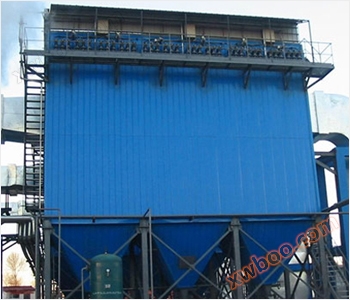
Structural characteristics of PPC pneumatic pulse bag filter
This is a bag filter with a segmented structure assembly, which uses a pulse valve on the top of the chamber to alternately clean the filter bags of each chamber with a segmented air stop box pulse cleaning (also known as offline cleaning). It is different from the dust cleaning of a general spray type dust collector. Spray pulse dust cleaning only sprays and cleans each row of filter bags in the same filter chamber, while the other rows of filter bags are still filtered. The cleaning and filtering are carried out simultaneously in one room, and the dust under the cleaning is secondary flown, some of which will be collected by adjacent filter bags, which is not conducive to the filtration of gases with high dust concentration. The PPC type pneumatic pulse bag filter is carried out when the valve is closed in one room to stop filtering. The cleaned dust settles downward in the ash half without secondary flying, which is extremely beneficial for filtering gases with high dust concentration. Moreover, the filter bag in one room can be replaced without stopping the machine. The gas box pulse dust collector is divided into four series according to different bag numbers: 32 bags/chamber, 64 bags/chamber, 96 bags/chamber, and 128 bags/chamber. Each series is further divided into multiple specifications according to different room numbers, totaling 33 types. The structure is detailed in the attached selection diagram and consists of the following parts: (1) Shell part: including clean room (or gas purification box, storage box), filter room, partition board, maintenance door, and shell structure. The cleaning room is equipped with a lift valve and a flower board, and a short spray pipe. The filtering room is equipped with a filter and its framework. (2) Ash hopper and ash unloading mechanism: There are ash hoppers and screw conveyors, air conveying chutes, and rigid impeller unloaders (ash valves) set up according to different series and import dust concentrations. (3) Inlet and outlet air box body: including inlet and outlet air ducts and middle partition. The single row (or single row) structure is arranged on one side of the shell, and the double row (or double row) structure is arranged in the middle of the shell: the 32 series is smaller without a box, and the inlet and outlet air ducts are respectively connected to the ash hopper and the cleaning room. (4) Pulse dust cleaning device: including pulse valve, air bag, lifting valve cylinder and its solenoid valve, etc. (5) Compressed air pipeline and pressure reducing device, oil-water separator, oil mist device, etc. (6) Pillars, vertical cage ladders, and railings.
Working principle of PPC pneumatic pulse bag dust collector
The dusty gas enters from the inlet of the dust collector's inlet and outlet air box (32 series enters from the ash hopper) and then turns to the ash hopper through the inclined partition. At the same time, the airflow speed slows down. Due to inertia, the coarse dust particles in the gas fall into the ash hopper, while the fine dust particles are deflected upwards by the airflow and enter the filtering chamber. The dust adheres to the surface of the filter bag, and the purified gas enters the upper cleaning chamber through the filter bag. It is collected by each cleaning chamber through the outlet and sucked out by the main fan of the dust collection system before being discharged into the atmosphere. As the filtration process continues, the amount of dust adhering to the surface of the filter bag gradually increases, and the resistance of the airflow passing through also gradually increases. When reaching a certain resistance value (e.g. 1770Pa), According to the needs, it can be manually or automatically controlled by a timed or timed dust cleaning program electronic controller to start the dust collector. The lifting valves of the * sub chambers are closed, cutting off the airflow through the filter chamber. Then, the high-pressure compressed air released by the electromagnetic pulse valve is opened to pulse blow and clean all the filter bags in the * sub chamber air box (stop air cleaning), causing each filter bag to suddenly swell, thereby shaking off the dust accumulated on the bag surface and restoring the pressure difference between the inside and outside of the bag to the starting use state. If the dust settles and cannot cover the ash hopper, the program controller opens the lifting valve at regular intervals to restore the filtration of the * chamber. Then, the lifting valve of the second chamber is started, the filtered airflow of the second chamber is closed, and the pressure difference between the inside and outside of the bag is restored to the starting use state. The electromagnetic pulse valve in the second compartment releases high-pressure compressed air to stop the air and pulse blow clean all filter bags inside the second compartment, Clean the dust on the filter bag of the second compartment, and then the programmable controller opens the second compartment lift valve to restore the filtration of the second compartment. Afterwards, according to the predetermined electrical control program, the filter bags of the third compartment, the third compartment, etc. will be stopped and blown to clean the dust until the cleaning of the next compartment is completed. The electrical control instrument will be turned off and the dust collector will resume formal filtering and dust collection. The time for stopping and blowing the filter bag, the interval between compartments, and the cleaning cycle are controlled by a programmable controller, and all times are adjustable.