-
E-mail
2179629483@qq.com
-
Phone
15618637748
-
Address
No. 2 Base, 466 Xintang Road, Zhelin Town, Fengxian District, Shanghai
Product Categories
- Steam pressure reducing valve
- Self operated micro pressure regulating valve
- FT43H lever floating ball drain valve
- T-shaped L-shaped reversing three-way ball valve
- Electric sewage gate valve
- V-shaped regulating valve
- Pneumatic explosion-proof ball valve
- Internal thread three-way directional ball valve
- Pneumatic three-way ball valve
- DF41X backflow preventer
- Explosion proof electric ball valve
- Oxygen ball valve
Shuoxiang Valve (Shanghai) Co., Ltd


Production and sales of T-shaped L-shaped reversing three-way explosion-proof ball valve and Shuoxiang valve
NegotiableUpdate on 03/01
- Model
- Nature of the Manufacturer
- Producers
- Product Category
- Place of Origin
Overview
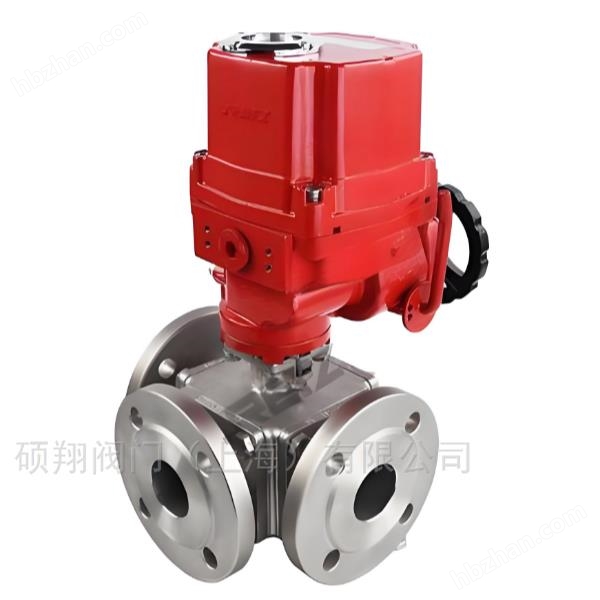
The explosion-proof electric three-way reversing valve produced by Shuoxiang Valve is an industrial process control valve composed of an explosion-proof electric actuator and a three-way valve body. Its core function is to control the flow path of fluids (liquids, gases, powders, etc.) and achieve the merging or splitting of media between the three pipelines. Drive the valve core to make linear or rotational motion inside the valve body, thereby changing the connection status of the three channels on the valve body. Guide the fluid from the inlet to outlet A or outlet B, or mix the two fluids and flow out from one outlet.
Product Details
1、 Shuoxiang Explosion proof Reversing Three way Ball Valve Product Introduction
Explosion proof electric three-way reversing valveIt is an industrial process control valve composed of an explosion-proof electric actuator and a three-way valve body. Its core function is to control the flow path of fluids (liquids, gases, powders, etc.) and achieve the merging or splitting of media between the three pipelines.
Working Principle:The electric actuator receives signals (switch signals or analog signals) from the control system, drives the valve core to make linear or rotational movements inside the valve body, thereby changing the connection status of the three channels on the valve body. Guide the fluid from the inlet to outlet A or outlet B, or mix the two fluids and flow out from one outlet.
Core feature: Explosion proofThe electric actuator has been specially designed to comply with national (GB3836) and international (IECEx, ATEX) explosion-proof standards. It can isolate the electrical sparks, high-temperature surfaces, and flammable and explosive hazardous environments that may be generated during operation, ensuring safe use in places with explosive gases such as petroleum, chemical, gas, and pharmaceutical industries.
Main application areas:
Petrochemical industry:Oil and gas transportation, reactor feed/discharge control, solvent recovery system.
Chemical industry:Path switching and proportioning of toxic and flammable media.
Gas industry:Gas transmission and distribution, station switching.
Pharmaceutical and Food:Media switching in CIP/SIP (online cleaning/sterilization) process.
Air conditioning/heating system:Control the flow of hot and cold water in the system to achieve heat exchange or bypass.

2、 Functional Features
Explosion proof safety
The actuator housing is sturdy and can withstand internal explosive pressure without damage.
Adopting explosion-proof technologies such as intrinsic safety, explosion-proof, or increased safety, effectively preventing electric sparks from igniting surrounding explosive mixtures.
All electrical interfaces adopt professional explosion-proof sealing structures.
Flexible flow control
6. Mixing type:Mix two fluids into one. For example, mixing cold and hot water into warm water.
Diverting type:Distribute a fluid path to two different outlets. For example, switch the material to reactor A or reactor B.
Reversing type:Implement switching between A → B and A → C.
High precision and reliability
Using high-performance motors and precision transmission mechanisms, accurate positioning and good repeatability.
The valve core and valve seat sealing pair are usually designed with hard seals (metal to metal) or soft seals (such as PTFE), with high internal leakage levels and long service life.
Powerful driving ability
Electric actuators have a large output torque, which can overcome high pipeline pressure differences and ensure reliable valve operation even under harsh working conditions.
Rich control and feedback options
Control mode:Supports switch type (two position) and adjustable type (proportional).
Signal type:Can receive control signals such as passive contacts, 4-20mA, 0-10V, etc.
Feedback signal:Provide valve position feedback signals (such as 4-20mA, resistance signals, or passive contacts) for remote monitoring of valve real-time status (open, closed, fault).
Good compatibility and durability
Valve body material:Carbon steel, stainless steel (304, 316L), alloy steel, etc. can be selected according to the characteristics of the medium.
Applicable medium:Water, steam, oil products, gases, corrosive chemical media, etc.
Working temperature/pressure:Covering a wide range from low to high temperatures.
3、 Usage and Operation
Pre-installation check
Verify parameters:Confirm whether the nominal diameter, pressure rating, material, and explosion-proof rating of the valve meet the on-site requirements.
Appearance inspectionCheck for any damage to valves and actuators during transportation.
Electrical inspection:Check whether the voltage and current on the actuator nameplate are consistent with the on-site power supply. Check if the cable entry device is intact.
correct installation
Pipeline cleaning:Before installation, remove welding slag, rust, and other debris from the pipeline to prevent damage to the sealing surface.
Installation location:It is recommended to keep the valve stem in a vertical or nearly vertical position to achieve service life and performance. Ensure that there is sufficient maintenance space on both sides of the valve.
Flow confirmation:Install strictly in accordance with the arrow direction (medium flow direction) marked on the valve body.
Grounding:It must be reliably grounded to ensure explosion-proof safety and personal safety.
electrical wiring
Must be operated by a professional electrician, inpower outageUnder certain circumstances.
Strictly follow the product wiring diagram to ensure that the power, control, and feedback wires are connected correctly and securely.
Use cable sealing joints that meet explosion-proof requirements and tighten them to the specified torque to ensure explosion-proof performance.
Operation Run
When powered on, a jog test should be performed to observe whether the valve switch direction is correct. If the direction is opposite, the power phase sequence needs to be adjusted.
Send instructions in the control room, observe whether the valve action is smooth and in place, and whether the feedback signal is accurate.
It is strictly prohibited to forcefully operate the valve when it encounters jamming, and the machine should be stopped immediately for inspection.
4、 Maintenance and upkeep
Regular maintenance is the key to ensuring the long-term stable operation and explosion-proof safety of valves.
routine maintenance
cleanRegularly clean the dust and oil stains on the surface of the actuator casing to maintain good heat dissipation.
On-Site Inspection:Listen for any abnormal noise during operation; Check if the valve operates smoothly and if there are any leaks.
Fastening:Regularly inspect and tighten cable joints and bolts in various parts to prevent loosening due to vibration.
Regular maintenance (recommended every 6-12 months or shortened according to working conditions)
Performance testing:Check whether the opening and closing time and fully open/fully closed position of the valve are accurate.
Sealing inspection:Check for any leakage at static sealing points such as the valve stem packing box and valve cover connection. If there is a slight leakage, the packing gland can be tightened appropriately (if allowed by the design).
Electrical inspection:Check the insulation performance of electrical components and clean the oxide on the wiring terminals.
Common faults and troubleshooting
Fault phenomenon |
Possible reasons |
exclusion method |
|---|---|---|
Valve does not operate |
Power failure, control signal not delivered, motor burnt out, excessive torque stuck |
Check the power supply, fuses, and wiring; Manually attempt to rotate (with power off and bypass pipeline pressure); Check for medium crystallization or foreign object jamming |
Serious valve leakage |
Wear or corrosion of valve core/seat, impurities on sealing surface, insufficient closing torque |
Disassemble, clean or replace the valve core and seat; Check the actuator torque setting |
external leakage |
Packing wear and aging of sealing gaskets |
Tighten or replace the packing/gasket |
High operating noise |
Pipeline vibration, loose internal components, and cavitation of the medium |
Supporting pipelines; Check internal fasteners; Optimize process conditions |
Valve position feedback is inaccurate |
Potentiometer or position sensor malfunction, loose transmission mechanism |
Recalibrate or replace feedback components |
Important safety precautions
Power must be cut off before maintenance!And ensure that the relevant process pipelines have been isolated and depressurized.
Explosion proof surface maintenance:When disassembling and repairing, pay attention to protecting the explosion-proof joint surface and ensure that there are no scratches or damages. When reassembling, it is necessary to ensure that the gap length and surface finish meet explosion-proof requirements.
Non professionals are prohibited from disassembling:Especially the internal electrical parts of explosion-proof actuators, which may affect their explosion-proof performance after maintenance, should be carried out by qualified professionals or returned to the manufacturer.
Similar Product Recommend