-
E-mail
2179629483@qq.com
-
Phone
15618637748
-
Address
No. 2 Base, 466 Xintang Road, Zhelin Town, Fengxian District, Shanghai
Product Categories
- Steam pressure reducing valve
- Self operated micro pressure regulating valve
- FT43H lever floating ball drain valve
- T-shaped L-shaped reversing three-way ball valve
- Electric sewage gate valve
- V-shaped regulating valve
- Pneumatic explosion-proof ball valve
- Internal thread three-way directional ball valve
- Pneumatic three-way ball valve
- DF41X backflow preventer
- Explosion proof electric ball valve
- Oxygen ball valve
Shuoxiang Valve (Shanghai) Co., Ltd
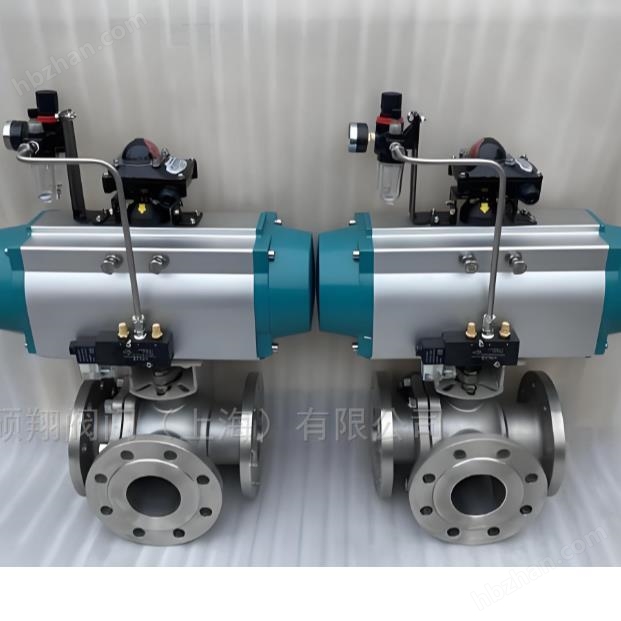


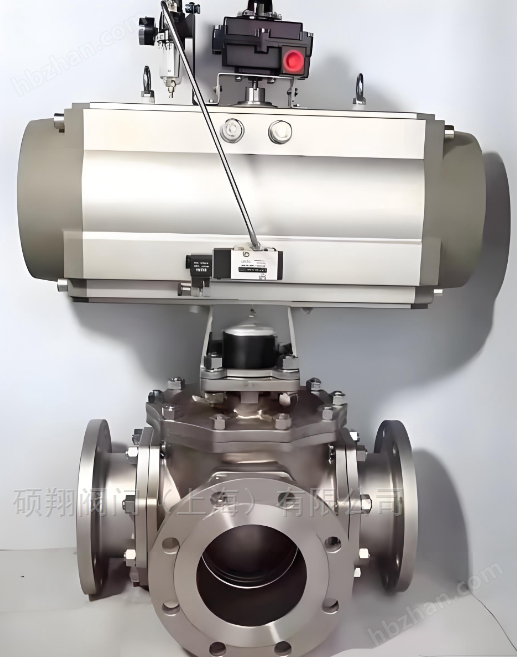

Production and sales of T-shaped L-type pneumatic three-way directional ball valve and Shuoxiang valve
NegotiableUpdate on 03/01
- Model
- Nature of the Manufacturer
- Producers
- Product Category
- Place of Origin
Overview
Pneumatic T-shaped and L-shaped directional ball valves. These two types of valves are the core components for achieving flow path switching in automated fluid control, but they have different functions and applicable working conditions. T-shaped ball valve: the channel of the ball core is in a "T" shape, and the three ports are interconnected. The main function is to achieve merging (two in, one out) or splitting (one in, two out). L-type ball valve: The channel of the ball core is in the shape of an "L" (right angle bend), which can only achieve communication between two ports, and the third port is closed. The main function is to implement reversing (one way in, one way out can be selected, and the other way is closed). Automated control, low flow resistance, and good sealing performance.
Product Details
1、 Product Introduction of Shuoxiang Three way Reversing Ball Valve
Pneumatic T-type/L-type directional ball valve is a type of ball valve that integrates a pneumatic actuator (double acting or single acting spring reset) on the basis of a regular three-way ball valve, and is named after the special structural shape of the ball core channel. They drive the ball core to rotate 90 degrees through pneumatic actuators, thereby achieving two predefined flow path switches.
T-shaped ball valve: The channel of the ball core is in a "T" shape, and the three ports are connected to each other. The main function is to achieve merging (two in, one out) or splitting (one in, two out).
L-type ball valve: The channel of the ball core is in the shape of an "L" (right angle bend), which can only achieve communication between two ports, and the third port is closed. The main function is to implement reversing (one way in, one way out can be selected, and the other way is closed).
Core commonalities: automated control, low flow resistance, good sealing performance, and fast action.
Main differences: shape and function of the core flow channel.
2、 Function, Structure, and Switching Principle of Shuoxiang Three way Reversing Ball Valve
1. T-shaped three-way ball valve
Function:
Diversion function (one in, two out): Allocate one incoming stream to either one of the other two streams or to both streams simultaneously.
Confluence function (two in one out): Merge two incoming streams into one output, or select one to flow in and the other to close.
Flow channel and switching principle:
The ball core of the T-valve has a main channel that runs through it and a side channel that is perpendicular to it, forming a T-shape.
Condition A (merging/diverging): When both ends of the "horizontal bar" of T (assuming 2 and 3 ports) are connected to the pipeline, and the bottom of the "vertical bar" (1 port) is connected to the pipeline. Making one entrance a public entrance can achieve:
The 1:1 port is connected to port 2 and disconnected from port 3.
Position 2: Rotate the core 90 degrees, connect port 1 to port 3, and disconnect from port 2.
Position 3 (key feature): The core rotates 45 degrees, allowing for simultaneous connection of ports 1, 2, and 3, achieving true merging or splitting.
structural diagram
Position 1: 1 mouth → 2 mouths Position 2: 1 mouth → 3 mouths Position 3: 1 mouth ↔ 2&3 bites
(3 ports closed) (2 ports closed) (3 ports interconnected)
2. L-type three-way ball valve
Function:
Reversing function: Only two flow paths can be switched, and the third flow path is always isolated. It does not have the ability to connect three ports simultaneously.
Typical application: Control the medium to switch between two different destinations, such as alternating feeding of reactor A and reactor B.
Flow channel and switching principle:
The core channel of the L-shaped valve is a 90 degree right angled bend.
Condition B (reversing): Assuming that port 1 is also a common port. It can achieve:
The 1:1 port is connected to port 2, and port 3 is closed.
Position 2: Rotate the core 90 degrees, connect port 1 to port 3, and close port 2.
Structural diagram:
Position 1: 1 mouth → 2 mouths Position 2: 1 mouth → 3 mouths
(3 ports closed) (2 ports closed)
Important note: T-shaped and L-shaped ball cores and valve bodies are not interchangeable. When selecting, the function must be determined based on the process requirements. Choosing the wrong type will not achieve the predetermined control objectives.
3、 Product features of Shuoxiang three-way directional ball valve
One valve for multiple uses, simplifying pipelines: One valve can replace multiple two-way valves and complex pipeline designs, saving space and costs.
Low flow resistance and high flow capacity: Designed with a full or nearly full diameter, with minimal pressure loss.
Quick action and easy automation: Pneumatic drive enables fast 90 degree rotation with short response time, and can be integrated with PLC and DCS systems.
Excellent sealing performance: The valve seat is made of elastic materials such as PTFE, PPL, or metal hard seals to ensure tight shut-off.
The flexibility of T-valve: It has the ability to connect three ports and is suitable for complex working conditions such as mixing and distribution.
Isolation of L-type valve: It can ensure that unused branches are isolated and has high safety.
4、 Use and maintenance of Shuoxiang three-way directional ball valve
1. Installation and use
Confirm model and function: Before installation, it is necessary to confirm whether the valve is T-shaped or L-shaped, and verify the port definition (usually marked on the valve body or in the factory manual) to ensure consistency with the process requirements.
Air source requirements: Provide clean and dry compressed air, with a pressure maintained within the standard range of 0.4-0.8 MPa. The front end of the gas path must be equipped with a triple component for air source treatment (filter, pressure reducing valve, oil mist device).
Installation direction: The actuator should be installed facing upwards, avoiding downwards. Valves can be installed horizontally or vertically, but excessive pipeline stress should be avoided on the valve body.
Electrical connection: The power supply voltage of the solenoid valve should meet the requirements and the wiring should be firm. If equipped with a limit switch (feedback device), correct wiring is required to achieve valve position signal feedback.
2. Daily maintenance
Regular inspection:
Air source system: Regularly drain the three components, check the oil level of the oil mist device, and clean the filter element.
Leakage inspection: Check for any external leaks at the connection between the valve stem packing box, valve body, and actuator.
Action testing: Regularly perform switch actions, listen for any abnormal sounds, and observe if the actions are smooth.
Keep clean: Keep the outside of the valve clean, especially the protruding part of the valve stem.
3. Common faults and troubleshooting
Fault phenomenon
Possible reasons
exclusion method
Valve does not operate
1. No gas source or low pressure
2. The solenoid valve coil is burnt or stuck
3. Damaged actuator
4. The valve core is stuck (due to impurities or temperature differences)
1. Check the pressure of the gas source and the smoothness of the gas path
2. Replace the solenoid valve coil or the entire unit
3. Check the sealing of the actuator
4. Manually attempt to rotate or disassemble for cleaning
valve internal leakage
1. Wear, damage or impurities on the sealing surface of the valve seat
2. The sphere has scratches
3. Insufficient torque of the actuator, not closed properly
1. Rinse the valve or disassemble and replace the valve seat
2. Replace the sphere
3. Increase the air source pressure or check the actuator
valve external leakage
1. Wear of valve stem packing
2. The flange gasket is damaged
1. Slightly tighten the packing gland or replace the packing
2. Replace the gasket after unloading the pressure
Slow/sluggish movements
1. Insufficient gas source pressure
2. Poor lubrication of the actuator or bearing
3. Excessive pipeline stress
1. Increase the pressure of the gas source
2. Add specialized lubricating grease
3. Adjust pipeline support to eliminate stress
Important safety reminder: Before any maintenance work, it is necessary to ensure that the system has been depressurized, the medium has been emptied, and the gas and power sources have been cut off. For toxic and harmful media, blowing and isolation are also necessary to ensure operational safety.
Summary: T-type vs L-type selection guide
feature
T-shaped three-way ball valve
L-type three-way ball valve
core functionality
Confluence and diversion
reversing
Flow channel characteristics
T-shaped, capable of achieving three port interconnection
L-shaped, can only be connected pairwise
Key Differences
There is a third position that connects all three ports simultaneously
There is only one exit path at any location, and the other is isolated
Applicable scenarios
Mix two fluids and distribute one fluid to two locations
Switch between two destinations, such as one for use and one for backup
Similar Product Recommend