-
E-mail
2179629483@qq.com
-
Phone
15618637748
-
Address
No. 2 Base, 466 Xintang Road, Zhelin Town, Fengxian District, Shanghai
Product Categories
- Steam pressure reducing valve
- Self operated micro pressure regulating valve
- FT43H lever floating ball drain valve
- T-shaped L-shaped reversing three-way ball valve
- Electric sewage gate valve
- V-shaped regulating valve
- Pneumatic explosion-proof ball valve
- Internal thread three-way directional ball valve
- Pneumatic three-way ball valve
- DF41X backflow preventer
- Explosion proof electric ball valve
- Oxygen ball valve
Shuoxiang Valve (Shanghai) Co., Ltd


Production and sales of V-type regulating valve, discharge valve, Shuoxiang valve
NegotiableUpdate on 03/01
- Model
- Nature of the Manufacturer
- Producers
- Product Category
- Place of Origin
Overview
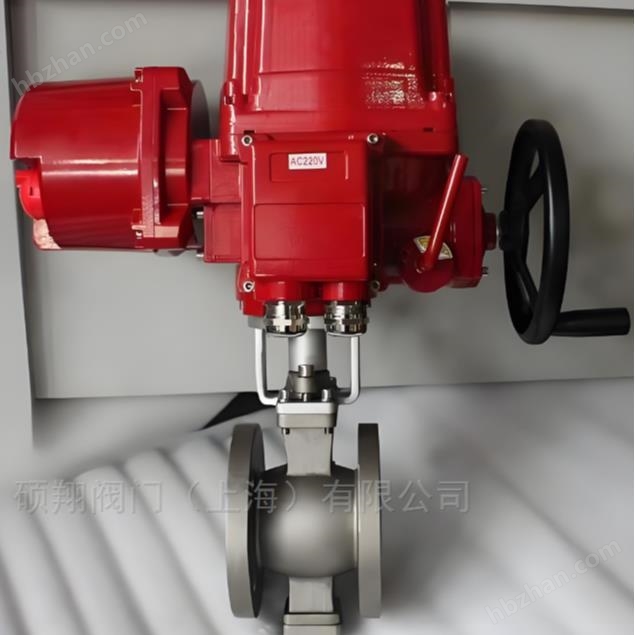
Shuoxiang pneumatic V-type regulating valve is a high-performance regulating valve widely used in industrial automation process control systems that require precise and continuous regulation of fluids (gases, liquids, slurries, particulate media, etc.). Its core feature lies in the use of a V-shaped notch design for the ball, which is different from the full bore switch function of ordinary O-ring ball valves. The V-shaped ball valve has approximately equal percentage flow characteristics and can achieve precise control and adjustment of flow. Receive standard signals such as 4-20mA from the control system, convert and drive the actuator through an electrical valve positioner, accurately control the valve opening, and ultimately achieve flow regulation.
Product Details
Comprehensive Introduction to Shuoxiang Pneumatic V-shaped Regulating Valve
1、 Product Introduction of Shuoxiang V-type Regulating Valve
Shuoxiang pneumatic V-type regulating valve is a high-performance regulating valve widely used in industrial automation process control systems that require precise and continuous regulation of fluids (gases, liquids, slurries, etc.). Its core feature is the adoption ofSpherical design with V-shaped incisionUnlike the full bore switch function of ordinary O-type ball valves, V-type ball valves have approximately equal percentage flow characteristics, which can achieve precise control and adjustment of flow.
It is usually composed ofV-shaped ball valve bodyandPneumatic actuatorComposed of two main parts, it receives standard signals such as 4-20mA from control systems (such as DCS, PLC), converts and drives the actuator through an electrical valve positioner, thereby accurately controlling the valve opening and ultimately achieving the goal of regulating process parameters such as flow rate, pressure, and temperature.
Typical application areas:
Power industry:Water treatment and ash removal system.
Chemical industry:Control of reactor feed and slurry transportation.
Paper industry:Flow regulation of pulp and slurry.
Environmental Protection Industry:Wastewater treatment and dust control.
Metallurgical and mining industries:Adjustment of slurry and powder media.
IIProduct structure of Shuoxiang V-shaped regulating valve
The Shuoxiang V-shaped regulating valve mainly consists of the following parts:
Pneumatic actuator:
Type:It is mostly a piston or gear rack structure, providing strong output torque.
Mode of action:usually havenormally open(Valve closes when gas is lost) andair-to-closeThere are two options (valve opening when gas loss occurs), choose according to process safety requirements.
Enclosure:The core attachment isElectric valve positionerIt converts the control signal into an air pressure signal and ensures that the valve opening accurately corresponds to the signal. Other accessories include air filter pressure reducing valve, solenoid valve, limit switch, etc.
Valve body part:
Valve body:It is usually cast or forged, and the material can be selected according to the medium, such as carbon steel, stainless steel (such as 304, 316, 316L), etc.
V-shaped core:This is the core component of the valve. There is a sphere with aV-notchWhen the valve starts to open from the closed position, the V-shaped notch forms a fan-shaped throttling window with the sealing surface of the valve seat. This design allows it to have good shear force at small openings and achieve precise fine-tuning.
Valve seat:Usually, metal hard seals (such as stainless steel overlay with Stellite alloy) or soft seals (such as reinforced PTFE) are used to adapt to high temperatures, wear or corrosive media. The V-shaped core also hasShear actionIt can effectively cut off fibers and particles to prevent blockage.
Connecting components:
Bracket:Connect the actuator and valve body, with a transmission shaft installed inside.
Connecting rod:Transfer the linear or rotational motion of the actuator to the core.
IIIFunctional characteristics of Shuoxiang V-shaped regulating valve
Excellent tuning performance:The V-shaped opening gives it an approximately equal percentage flow characteristic, with high adjustment accuracy and a wide range (adjustable ratio is large), making it particularly suitable for regulating and controlling.
Powerful cutting self-cleaning function:During the opening and closing process, the sharp V-shaped edge of the V-shaped core can cut off viscous media such as fibers and pulp in the pipeline like scissors, and scrape off the scale on the sealing surface. It has self-cleaning ability and effectively prevents the valve from getting stuck.
High wear and corrosion resistance:The valve seat and core are usually made of hard alloy or special surface treatment, which is very suitable for slurry media with particles and powders, and has a long wear resistance life.
Good anti blocking performance:The flow path is simple, the medium flows smoothly, and the V-shaped opening can generate high-speed flow during adjustment, making it an ideal choice for handling slurry and granular media.
Reliable sealing:Adopting metal hard or soft sealing structure, it has good sealing performance, small leakage, and can reach VI level or higher sealing level.
Compact structure, moderate torque:Compared to butterfly valves or other regulating valves of the same diameter, the structure is relatively compact. Equipped with high-performance actuators, it runs stably and reliably.
4Use and maintenance of Shuoxiang V-shaped regulating valve
Precautions for use:
Before installation:Check whether the valve model and specifications meet the requirements, and remove foreign objects from the pipeline and valve body.
During installation:Ensure that the installation direction of the valve is consistent with the flow direction of the medium (usually indicated by arrows on the valve body). Reserve sufficient space for operation and maintenance.
Gas source requirements:The compressed air supplied to the actuator must be clean and dry, with a stable pressure at the specified value (usually 0.4-0.7MPa), and an air filter pressure reducing valve must be installed.
Electrical connection:Strictly follow the instructions for wiring to ensure that the signal and power lines are correct and error free.
Debugging:When running for the first time, manual or jog operation should be performed to confirm that the valve switch direction is correct, and then automatic debugging should be carried out to calibrate the zero point and full degree of the locator.
Maintenance and upkeep:
Daily maintenance:
Check the gas source:Regularly check the air source pressure and treatment device (triple piece), and promptly drain and refuel.
Check for leaks:Check for any external leaks in the valve stem packing box, air circuit joints, etc.
Check the operation:Check for any abnormal noise or vibration during valve operation, and observe if the operation is smooth.
Regular maintenance (every six months or one year, depending on the operating conditions):
clean:For harsh working conditions, the valve should be regularly disassembled, the interior cleaned, and the wear and corrosion of the V-shaped ball core and valve seat checked.
Check the seals:Check whether the valve seat sealing ring, O-ring and other sealing components are intact. If there is aging or wear, they should be replaced in a timely manner.
Positioner calibration:Regularly calibrate the electrical valve positioner to ensure its control accuracy.
9. Lubrication:According to the requirements, apply the specified lubricating grease to the transmission components of the actuator, such as gears and bearings.
Common faults and solutions:
Valve does not operate:Check if the air source is normal, if the solenoid valve is powered, and if the locator is outputting.
Slow or sluggish movements:It may be due to the crystallization of the medium or impurities getting stuck. It is necessary to clean the valve or check whether the lubrication of the actuator is good.
Excessive leakage:The sealing surface of the ball core or valve seat is worn and the sealing component needs to be replaced.
Decreased adjustment accuracy:Possible locator malfunction or zero drift, requiring recalibration.
Similar Product Recommend