-
E-mail
2179629483@qq.com
-
Phone
15618637748
-
Address
No. 2 Base, 466 Xintang Road, Zhelin Town, Fengxian District, Shanghai
Product Categories
- Steam pressure reducing valve
- Self operated micro pressure regulating valve
- FT43H lever floating ball drain valve
- T-shaped L-shaped reversing three-way ball valve
- Electric sewage gate valve
- V-shaped regulating valve
- Pneumatic explosion-proof ball valve
- Internal thread three-way directional ball valve
- Pneumatic three-way ball valve
- DF41X backflow preventer
- Explosion proof electric ball valve
- Oxygen ball valve
Shuoxiang Valve (Shanghai) Co., Ltd
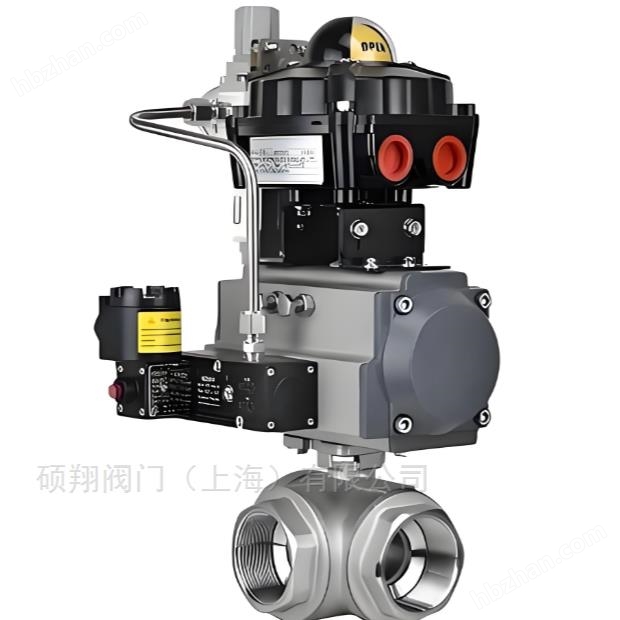


Production and sales of internal thread three-way directional ball valve Shuoxiang valve
NegotiableUpdate on 03/01
- Model
- Nature of the Manufacturer
- Producers
- Product Category
- Place of Origin
Overview
Internal threaded pneumatic three-way ball valve is an industrial process control valve that integrates a three-way ball valve and pneumatic actuator. It is connected to the pipeline system through threaded interfaces (such as NPT, BSPT, G, etc.) inside the valve body, and uses compressed air as a power source to achieve switching, merging, or splitting control of fluids (liquids, gases, slurries, etc.). This valve is widely used in automation control systems in industries such as petrochemicals, pharmaceuticals, food, water treatment, electricity, and light industry.
Product Details
Product Introduction of Shuoxiang Internal Thread Pneumatic Three way Reversing Ball Valve
Internal threaded pneumatic three-way ball valve is an industrial process control valve that integrates a three-way ball valve and pneumatic actuator. It is connected to the pipeline system through threaded interfaces (such as NPT, BSPT, G, etc.) inside the valve body, and uses compressed air as a power source to achieve switching, merging, or splitting control of fluids (liquids, gases, slurries, etc.). This valve is widely used in automation control systems in industries such as petrochemicals, pharmaceuticals, food, water treatment, electricity, and light industry.
Core features:
Connection method:Internal thread connection, compact installation, suitable for small and medium-sized pipelines.
Drive mode:Pneumatic actuators can achieve fast opening and closing and remote automation control.
Valve body structure:Three ways, with three channel ports, can achieve complex flow path switching.

IIMain structure and components of Shuoxiang internal thread pneumatic three-way directional ball valve
The internal threaded pneumatic three-way ball valve mainly consists of two parts:Three way ball valve bodyandPneumatic actuator.
1. Valve body part of three-way ball valve:
Valve body:Usually cast or forged, materials include carbon steel, stainless steel (304, 316, etc.), brass, etc., depending on the fluid medium. There are three internal threaded interfaces on the valve body, forming a T-shaped or L-shaped flow channel.
Ball core:The core component of the valve has an L-shaped or T-shaped through-hole machined internally. By rotating 90 degrees, the alignment relationship between the channel and the valve body channel can be changed to achieve the switching of the flow path.
L-shaped channel (two-way distribution type):Used to switch flow direction and achieveAlternating supply of liquid from one inlet to two outlets, orAlternating supply of liquid from two inlets to one outletIt cannot close two exits at the same time.
T-shaped channel (three-way merging type):Used for merging or diverging, it can achieveThree channels flow through each other, orDivert the merging medium.
Valve seat/sealing ring:Located between the ball core and valve body to ensure sealing. Common materials include PTFE (polytetrafluoroethylene), RPTFE, PEEK, etc., which have good sealing and wear resistance.
Valve stem:Connect the upper pneumatic actuator and the lower ball core, and transmit the rotational torque of the actuator to the ball core.
Packing box:At the part where the valve stem penetrates the valve body, the medium is prevented from leaking from the valve stem by compressing the packing (such as graphite, PTFE).
2. Pneumatic actuator part:
Pneumatic cylinder:The core power component drives the piston to move after compressed air enters.
Gear and rack mechanism (or fork mechanism):Convert the linear motion of the piston into a 90 degree rotational output.
Spring (single acting/double acting):
Double acting actuator:Both opening and closing require compressed air drive. When the gas source is lost, the valve will remain in placeLoss of Qi and Maintenance of PositionStatus (requires additional configuration of gas tank).
Single acting actuator:Spring reset. Compress the spring during ventilation and drive the valve; When the gas is cut off, the spring force resets the valve to its initial safe position (normally open or normally closed).
•Attachment (optional):
Solenoid valve:Receive electrical signals, control the opening and closing of gas circuits, and realize the opening and closing of valves.
Limit switch:Provide the switch position signal of the feedback valve to the control system.
Triple components for gas source treatment:Filter impurities in compressed air, regulate pressure, and add lubricating oil to extend actuator life•
-
positioner:Used in situations where proportional adjustment (opening control) is required, it can accurately control any opening of the ball valve.
IIIFunctional characteristics of Shuoxiang internal thread pneumatic three-way directional ball valve
Flexible flow path switching:The core function is to achieve the merging, splitting, and flow direction switching of media, with one valve for multiple purposes, simplifying pipeline design.
Quick action, quick opening and closing:Pneumatic drive allows the valve to complete its opening and closing action in just 0.25 seconds (90 degree rotation), making it suitable for situations that require quick shut-off.
Low fluid resistance:The design of full or approximate full diameter ensures smooth flow channels and minimal pressure loss.
Good sealing performance:Adopting a soft sealed valve seat, the seal is reliable and zero leakage can be achieved.
High degree of automation:It can be connected to control systems such as PLC and DCS to achieve remote control and automated operation, improving production efficiency and safety.
Compact structure and easy installation:The internal thread connection method does not require welding flanges, occupies less space, and is easy to install and maintain.
Easy maintenance:The valve seat sealing ring usually adopts a detachable design, which is easy to replace when the sealing surface wears out.
4Key points for the use and selection of Shuoxiang internal thread pneumatic three-way directional ball valve
Consideration of operating conditions:
Medium characteristics:Confirm the corrosiveness, temperature, viscosity, and presence of particulate matter of the medium to select suitable valve bodies and sealing materials. (For example, choose 316 stainless steel for corrosive media and PEEK or metal hard seals for high-temperature media).
Pressure and temperature range:The nominal pressure (PN) and applicable temperature of the valve must meet the requirements of the operating conditions.
Control requirements:
Switch control:Choose ordinary double acting or single acting actuators, equipped with solenoid valves.
Adjustment control:Must choose matchinglocatorThe actuator.
Safety fault position:It is necessary to determine whether the valve should be in the open, closed, or hold position when there is a gas or power outage, in order to select a single acting or double acting actuator (and configure a hold valve).
Valve function selection:
T-shaped three-way ball valve:It can achieve interconnection of three channels or be used for distributing and mixing media.
L-type three-way ball valve:Only two channels can be connected for switching flow direction.
5Installation and maintenance of Shuoxiang internal thread pneumatic three-way directional ball valve
Installation precautions:
Pre installation inspection:Check if the valve model, specifications, and flow direction match the design. Remove welding slag and impurities from the pipeline to prevent damage to the valve seat.
Installation location:Try to keep the valve stem in a vertical or nearly vertical position to avoid uneven stress on the stem caused by long-term horizontal installation.
Gas source connection:Ensure that the gas source is clean and dry. The air interface should be well sealed and leak free. It is recommended to install filters, pressure reducing valves, and oil mist devices at the front end of the gas source.
Manual operation:Many pneumatic actuators are equipped with manual operating mechanisms (handles or handwheels), and the manual function should be tested for normal operation after installation.
Daily maintenance and upkeep:
1.Regular inspection:
Gas source pressure:Ensure that the gas supply pressure is within the required range of the actuator (usually 0.4-0.8 MPa).
Leakage inspection:Check if there is any external leakage at the connection between the valve stem packing box and the valve body.
Action performance:Regularly test whether the valve's opening and closing actions are smooth and in place.
Regular lubrication:For actuators that require lubrication, regularly add lubricating oil through an oil mist device. Valves that do not operate for a long time should be manually operated several times regularly to prevent jamming.
Seal replacement:When valve leakage is detected, it is usually due to wear or damage to the valve seat sealing ring. It is necessary to remove the valve from the pipeline and replace the valve seat and ball core seal. This is a highly specialized maintenance job.
Long term discontinuation:The medium and moisture inside the valve and actuator should be drained, and rust prevention treatment should be carried out on each processing surface. The material should be stored in a dry environment
Similar Product Recommend