-
E-mail
85531818@qq.com
-
Phone
13503187732
-
Address
Fiberglass Industrial Park, Zaoqiang County, Hengshui City, Hebei Province
Product Categories
Zaoqiang Runhe Environmental Protection Equipment Co., Ltd
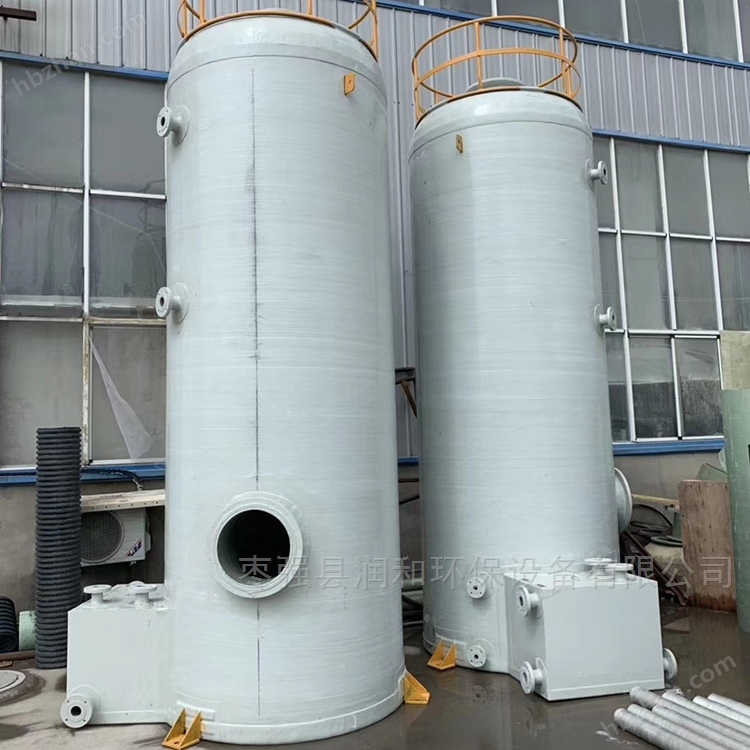
Tail gas washing tower, washing tower Canglang
NegotiableUpdate on 05/07
- Model
- Nature of the Manufacturer
- Producers
- Product Category
- Place of Origin
Overview
Tail gas washing tower, washing tower Canglang uses the contact between exhaust gas and liquid to adsorb pollutants, and then separates the gas from the contaminated liquid, thereby achieving the purpose of purifying tail gas.
Product Details
Tail gas washing tower, washing tower CanglangThrough the contact between exhaust gas and liquid, pollutants are adsorbed by the liquid, and then the gas is separated from the contaminated liquid to achieve the goal of purifying exhaust gas. The working principle is based on processes such as physical absorption, chemical neutralization, and gas-liquid mass transfer. The washing solution is usually water, alkaline solution, or other specific chemical solutions. When the tail gas containing pollutants enters the washing tower from the bottom, it fully contacts with the washing solution sprayed from the top of the washing tower. The particles in the tail gas are captured by the washing solution, and the acidic or alkaline gas pollutants react chemically with the washing solution and are neutralized. The treated tail gas is discharged from the top of the tower.

Tail gas washing tower, washing tower CanglangTechnical parameter description:
1. Processing parameters
Processing air volume: the volume of exhaust gas that can be processed per unit time, commonly measured in meters per hour.
2. Structure of tail gas scrubbing tower body:
Tower material: Choose according to the corrosiveness of exhaust gas, commonly including carbon steel (anti-corrosion coating), stainless steel (304/316L), and PP/FRP (fiberglass).
Tower size: diameter (m) x height (m), determined by the processing air volume and gas-liquid contact time, with a height typically ranging from 6-20m.
Packing type and height: Packing is used to increase the gas-liquid contact area, commonly using Ball rings, Rascal rings, and stepped rings, with a height of 1-5m (adjusted according to mass transfer efficiency requirements).
3. Operating conditions of tail gas scrubbing tower:
Operating temperature: Inlet exhaust gas temperature, normal operating conditions ≤ 80 ℃.
Operating pressure: The operating pressure inside the water washing tower is mostly normal pressure or slightly negative pressure (-50~-200Pa) to avoid exhaust gas leakage.
4. Auxiliary design of tail gas scrubbing tower:
Resistance loss: The pressure loss (Pa) of exhaust gas passing through the tower body, with a conventional range of 500-2000Pa, needs to be matched with the fan pressure.
Washing solution pH value: Adjust according to the type of pollutant, pH=8-10 when treating acidic waste gas (alkaline washing solution), and pH=4-6 when treating alkaline waste gas (acidic washing solution).
Residence time: The length of time the exhaust gas stays in the tower (s), which is related to the height of the water washing tower and the airflow velocity, usually ≥ 5s.

Tail gas scrubbing tower, scrubbing tower principle:
Gas liquid reverse contact: The exhaust gas containing pollutants enters from the bottom of the tail gas scrubbing tower, and the scrubbing solution (water, alkali solution, etc.) sprays down from the top of the tower, forming a reverse flow.
Contact: By using packing layers, spray devices, etc., the gas-liquid contact area and contact time are increased to allow pollutants to fully interact with the washing solution.
Pollutant treatment: Particulate matter is washed by the washing solution, and acidic/alkaline gases undergo neutralization reactions (chemical reactions) with the washing solution. Soluble pollutants are dissolved by the washing solution.
Gas liquid separation: The purified gas is treated by a defogging device to remove liquid droplets from the gas and discharged from the top of the tower; The waste liquid containing pollutants is discharged from the bottom of the tower and enters the subsequent treatment system.

Similar Product Recommend