- Phone
-
Address
3-3, Enterprise Shushang District, No. 18 Jingxing Street, Changping District, Beijing
Product Categories
- stereoscopic monitoring
- Monitoring the hygroscopic growth characteristics of particulate matter
- Ozone/photochemical pollution monitoring
- Greenhouse gas monitoring
- Carbon aerosol monitoring
- Haze monitoring
- Monitoring of particulate matter source apportionment components
- AQI monitoring of ambient air quality
Beijing Saikema Environmental Protection Instrument Co., Ltd

UF-CCD Photolysis Spectrometer
NegotiableUpdate on 01/06
- Model
- Nature of the Manufacturer
- Producers
- Product Category
- Place of Origin
Overview
UF-CCD Photolysis Spectrometer
Product Details
Background introduction:
The variation of O3 volume fraction in the near surface layer of urban polluted areas is mainly controlled by local photochemical reactions, and the generation and loss of ozone are determined by the photochemical reactions of its precursors (such as NOx, VOCs, etc.).
The photochemical reaction of VOCs in the atmosphere increases the content of HO2 and RO2 free radicals, thereby increasing the amount of NO converted to NO2, leading to the accumulation of ozone.
Based on the technology and research of Max Planck Institute in Germany, Metcon has developed a filter radiometer and photolysis spectrometer specifically for measuring atmospheric photochemical radiation flux, taking into account the important role of O3, NO2, etc. in photochemical reactions, and calculating the photolysis rates of J (O1D), J (HCHO), J (NO2), J (HONO), J (NO3), and J (H2O2).
The spectrometer series developed and produced by Metcon company can measure the solar spectrum in the 280-650nm band. Based on the measured spectral flux, the original spectral data can be obtained. Then, using a spectral detector and analysis software, the photolysis rate values of important substances in the corresponding band can be obtained.
The measurement of this series of spectrometers is based on an integrated monochromator without moving parts, which is almost insensitive to temperature changes, allowing the detection band to be maintained within a stable range. The spectrometer can operate normally at low solar zenith angles during the detection of J (O1D) photolysis rate, so the measurement of the spectrometer in the UVB (290-320nm) band does not require correction for changes in total O3 concentration.
Metcon's spectrometer can be widely used for atmospheric research in ground observation stations and aerial survey modes. When the spectrometer is used for ground observation, the optical receiver is connected to the detector and can be directly installed outdoors; During aerial surveying, the optical receiver head needs to be installed separately outside the cabin, and the spectral detector needs to be placed inside the cabin. The optical receiver head is connected to the detector through optical fibers, and the spectral detector can achieve excellent signal stability after calibration. In addition, the spectrometer can also be used in underwater environments (configuration needs to be based on specific requirements).
UF CCD type photolysis spectrometer:
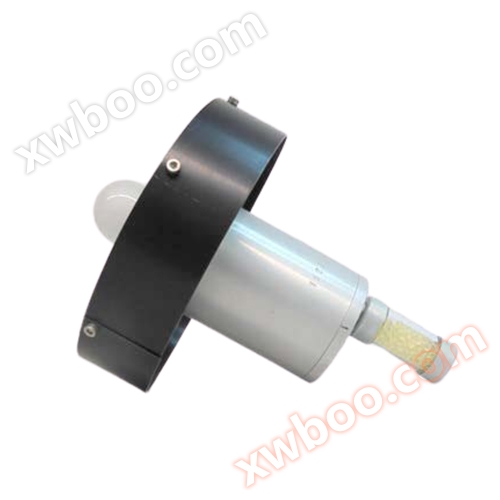
Due to the use of CCD detectors, the sensitivity and resolution of detection have been improved. The CCD rapid photolysis spectrometer (i.e. UF-CCD type photolysis spectrometer) mainly consists of an optical receiving head, a CCD detector (Charge Coupled detector), and a detector cooling control box.Instrument features:
*CCD detector has fast detection and high sensitivity, making it particularly suitable for use in aviation testing. The detection time of the spectrometer is only 100ms, which is extremely beneficial for the detection of ultraviolet spectra. The detection resolution in the UVB band can reach a level of less than 1.8nm;
*The system device uses an improved ZEISS-MCS monochromator and a CCD detector with an electric cooling system;
*Enhanced UV detection effect: spectral band range: 280~650nm, resolution<1.8nm (FWHM: full width (peak area) at half of the maximum counting value);
*Can broaden the detection band in the UV~VIS (visible light) range: based on the incident slit, can broaden the spectral band: 290~1000nm, resolution 2~3nm (FMHW) (optional);
*The optical receiver can be directly connected to the spectrometer or connected to the spectrometer through a 600 μ m single fiber (or fiber bundle) (optional);
*The instrument can be operated using a laptop or desktop computer;
*The data software can continuously and real-time analyze spectral sampling data, which can be processed and documented by the software carried by the instrument to obtain real-time spectral and photolysis rates, and transmitted through Ethernet;
*The data software package can convert raw data into spline functions corrected under 0.5nm spectra and integrated data of J (O1D), J (HCHO), J (NO2), J (HONO), J (NO3), J (H2O2) and spectra;
*The detection system is tracked and calibrated using NIST/PTB 1000W halogen lamps.
Technical parameters:
*Type of spectrophotometer: Acceptable fixed grating monochromator (CARL ZEISS);
*Optical connection (used for aerial surveying): quartz fiber optic, connected to a slit converter;
*Detector type: CCD with cooling: 532 Pixel * 64 Pixel;
*Spectral measurement range: 280~650nm, spectral resolution<1.8nm (FWHM);
*Weight: approximately 5kg;
*Power supply: Input 100~240VAC, 50HZ, maximum power 60W;
*Data transmission: transmit data through Ethernet interface;
*Analysis and measurement interval: 1s-30min (within the interval, users can adjust it freely);
*It can be controlled using a laptop or desktop computer software, and can run on both Win7 and Windows 8 systems;
*The instrument comes with software that includes spectral raw data and programs for calculating the photolysis rates of J (O1D), J (HCHO), J (NO2), J (HONO), J (NO3), and J (H2O2).
Instrument calibration:
Each instrument has a calibration factor before leaving the factory, which is obtained by scanning a standard 1000W lamp on an optical test bench. During the software calculation process, the original spectral signal needs to be multiplied by the reference calibration factor.