-
E-mail
1743251064@qq.com
-
Phone
13403270026
-
Address
Botou Development Zone, Hebei Province
Product Categories
- Pulse dust collector
- Star shaped unloader
- Dust bag
- Spiral conveyor
- Cyclone dust collector
- Dust humidifier
- Dust removal framework
- Low temperature plasma exhaust gas treatment equipment
- precipitator
- Dust removal accessories
- Single dust collector
- Boiler dust collector
- bag-type dust collector
- Plasma oxygen integrated machine
- Catalytic combustion equipment
- Industry dust collector
- Welding smoke purification equipment
- other
- UV photo oxygen exhaust gas treatment equipment
Botou Longnuo Environmental Protection Equipment Co., Ltd

UV photocatalytic equipment
NegotiableUpdate on 08/02
- Model
- Nature of the Manufacturer
- Producers
- Product Category
- Place of Origin
Overview
Introduction to UV photocatalytic equipment: Characteristics of UV photocatalytic equipment: Organic waste gas is generally flammable, explosive, toxic and harmful, insoluble in water, soluble in organic solvents, and difficult to treat
Product Details

The UV photocatalytic equipment uses - C band ultraviolet light to react with oxygen in the air to produce ozone. When decomposing pollutants such as oil mist and exhaust gas, the high-energy ozone in the ultraviolet light plays a decisive role. The high-energy ozone resembling a meteor shower collides non elastically with molecules in the medium (principle), converting energy into the internal energy of ground state molecules (atoms), and undergoing a series of processes such as excitation, dissociation, and ionization to activate the polluted medium. Achieve the effect of purifying and deodorizing.
Under the action of ionization, the pollutant medium generates active free radicals, and the activated pollutant molecules are removed through directional chain chemical reactions. When the average energy exceeds the chemical bond binding energy in the polluted medium, the molecular chain breaks, the polluted medium decomposes, and is collected under the action of the adsorption field of the ozone generator. The concentration of molecules in the medium and the coexisting components of the medium.
Degradation mechanism of gaseous organic pollutants by UV photocatalytic equipment
There is enough energy to generate free radicals, triggering a series of complex physical and chemical reactions. The chemical reactions of gas organic compounds caused by the action of ozone generators are ionization, dissociation, excitation, and atomic reactions that occur in the gas phase. The mutual binding and addition reactions between molecules. This energy is sufficient to break the chemical bonds in most gaseous organic compounds, leading to their degradation.
From the perspective of air purification efficiency, we have chosen to use a combination of - C-band ultraviolet radiation and ozone generator with a high corona current device to eliminate harmful gases using the principle of pulse corona discharge adsorption technology. The - C-band ultraviolet radiation is mainly used to remove gases such as hydrogen sulfide, ammonia, benzene, toluene, xylene, formaldehyde, acetone, urea, resin, etc., as well as for disinfection and sterilization.
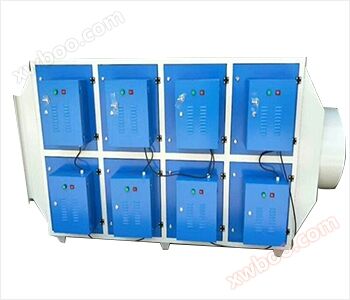
The purification device consists of equipment and components such as a primary filtration unit, a - C-band ultraviolet device, degradation collection, an ozone generator, and a filtration unit.
Product characteristics of UV photocatalytic equipment
Characteristics of UV photocatalytic equipment: Organic waste gas generally has the characteristics of being flammable, explosive, toxic and harmful, insoluble in water, soluble in organic solvents, and difficult to treat. Various principles such as activated carbon adsorption treatment, catalytic combustion, catalytic oxidation, acid-base neutralization, and plasma treatment are commonly used in the treatment of organic waste gas. It is generally recommended to use plasma method because low-temperature plasma method has the characteristics of high removal efficiency and convenient use. A better method for treating organic waste gas is the catalytic oxidation purification system. The waste gas treatment design is meticulous, with layers of purification and filtration, resulting in better results.
Each organic waste gas treatment project has different characteristics, and attention should be paid to the relevant details when designing organic waste gas treatment projects to ensure that the best results can be achieved.
Benzene (benzene organic compounds) in UV photocatalytic equipment can damage the central nervous system and cause neurological disorders. When the concentration of benzene vapor is too high (up to 2% in the air), it can cause fatal acute poisoning.
The strong carcinogenicity of polycyclic aromatic hydrocarbons in UV photocatalytic equipment;
Benzoic acid organic compounds in UV photocatalytic equipment cause deformation or coagulation of cellular proteins, leading to systemic poisoning;
Diphenylamine and benzidine in UV photocatalytic equipment can cause hypoxia in the human body;
Inhalation of high concentrations of ethylene oxide by oxygen-containing organic compounds in UV photocatalytic equipment can lead to human death
The vast majority of organic waste gases are flammable, explosive, toxic, and harmful compounds, which are particularly important for safety in purification and treatment projects. Our design and manufacturing principles are: safety *, followed by compliance. Without security, anything is meaningless.
Organic waste gas treatment refers to the process of adsorbing, filtering, and purifying organic waste gases generated during industrial production. Usually, organic waste gas treatment includes formaldehyde organic waste gas treatment, benzene toluene xylene and other benzene based organic waste gas treatment, acetone butanone organic waste gas treatment, ethyl acetate waste gas treatment, oil mist organic waste gas treatment, furfural organic waste gas treatment, styrene, acrylic acid organic waste gas treatment, resin organic waste gas treatment, additive organic waste gas treatment, paint mist organic waste gas treatment, Tianshui organic waste gas treatment and other air purification treatments for organic compounds containing carbon, hydrogen and oxygen.