-
E-mail
hzhuf@163.com
-
Phone
13503187732
-
Address
Hongwuzhuang Village, Zaoqiang County, Hebei Province
Product Categories
Zaoqiang Runhe Environmental Protection Equipment Co., Ltd

Fiberglass exhaust pipe (exhaust pipe, chimney) Qilian
NegotiableUpdate on 01/08
- Model
- Nature of the Manufacturer
- Producers
- Product Category
- Place of Origin
Overview
Fiberglass exhaust pipe (exhaust pipe, chimney) Qilian accessories: flange connection, lightning protection device, inspection/testing port, drainage device, support and fixing device, and others
Product Details
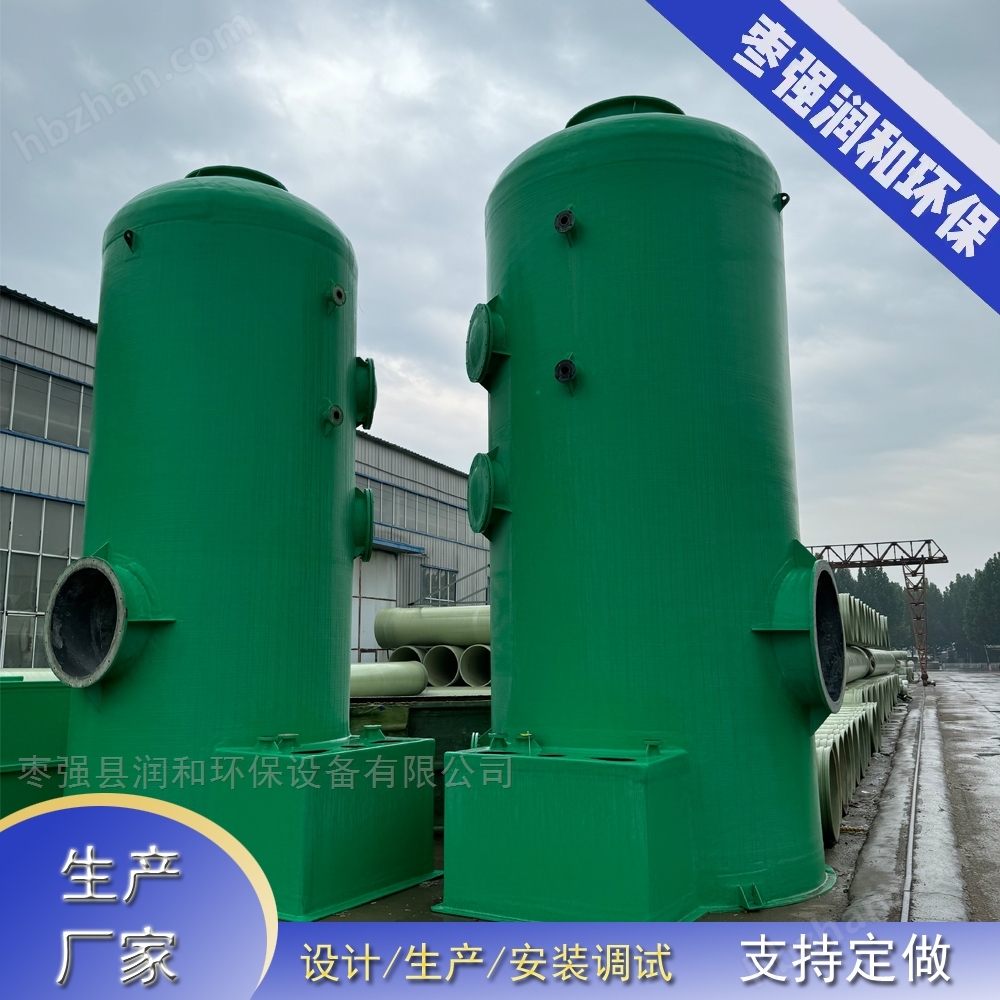
Fiberglass exhaust pipe (exhaust pipe, chimney) QilianAttachment: Flange connection, lightning protection device, inspection/testing port, drainage device, support and fixing device, and others. Foundation acceptance before installation of fiberglass exhaust pipe: The concrete foundation needs to be flat (horizontal error ≤ 3mm/m), with a bearing capacity ≥ design value (conventional ≥ 20kN/m ²), and reserved anchor bolt holes to match the tower support position. Check the flatness of the flange sealing surface of the fiberglass exhaust pipe, and prepare the fiberglass chimney accessories: bolts, gaskets, and sealant.
Fiberglass exhaust pipes are classified according to their structural form:
| structural type | Applicable scenarios | Design Key Points |
| Vertical cylindrical shape | Most industrial waste gas emissions (such as chemical plants, spray washing tower vents, asphalt mixing stations) have stable airflow and low resistance | Tower diameter 500mm-5m, height 10-50m, using segmented flange connections (3-6m per section) for easy transportation and installation |
| Horizontal/irregular shape | Installation space limited scenarios (such as local exhaust in the workshop, low rise factory buildings) | Need to increase support points, optimize internal flow channel design, and avoid liquid and dust accumulation (such as setting up a drain outlet at the bottom) |
| Double layered sandwich structure | High temperature exhaust gas (150-200 ℃) or low temperature environment (below -20 ℃) | Inner layer (exposed to exhaust gas): corrosion-resistant and high-temperature resistant FRP, outer layer: ordinary FRP, filled with rock wool/polyurethane insulation layer in the middle (thickness 50-100mm) |

Fiberglass emptying pipes classified by function
| functional type | Application scenarios | configuration |
| Ordinary exhaust pipe (exhaust pipe) | Non corrosive, ambient temperature exhaust emissions | Resin: ordinary unsaturated polyester resin, reinforcement material: glass fiber cloth+short cut felt, wall thickness 6-10mm |
| Anti corrosion exhaust pipe | Corrosive exhaust emissions | Resin: Vinyl ester resin/epoxy vinyl ester resin, wall thickness 8-15mm, can be lined with PTFE coating (thickness 0.5-1mm) |
| High temperature resistant exhaust pipe | High temperature exhaust emissions | |
| Dust removal exhaust pipe | Dust containing exhaust emissions |

Fiberglass exhaust pipe (exhaust pipe, chimney) QilianBasic design parameters:
| parameter name | Value range/calculation method | Industrial Application Instructions |
| Design air volume (Q) | According to the processing capacity of the exhaust gas treatment system multiplied by 1.1 | Example: The processing capacity of the spray washing tower is 15000m ³/h, and the designed air volume of the exhaust pipe is 15000 × 1.1=16500m ³/h |
| Smoke flow rate (v) | 6-15m/s (conventional); Dust containing exhaust gas 8-12m/s (to avoid particle settling); Corrosive exhaust gas 6-10m/s (reduces corrosion impact) | Low flow rate is prone to dust/liquid accumulation, while high flow rate increases fan energy consumption and noise |
| Exhaust pipe diameter (D) | Formula: D=√ (4Q/(π v × 3600)) (unit: m), rounded to the nearest integer and leave a margin of 5-10% | Example: Q=16500m ³/h, v=10m/s, D=√ (4 × 16500/(π× 10 × 3600)) ≈ 0.76m, rounded to 0.8m |
| Exhaust pipe height (H) | 1. Meet environmental emission standards (such as unorganized emission height ≥ 15m); | Conventional industrial scenarios have a height of 10-30m, while large-scale installations or high concentration exhaust emissions have a height of 30-50m |
| 2. Calculated based on atmospheric diffusion (to avoid exhaust gas backflow) | ||
| Wall thickness (δ) | Formula: δ=δ₁+δ₂+δ₃(δ₁: Strength wall thickness, δ₂Corrosion allowance, δ₃: Forming allowance) | Conventional scenario δ=8-15mm; Severe corrosion scenario δ=15-20mm; High temperature scenario δ=12-18mm |

Similar Product Recommend